
Are “Lifetime” Roofing Warranties Actually Worth Anything?
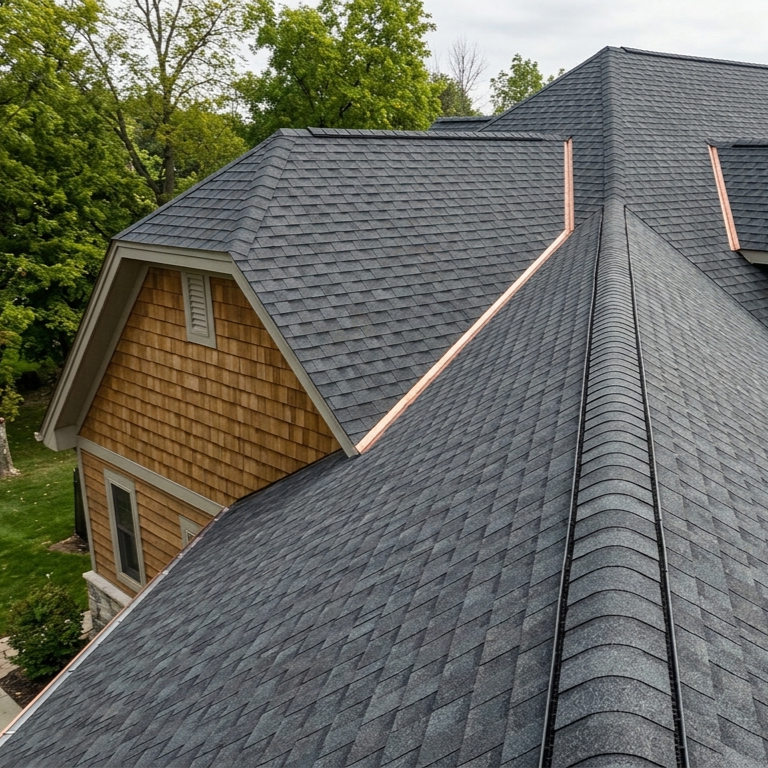
You replaced your roof four years ago. The crew finished in two days, handed you a stack of paperwork, and somewhere in that stack was a warranty card that said "lifetime." You didn't read it closely—why would you? Lifetime meant lifetime.
Then a hailstorm rolled through in May. You called the manufacturer. An hour on hold later, you learned that hail is classified as an "act of God," granule loss without physical penetration doesn't qualify, and—by the way—did you register the warranty within 45 days of installation?
This isn't a rare story. It's one of the most common gut-punch moments in residential roofing, and it happens because "lifetime" does a lot of marketing work that the fine print quietly undoes.
What "Lifetime" Actually Means—and Why It's Not Forever
Manufacturers don't advertise this part: "lifetime" is a defined industry term, not a plain-English promise. In roofing, it almost always refers to the expected functional lifespan of the shingles under normal conditions—typically 25-40 years for most architectural asphalt products. It doesn't mean forever. It doesn't mean until the house falls down.
And in most standard warranties, coverage is tied to the original purchaser. Sell the house, and the warranty either terminates or converts to a shorter, limited version. The "lifetime" you were sold follows you, not the roof.
That 25-to-40-year range comes from accelerated aging tests: UV exposure, thermal cycling, moisture cycling—all run in controlled lab conditions. Real roofs don't live in labs. They sit under 40 inches of annual snowfall, go through 100-plus freeze-thaw cycles in a single winter, and absorb spring hailstorms that arrive with no warning. The gap between lab conditions and what actually happens on a roof deck is where most warranty disputes end up.
The Warranties You Actually Get—and Which One Matters Most
Every roof replacement comes with multiple warranties. They work completely differently, and most homeowners don't understand the difference until something goes wrong.
The manufacturer's material warranty covers defects in the shingles themselves—manufacturing flaws, delamination, and cracking that originate in the factory. This is the "lifetime" warranty everyone talks about. It covers the material. Not the installation. Not the flashing. Not the underlayment.
The contractor's workmanship warranty covers installation errors. Missed nail pattern, gap in the ice-and-water shield, underlayment that wasn't lapped correctly—those are workmanship issues. This warranty comes from the contractor, not the manufacturer, and the terms vary wildly. Industry standard runs five to 10 years. Some contractors offer as little as one year. If your contractor goes out of business, this warranty goes with them.
The extended or system warranty is a combined manufacturer-plus-contractor package, available only through certified installers. GAF's Golden Pledge, for example, pairs 50-year non-prorated material coverage with a 25-year workmanship guarantee—but only if you use a GAF Master Elite contractor and install the full GAF system. Their underlayment. Their starter strips. Their hip and ridge cap. All of it.
Which one matters most? The workmanship warranty, and it's not particularly close. The vast majority of roof failures in the first 10 years trace back to installation errors, not defective materials. A shingle is an engineered product made under tight quality controls. A roof installation is done by people, in varying weather, under schedule pressure. The material is almost never the weak link.
Why Prorated Coverage Leaves You Paying More Than You Expect
Most standard "lifetime" warranties are prorated after the first 10 years. That means the manufacturer's financial contribution decreases as the roof ages—on a sliding scale tied to the remaining expected lifespan.
Here's what that looks like in actual dollars. Say your shingles have a 30-year designed lifespan and you paid $14,000 for the roof. At year 20, they develop a manufacturing defect causing widespread cracking. Under a standard prorated warranty, the manufacturer's contribution is roughly one-third of the original material cost—maybe $1,500 to $2,000. You're covering the rest. Add labor, tear-off, and disposal, and you're still looking at $10,000 or more out of pocket.
Think of prorated warranty coverage like a gift card that loses $100 in value every year. Real money on day one. By year 20, it barely covers supplies.
The non-prorated period is the number that actually matters. Standard architectural shingles often come with a 10-year non-prorated window. Premium products and enhanced warranty programs push that to 25, 30, or 50 years. The longer that window, the more actual protection you have during the years when failures are most likely to show up.
What Voids a Lifetime Warranty Before You Ever Need It
This is the part that changes how people read warranty paperwork. Manufacturers include specific installation and maintenance requirements—and when those aren't met, they can deny a claim regardless of what the product label says.
Improper attic ventilation is the most common reason manufacturers deny claims, and it's the one most homeowners don't see coming. Manufacturers require specific air movement ratios—typically one square foot of net free ventilation area per 150 square feet of attic floor space, intake at the soffits, exhaust at the ridge. When that's wrong, heat and moisture build up under the roof deck, shingles age faster, the deck warps, and adhesive strips stop sealing properly. Every major manufacturer includes a ventilation clause. Inadequate ventilation also causes ice dam formation—so the same problem that pushes water under your shingles can be used to deny the resulting claim.
Cold-temperature installation is a risk when hiring the wrong contractor. Asphalt shingles need temperatures above 40°F to activate the adhesive strips and properly seal tab to tab. When crews install in colder conditions—which happens in fall and during mild spells in shoulder months—shingles won't seat correctly. If an inspection reveals improper sealing and the installation date fell below 40°F, the manufacturer can deny coverage. Some contractor warranties also include language that excludes "winter installation conditions" entirely.
Failure to register catches more homeowners than it should. Many manufacturers require registration within 30 to 60 days of installation. Miss that window, and the enhanced warranty reverts to a basic one, sometimes dramatically shorter.
Most manufacturer warranties require registration within 30–90 days of installation. Ask your contractor for the registration documentation on the day the job is complete — not weeks later when it's easy to forget.
Non-approved system components are a quiet problem. Enhanced warranty programs require the entire roofing system to use the manufacturer's specified products. If a contractor swapped in a competitor's underlayment or off-brand starter strips to cut costs, the enhanced warranty is void. The homeowner almost never knows this happened until they file a claim.
Hail exclusions are standard in material warranties—hail is classified as an act of God. Some enhanced warranties include hail riders, but with size thresholds (typically one inch in diameter) and a requirement for physical penetration, not just granule loss. Hailstorms frequently deposit three-quarter-inch stones that strip granules without punching through. That granule loss accelerates UV degradation of the fiberglass mat underneath over the next two to four years. It typically won't qualify.
Improper repairs trip up homeowners who handled small problems themselves. A handyman patching a flashing leak with the wrong materials or the wrong method can void the warranty on adjacent sections.
Unauthorized penetrations—satellite dish brackets, vent stacks, or skylights added after installation—can void coverage around the penetration zone if the work wasn't done by a certified installer following the manufacturer's guidelines.
What Enhanced Warranty Programs Actually Add
Enhanced or "system" warranties from manufacturers such as GAF, Owens Corning, and CertainTeed address most gaps in a standard limited warranty.
GAF's Golden Pledge pushes non-prorated material coverage to 50 years and includes 25 years of workmanship coverage. That's a fundamentally different product than a 10-year non-prorated warranty—not a slight upgrade, a different category. Standard warranties cover materials only. Enhanced warranties typically include tear-off, replacement labor, and disposal during the non-prorated period. Some programs also let you add hail coverage for impact-resistant shingles, pulling weather-related damage into the covered category.
But enhanced warranties are only available through manufacturer-certified contractors. GAF's top tier requires Master Elite certification—roughly the top 2% of contractors in training and compliance. You can't just request an enhanced warranty. The contractor has to qualify for it.
The cost difference is typically $500 to $1,500 on a full roof replacement. On a $13,000 job, that's a three to 10 percent premium. For what you're getting in return, it's usually worth it.
What Happens to the Warranty When You Sell
Most manufacturer warranties allow a one-time transfer to a new homeowner. You submit a transfer application—usually within 30 to 60 days of the sale—and pay a fee ranging from $0 to $250, depending on the manufacturer.
After transfer, coverage converts. A standard GAF lifetime warranty becomes a 20-year limited warranty once it changes hands. The non-prorated period may shorten, too. Workmanship coverage from the original contractor doesn't transfer unless the contractor explicitly agrees to it in writing—and most won't.
For sellers, a transferable warranty is a real selling point. For buyers, the question to ask isn't "is there a warranty?" It's "what does it convert to after transfer?" Get the original warranty documentation and the transfer terms before closing, not after.
Frequently Asked Questions
No. "Lifetime" refers to the expected functional lifespan of the shingles—typically 25 to 40 years for architectural asphalt. Coverage is also tied to the original owner in most standard warranties.
A material warranty covers manufacturing defects in the shingles. A workmanship warranty covers installation errors. They come from different sources—the manufacturer and the contractor—with completely different terms and durations.
Standard warranties exclude hail as an act of God. Some enhanced warranties include hail riders with specific size and damage thresholds. Granule loss from hail, without physical penetration, typically doesn't qualify under any warranty type.
Improper attic ventilation. That's the most common reason manufacturers deny claims. Cold-weather installation, failure to register, use of non-approved components, and unauthorized repairs are also frequent causes.
For homeowners staying 10 or more years, usually yes. Non-prorated labor coverage and longer workmanship protection are the real value—and the added cost typically runs under $1,500 on a standard job.
Most warranties allow a one-time transfer within 30 to 60 days of sale. Coverage converts to a shorter, more limited warranty after the handoff. Contractor workmanship coverage typically doesn't transfer.
Schedule an estimate—Craftsman Exteriors handles roof replacement across Madison, Verona, Fitchburg, Middleton, Sun Prairie, and southern Wisconsin. We're certified installers who can walk you through warranty options before you sign anything. Call (608) 975-5747.
