
Do Gutter Guards Actually Work in Wisconsin?
The maple seeds started it. You noticed them last May, jammed into the mesh of the gutter guards your neighbor swore by—hundreds of the little helicopter propellers packed in so tight the whole system was backing up. The guards he paid $800 to install were now holding more debris than the open gutters he'd had before.
That's not an anomaly in Wisconsin. It's one of the most common complaints contractors hear after homeowners invest in gutter protection. The product worked fine in the brochure. On a Wisconsin house in late April, under a maple canopy, it did something else entirely.
So do gutter guards work? Some do, under the right conditions, for the right debris type. The wrong ones make things worse. And in a climate that swings from 95°F in July to -20°F in February, the margin for error is smaller than it is somewhere mild.
Here's what you need to know before you spend a dollar.
Why Wisconsin's Climate Makes Gutter Guard Performance Different
Most gutter guard testing happens in mild climates. A product designed to handle leaves in the mid-Atlantic performs very differently when you stack 18 inches of wet snow on top of it, cycle it through 30-plus freeze-thaw events in a single winter, and then hit it with a spring loaded with maple seeds and cottonwood fluff.
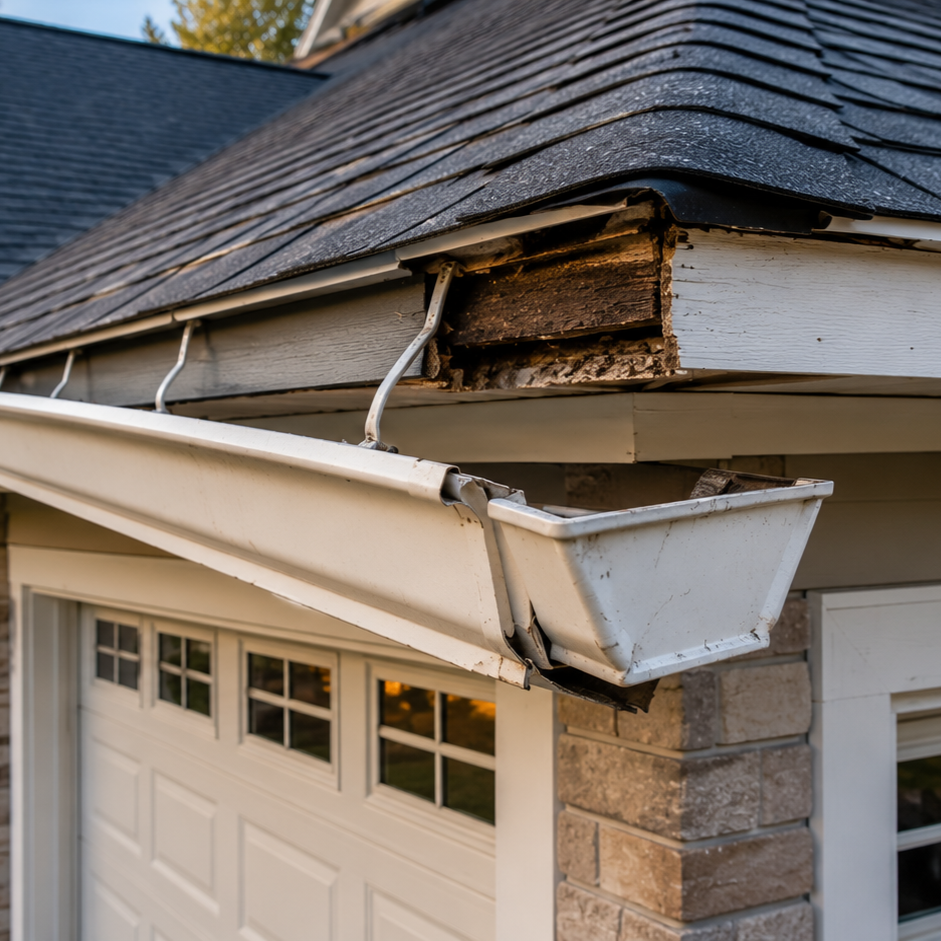
The physics matter. When wet snow sits on a micro-mesh gutter guard, it adds roughly 20 pounds per cubic foot of weight to the system. If the snow partially melts and refreezes, the resulting ice can bond to the mesh and create a solid bridge across the gutter opening. Water from the next melt cycle has nowhere to go. It backs up, finds the fascia behind the gutter, wicks into the wood, and starts rotting the structure you were trying to protect.
Freeze-thaw cycles are the hidden problem with certain guard designs. A foam or brush insert that's soaked with water from a November rain will expand slightly when temperatures drop below freezing—not enough to crack, but enough to shift. Do that 80-plus times in a Wisconsin winter, and the material fatigue adds up. Foam inserts in particular can compact over two or three winters, cutting their effective drainage capacity nearly in half.
Think of it like a kitchen sponge left on the counter through winter. It starts porous and flexible. After enough freeze-thaw cycles, it gets stiff, misshapen, and dense—worse at the one thing it's supposed to do.
The Five Types of Gutter Guards, Compared
Not all gutter guards work the same way, and they fail for different reasons. Here's how each type holds up in a Wisconsin climate:
| Type | How It Works | Wisconsin Performance | Best For | Weaknesses |
|---|---|---|---|---|
| Micro-mesh | Fine stainless steel mesh blocks debris while water flows through | Best overall for Wisconsin | Mixed canopies (maples, oaks) | Can ice over in severe cold; higher cost |
| Reverse curve | Water follows the curve into gutter; debris flies off edge | Good for leaves; struggles with small debris | Oak and ash canopies | Maple seeds and pine needles get stuck |
| Perforated cover | Aluminum or plastic cover with holes; debris sheds off the top | Moderate; holes pack with debris over time | Light-debris areas | Compacts with wet debris under freeze-thaw |
| Foam insert | Porous foam sits inside the gutter; debris stays on top | Poor in Wisconsin winters | Dry climates only | Compacts, retains moisture, grows mold |
| Brush insert | Cylindrical brush sits in the gutter; debris catches on the bristles | Poor to fair | Dry, low-debris areas | Bristles trap small debris; hard to clean |
The pattern is predictable. Designs that rely on surface tension or gravity to self-clear perform better in Wisconsin than anything that stays wet. Wet inserts freeze. Frozen inserts block. Blocked gutters back up onto the fascia and foundations.
Micro-mesh guards with stainless steel mesh in the 50-micron range consistently outperform other designs in cold-climate applications. They keep debris out while allowing water through—and unlike foam or brush, there's no porous material to saturate and freeze solid. Cost is the tradeoff. Micro-mesh systems typically run $15–$35 per linear foot installed, compared to $4–$8 for basic perforated covers or $2–$5 for foam inserts. On a home with 150 linear feet of gutters, that's $2,250–$5,250 for micro-mesh versus $600–$1,200 for screen covers.
What Gutter Guards Cannot Do (Even the Good Ones)
No gutter guard eliminates maintenance. The question is whether they reduce it meaningfully.
Micro-mesh guards in good condition can extend the cleaning interval from once or twice a year to once every two to four years for most homes. That's real. But they don't erase the need entirely—particularly with the debris types that perform worst against any guard design.
Cottonwood fluff is the worst offender in Wisconsin. Those white, cotton-like seeds that coat everything in early June can paste themselves flat across even fine micro-mesh. They're lightweight enough that they don't blow off and small enough that they don't slide away. A cottonwood-heavy yard needs mesh cleaning at least once a year, even with premium guards.
Maple samaras—the helicopter seeds—pack into reverse-curve guards and some mesh designs with enough force to survive rain and wind. One mature silver maple can drop 14,000 seeds over a two-week window. On a house without guards, those seeds wash through. On a house with surface-tension guards, many of them lodge in the channel between the guard and the fascia.
Pine needles are another problem. Their narrow diameter lets them slip through larger-mesh guards and accumulate inside the gutter, where they compact into a mat that's harder to remove than loose debris.
If your yard has cottonwoods, heavy maples, or mature pines, plan on cleaning your gutters regardless of what guard you install. Just less often.
How Ice and Snow Load Affect Gutter Guards
Wisconsin roofs carry real snow loads in serious winters—30 to 40 pounds per square foot for heavy wet snow. Gutters aren't designed to carry that weight, and gutter guards add their own complication: they can trap snow that would otherwise slide off an open gutter, increasing the load on the hangers and the fascia behind them.
Solid-top micro-mesh covers let snow slide off without bridging across the opening. Open mesh holds snow in suspension until it melts—and if it refreezes before draining, you've got an ice plug. That plug blocks drainage entirely. Meltwater from the roof has nowhere to go except backward under the shingles, which is exactly what gutters are supposed to prevent.
Ice also creates a structural problem that people don't notice until spring. A 150 linear foot gutter packed solid with ice can add 300 to 400 pounds of load to the hanger screws and the fascia board behind them. Those hangers aren't designed for that. By March, when the ice melts and the load releases, the gutter hangs visibly crooked—or has already torn a strip of fascia off the roofline with it. Foam and flat-screen designs accelerate this problem because they hold more snow on their surface.
Heated gutter guard systems address ice buildup directly, but they add cost: cable heating kits for 150 linear feet run $300–$600 for materials alone, plus installation. They're worth considering on homes with north-facing gutters that stay shaded through winter or on rooflines with recurring ice-dam problems year after year.
The One Thing Gutter Guards Can't Fix
Skip this section, and you'll spend money on the wrong problem. If your home has significant attic heat loss, no gutter guard design will stop ice dams from forming. Guards affect how water behaves at the roof edge. They don't affect how much snow is melting in the first place.
Ice dams form because heat escaping through the roof deck melts snow from underneath. That meltwater runs downhill, hits the cold eave where there's no heat source below, and refreezes. The dam grows from there. If your attic is poorly insulated—or if the insulation has gaps or compressed patches where it's lost its R-value—you'll have meltwater running to your eaves every time temperatures climb above freezing.
Good guards help manage that meltwater once it reaches the edge. They can't reduce the volume of the melt. Homeowners who install premium guards and still get ice dams every winter almost always have an attic problem, not a gutter problem: insufficient insulation, blocked soffit vents, or air leaks around recessed lights and penetrations letting warm air into the attic cavity.
Fixing insulation and ventilation does more to reduce ice-dam damage than upgrading gutter guards. If you're dealing with recurring ice-dam issues, have a contractor inspect your attic before spending money on heated guard systems.
What to Look For When Comparing Gutter Guard Products
If you are comparing products, these are the specs that actually matter in Wisconsin.
Mesh size. 50 microns or smaller for micro-mesh guards. Larger openings let in shingle grit and small debris that accumulates inside the gutter and eventually blocks drainage from the inside out.
Material. Stainless steel mesh holds up better than aluminum, which can stretch under snow load. The frame should be aluminum, not plastic—plastic gets brittle below 0°F and can crack under installation stress in cold weather.
Slope. Guards that pitch slightly toward the outer edge of the gutter shed water better than flat designs. On a flat surface, surface tension can hold water long enough to freeze.
Fastening method. Guards that attach to the gutter without lifting shingles are better for roof warranty preservation. Some reverse-curve systems require sliding under shingles, which voids certain manufacturer warranties.
Cold-climate warranty language. Look for warranties that cover product failure due to ice and snow—not just manufacturing defects. Some national brands specifically exclude freeze-thaw damage from their coverage.
Frequently Asked Questions
Some do. Micro-mesh guards with stainless steel mesh and solid aluminum covers hold up best in cold climates. Foam and brush inserts tend to compress, retain moisture, and fail within a few Wisconsin winters.
No. They reduce how often you need to clean—potentially from twice a year to once every two to four years. Homes under cottonwood trees or heavy maple canopies still need at least annual maintenance regardless of guard type.
If the wrong type blocks drainage or holds snow that bridges across the gutter opening, yes. A well-installed solid-top micro-mesh guard on a house with good attic insulation shouldn't contribute to ice-dam formation. Open-mesh and foam designs are more vulnerable.
Installed cost ranges from about $4 to $8 per linear foot for basic screen guards to $15 to $35 per foot for premium micro-mesh systems. A 150-linear-foot home could pay $600 to $5,250, depending on type and installer.
For most homeowners, mid-range or premium micro-mesh guards pay off over time through reduced cleaning costs and fewer water-damage repairs. Cheap foam or brush inserts usually aren't worth it—they often need replacement within three to five years.
Micro-mesh with 50-micron openings is the most reliable choice for maple-heavy yards. No guard handles samaras perfectly, but micro-mesh minimizes what gets through. Expect to clear the top of the guard once each spring after seed drop.
Schedule an estimate — Craftsman Exteriors handles gutter guard installation across Madison, Verona, Fitchburg, Middleton, Sun Prairie, and southern Wisconsin. We'll assess your canopy, roof pitch, and existing gutter condition to recommend what will actually perform on your specific house. Call (608) 975-5747.
