
How Does Hail Damage Siding?
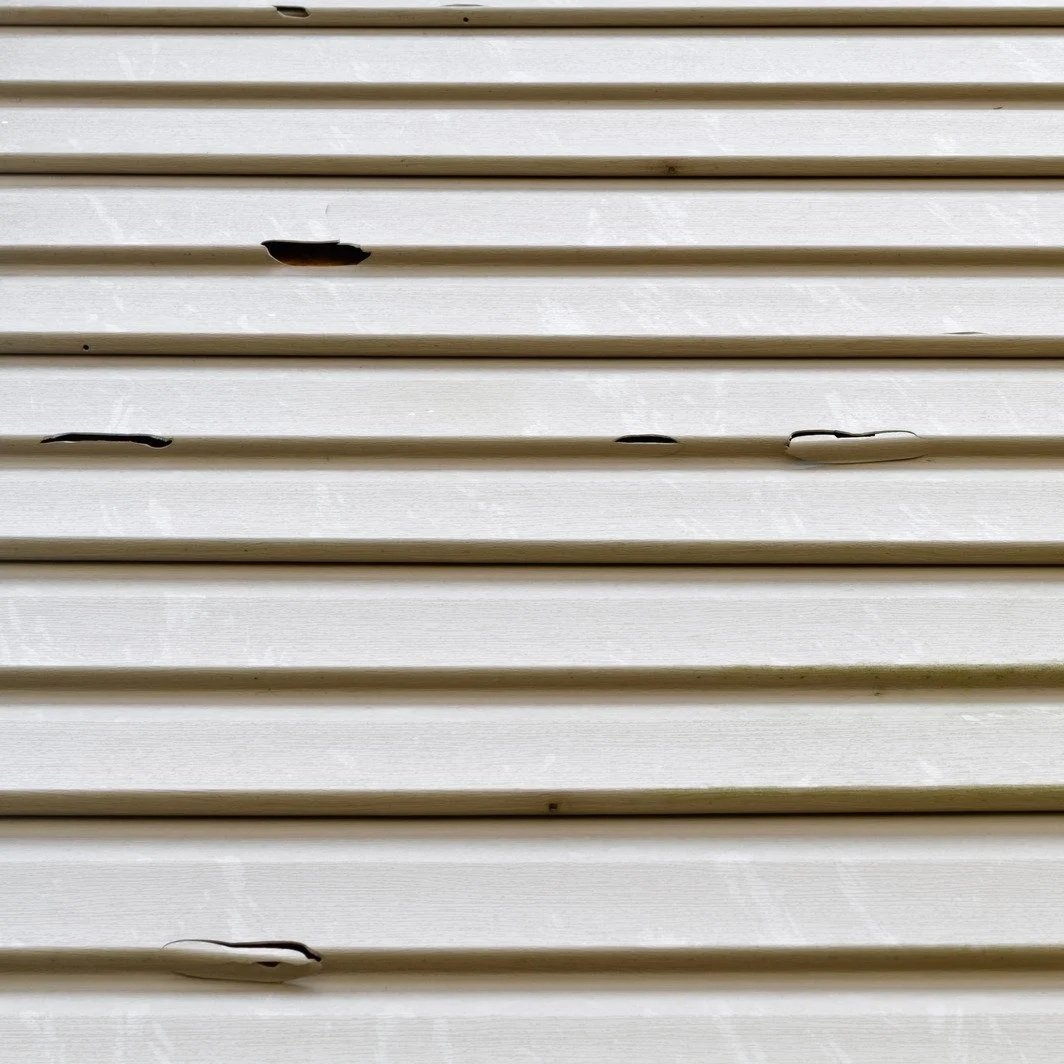
You walked the yard the morning after the storm and didn't find anything obvious—windows intact, gutters still hanging straight, no caved-in panels. Three weeks later, you're standing in your living room staring at a dark stain creeping down the drywall next to the window. The hail didn't need to punch a visible hole in your siding to cause that. That's the trap with hail damage: the failure is slow, quiet, and almost always hidden until water's already inside the wall.
What Hail Actually Does to Siding at the Moment of Impact
Hail doesn't damage siding in one dramatic way. It damages it in four different ways, depending on stone size, velocity, and what the siding is made of—and most homeowners only know to look for one of them.
Denting and deformation. A hailstone 1 inch in diameter hits the siding at roughly 25 mph. At 1.5 inches—common in a moderate spring storm—velocity climbs toward 40 mph. That's enough energy to permanently deform aluminum and thicker vinyl panels. You'll see round dents, sometimes with a chalky white area at the center where the surface coating fractured. But the dent isn't really the problem. Deformed siding no longer lies flat against the sheathing the way it was designed to. That gap—even 1/8 inch—creates a channel where wind-driven rain travels horizontally and works behind the panel.
Fracture and cracking. Vinyl siding gets brittle once temperatures drop below about 20°F. In spring, when hail typically arrives, overnight lows can still swing that cold. A hailstone that would merely dent vinyl at 50°F can split a panel clean through at 28°F. The crack doesn't have to be obvious. It can run along a seam, along a nail hem, or at a corner where the panel bends. Water follows cracks the same way it follows any gap—without hesitation.
Surface erosion without visible damage. This is the one most people miss entirely. Hailstones don't just hit flat—they hit and skid across the surface. That skidding motion acts like sandpaper dragged across a car's clear coat. It removes the UV-protective coating from vinyl, strips the painted finish from fiber cement, and gouges the wood-grain treatment from LP SmartSide panels. From 15 feet away, the siding looks fine. Up close, the surface is roughened, the finish is gone, and now every freeze-thaw cycle is attacking an unprotected substrate instead of a sealed one.
Fastener pull-through. Hard to spot without putting hands on the siding. A direct strike to the nail head can deform the slot just enough that the panel below loses its lock. You won't see it from the yard. You'll feel it—press lightly on the panel, and it moves more than it should. That looseness lets wind cycling do the rest, working the panel progressively away from the sheathing with each storm.
Think of it like a car after a hailstorm. The body has hundreds of dents, but the paint looks okay. And it is okay—today. But the clear coat's gone in spots, and within a season, the paint starts oxidizing exactly where the clear coat was removed. Siding fails the same way. The surface damage is invisible until the material underneath starts absorbing moisture, which it was never designed to handle.
How Damage Differs by Siding Material
The same hailstorm does completely different things to different siding materials. Your job after any significant storm is to look for the right failure type, not just the most obvious one.
Vinyl Siding
Vinyl's the most common residential siding, and it shows hail damage in two ways: dents and cracks. Dents are easier to spot—circular or oval depressions, usually with a whitish bruise at the center where the surface finish fractured. Cracks are harder because they often appear at the nail hem (the top edge of each panel) or along vertical seams. Run your hand along the seams after a storm. Any roughness, any panel flex that doesn't feel right, warrants a ladder.
Temperature at time of impact matters more than most people realize. Vinyl struck during a cold-overnight, spring-morning storm will show far more cracking than the same-size stone hitting on a warm afternoon. A 1-inch hailstone that dents at 55°F may crack a panel clean through at 30°F.
And here's the practical point: a dented vinyl panel isn't necessarily compromised. But cracked vinyl is always a water entry point. Don't caulk it—caulk fails in the first full freeze-thaw cycle. The panel needs to come off and be replaced.
Fiber Cement Siding (James Hardie and Similar)
Fiber cement doesn't dent. It chips and fractures. When hail strikes it, the factory coating cracks and small pieces break away, exposing the raw cement substrate beneath. That damage looks like irregular craters—not round dents—with sharp, not smooth, edges. It's easy to mistake for old paint loss until you look closer.
Raw fiber cement absorbs water aggressively. A single season of freeze-thaw cycling can turn a small chip site into a panel that's swelling and cracking from the inside out—and Wisconsin's 100-plus freeze-thaw cycles per winter don't give that process much time to slow down. Spot it in the fall, and it's a minor repair. Miss it through winter, and it's a panel replacement in spring.
LP SmartSide and Engineered-Wood Siding
LP SmartSide holds up better than vinyl against moderate hail. It carries an impact-resistance rating of 24 on the ASTM D2444 scale, compared to 12 for standard vinyl—a real difference in a 1-inch-hail storm. But it's not invincible. Stones at 1.5 inches or larger can crack the factory coating and expose the engineered-wood substrate underneath. Once moisture gets into that substrate at an unprotected edge or crack, the panel swells and delaminates. That process takes a full two winters to become obviously visible, which makes it easy to miss during a quick post-storm inspection.
After any significant storm, check LP SmartSide panels for paint cracking along horizontal joints and at corners. The damage looks subtle—a few hairline cracks in the finish—but catching it early is the difference between spot-painting and panel replacement.
Wood Siding
Traditional wood siding—cedar, pine, hardboard—takes hail damage as surface bruising, split grain lines, and raw-wood exposure wherever a stone gouged through the finish. Unsealed raw wood absorbs moisture immediately. Painted wood that's been hit will blister and peel at impact sites within months, and each blister draws in more moisture. Older wood siding is worst off because the finish is already partially compromised before the storm ever arrives.
What Hail Damage Looks Like Up Close
From the street, your siding may look completely fine. That's exactly why insurance adjusters climb ladders.
Walk each elevation with a flashlight and look for round dents with white or chalky centers—that's stress-cracking of the surface finish on vinyl and aluminum. On fiber cement, you're looking for crater-like impact marks with sharp edges, not smooth. Run a gloved hand across the surface—if it feels rougher than you remember, surface erosion has happened even if nothing is visibly cracked. Hold the flashlight at a low angle along seam lines and look for cracks running parallel to the seam, especially at the nail hem. And press lightly on each panel. Any unusual flex or movement means the panel's lost contact with the sheathing.
One more thing: check your soft targets first. If your gutters have round dents, your garage door has dimples, or your A/C unit cover is pocked—all materials that show hail impacts clearly—the siding on that same elevation almost certainly has damage worth documenting.
Hail follows the storm path, so south- and west-facing elevations usually take the worst of it. If one side of your house looks clean, that doesn't mean the others do.
Why Hail Damage Gets Worse Before You Notice It
Hail damage doesn't announce itself. A cracked panel passes one rainstorm without leaking. It passes a second. By the third, water's inside the wall. That's because water entry behind siding isn't driven by gravity alone—it's driven by wind pressure. A 30 mph driving rain can push water 3 to 4 inches behind a cracked panel. Once it's back there, it travels down the sheathing until it finds a horizontal surface: a window flashing, a sill plate, a rim joist. That's where it pools.
Then winter arrives. Water that got into a wall cavity in October refreezes in November. Water expands roughly 9% when it turns to ice, which means cracks widen, fasteners loosen, and seams that were barely open become fully gapped. What started as a small impact crack in October is a gap in April.
This is why hail damage always ends up costing more than it would have if it had been caught right away.
When to Get an Inspection vs. Handle It Yourself
If your area saw hail larger than 3/4 inch—about the diameter of a dime—get a professional inspection. Stones that size carry enough energy to damage siding at any temperature, and the failure pattern is often irregular enough that a ground-level walk-around misses most of it.
Smaller hail but older vinyl, or any home with existing cracks or gaps from past repairs, also warrants an inspection. Pre-existing damage plus new stress from impact creates failure that isn't visible from outside and doesn't show up in a quick self-check.
Your homeowner's insurance policy typically covers hail damage under windstorm coverage. Most policies give you one to two years to file from the date of the storm. But documenting damage while it's fresh—before additional weather events blur the picture—is always to your advantage. An adjuster who sees clear, recent impact marks connects them directly to a specific storm. One who sees aged damage mixed with newer marks has grounds to dispute whether any of it is storm-related.
Repair or Replace? How to Decide After a Hail Storm
Not every hail-damaged panel means a full replacement. Three things determine which direction you go: the material type, how widespread the damage is, and how old the existing siding is.
Spot repairs work when damage is confined to a few panels on one elevation, the siding's less than 10 years old, and you can still get matching material. Individual vinyl panels can often be swapped if the product line's still manufactured. A single cracked fiber-cement board can come off without touching adjacent panels.
Full replacement makes more sense when damage covers multiple elevations, the siding's 20-plus years old, or the material's been discontinued and can't be matched. A mismatched patch on the front elevation hurts curb appeal—and it can complicate an insurance claim if the adjuster determines the siding was already at the end of its service life before the storm hit.
If you're heading into a full replacement anyway, it's worth looking at what you're replacing it with. Upgrading from standard vinyl to LP SmartSide or fiber cement adds upfront cost but cuts the odds of repeating this whole process after the next spring hailstorm.
Document Before You Call Your Insurer
Walk your home within 48 hours of the storm and photograph every damaged panel—all four elevations. Get close, include something for scale (a coin, a tape measure), and note the date. Check your gutters, A/C unit, and garage door first: if those soft surfaces show impact dents, the siding on the same elevation almost certainly does too.
That documentation matters because adjusters work on a timeline. A claim filed with dated photos and clear impact patterns ties the damage to a specific storm. A claim filed four months later with no photos may end up in a dispute about whether the damage is weather-related or just maintenance the homeowner ignored.
Frequently Asked Questions
No. Vinyl may show only hairline cracks at seams with no denting at all. Fiber cement shows chipping, not dents. Surface-finish erosion is invisible until water entry reveals it months later. Don't rule out hail damage because you don't see obvious dents.
Hailstones 3/4 inch or larger can damage vinyl under most conditions. In cold weather—below 40°F—even 1/2-inch hail can crack brittle vinyl at seams and corners.
A direct hit to the nail hem can deform the locking slot enough that the panel below loses its grip. That panel then works progressively looser through wind cycling and freeze-thaw movement until it's no longer secured.
If the damage covers a substantial portion of an elevation, yes. Most homeowner policies cover hail under windstorm coverage. Have a contractor document the damage independently before the adjuster visits—that gives you a baseline to compare against their findings.
Hail damage concentrates on the storm-facing elevations, shows up on multiple surfaces simultaneously (gutters, A/C, siding), and has a consistent impact pattern matching hailstone size. Normal wear is gradual, appears evenly across all elevations, and doesn't tie to a specific date.
No. Cracked or deformed siding that lets water in will get significantly worse through freeze-thaw cycling. Water entering a wall cavity in the fall becomes ice that widens cracks by spring. Getting it addressed before cold weather sets in is always the right call—waiting makes the repair bigger.
Schedule an estimate — Craftsman Exteriors handles hail and storm siding damage across Madison, Verona, Fitchburg, Middleton, Sun Prairie, and southern Wisconsin. We inspect all siding types, document damage for insurance claims, and complete repairs before winter compounds the problem. Call (608) 975-5747.
