
How Long Do Replacement Windows Last?
You noticed it last January — a faint fog between the panes of your living room window that wouldn't wipe away, because it wasn't on the surface. It was inside the sealed glass unit, trapped there after the argon gas leaked out and moisture crept in. The window is only 18 years old. You're wondering if that's supposed to happen this fast.
It depends on what was installed, how it was installed, and what it's been through.
Replacement windows don't all age the same way. A quality vinyl double-pane window installed correctly can hold up for 30 to 40 years. A cheap unit with a foam seal and no proper shimming might show seal failures within 12 years. Understanding what drives window lifespan — and what tends to fail first — saves you from replacing windows before they're done or ignoring ones that have been failing quietly for years.
What Actually Determines How Long a Window Lasts
Window lifespan isn't a single number. It's the sum of three overlapping factors: the frame material, the insulated glass unit inside it, and the quality of the installation.
The frame is what most people think about when they hear "window replacement." Vinyl, fiberglass, aluminum, and wood — each material has a different relationship with temperature swings, UV exposure, and moisture. In a climate that swings from -15°F in January to 90°F in August, that relationship matters more than it would in a mild coastal region.
The insulated glass unit — the IGU — is the sealed assembly of two or three panes with a gas fill between them. This is usually what fails first, long before the frame shows any problems. The seal is a butyl-based perimeter tape that bonds the panes together and traps argon or krypton gas inside. When that seal fails, gas escapes, outside air moves in, and moisture condenses inside the unit where you can't wipe it off.
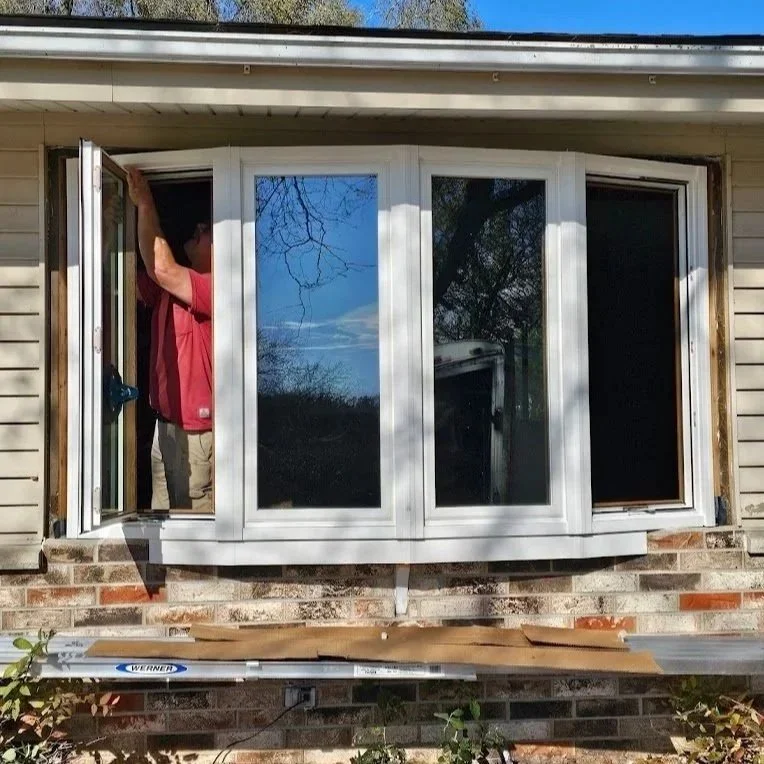
Installation quality determines how long both the frame and the IGU hold up. A window shimmed out of level puts constant stress on the frame corners. One that isn't properly flashed at the rough opening will let water wick behind the sill, freeze, and pry the window out of square over multiple winters. Poor installation can cut a 30-year window's effective life to 15 years.
Lifespan by Frame Material: Vinyl, Fiberglass, Aluminum, and Wood
Vinyl windows are the most common replacement option and typically last 20 to 40 years. Vinyl — polyvinyl chloride — doesn't rot, corrode, or need painting. The downside in cold climates is thermal expansion and contraction. Vinyl expands and contracts at a much higher rate than fiberglass: roughly 3 inches of movement per 100 feet of material across a typical temperature swing. Over decades of freeze-thaw cycling, repeated movement loosens the weatherstripping and can cause corners to separate on lower-quality frames.
Quality matters significantly within the vinyl category. Thicker-wall extrusions with internal reinforcing chambers handle thermal movement better. Single-chamber vinyl frames — the cheap end of the market — have less structural integrity and tend to warp or go out of square faster.
Fiberglass windows are more dimensionally stable than vinyl because fiberglass expands and contracts at nearly the same rate as glass itself. That compatibility means the seal between frame and IGU faces far less stress over temperature cycles. A well-made, correctly installed fiberglass window can last 40 to 50 years. The trade-off is cost — fiberglass windows typically run 20 to 30% more than comparable vinyl.
Aluminum windows are structurally durable but thermally problematic. Aluminum conducts heat and cold extremely efficiently, which means an aluminum frame in a hard winter is a cold bridge running straight through your wall. Condensation forms on the interior surface, which leads to mold on the surrounding drywall and paint. Modern aluminum windows use thermally broken frames — a plastic strip separating the interior and exterior aluminum sections — but even these underperform in sub-zero temperatures. Aluminum frames typically last 20 to 30 years structurally, but in cold climates, they often get replaced for performance reasons before they structurally fail.
Wood windows are the longest-lasting option when maintained — original wood windows from the 1920s still function on many older homes. But "properly maintained" is the critical phrase. Wood requires painting or sealing every few years. When the exterior surface isn't maintained, water infiltrates the grain, freezes in winter, and begins the rot cycle. An unmaintained wood window can begin delaminating within five to seven years of the last coat of exterior paint. Well-maintained wood can last 30 years or longer. Most homeowners get 15 to 25 years from wood windows before they need full replacement.
The Part That Usually Fails First: The Insulated Glass Unit
Frame material gets a lot of attention. The insulated glass unit typically reaches the end of its useful life before the frame does.
Here's the mechanism: the seal between the panes is a double barrier — a primary desiccant-filled spacer that absorbs moisture, and a secondary sealant at the perimeter. Argon or krypton gas fills the cavity between panes. That gas serves two purposes: it slows heat transfer better than air (argon is about 34% less conductive than air), and it displaces moisture.
When the seal fails, the sequence goes like this. The gas escapes first — slowly, sometimes over years. Outdoor air moves into the cavity. That air carries humidity, and the desiccant in the spacer absorbs it until the desiccant is saturated. After that, moisture condenses on the interior surface of the outer pane whenever the temperature drops — the same way a cold glass sweats on a humid day. You see a fog or haze between the panes that won't wipe off.
The IGU itself typically carries a 10- to 20-year warranty from the manufacturer. Real-world performance varies. Seal failure at years 12 to 15 is common in windows installed in the lower price range. Higher-quality units with warm-edge spacers and structural silicone sealant hold up longer. Warm-edge spacers — made from foam, rubber, or composite rather than aluminum — reduce the temperature differential at the edge of the glass, which reduces condensation at the perimeter and extends seal life.
Think of the IGU seal like a caulk joint around a bathtub. The joint doesn't fail from age alone — it fails from constant movement. Every time the frame expands and contracts, the seal flexes. The more movement (cheap vinyl frame, aluminum frame, poor installation), the faster the seal fatigues. A fiberglass frame with a warm-edge spacer moves less and asks the seal to flex less.
What Shortens Window Lifespan in Cold Climates
A few specific conditions accelerate window failure in northern climates.
Repeated freeze-thaw cycling at the sill. Ice formation at window sills and corners is a sign of air infiltration — and where air gets in, water follows. Water expands 9% when it freezes. That's enough to crack grout joints in tile and pry brick veneer off foundations. It does the same damage to window frame corners and sealed edges over the years of repeated cycles.
Improper rough-opening flashing. Water that gets behind the window installation and saturates the rough-opening framing doesn't just damage the frame — it damages the structure. A window sitting in wet, rotting wood will shift as the wood decays. That movement puts the IGU under stress it wasn't designed to handle.
South- and west-facing sun exposure. UV degrades the sealant compounds in IGUs over time. Windows with south and west exposures receive a higher UV load per day, which accelerates seal degradation. This is partly why the fogged window in your living room is often the south-facing one. Modern low-emissivity (low-E) glass coatings block a significant portion of UV rays, which also helps prevent fading in carpets, furniture, and flooring near the window. When IGU seals fail on older windows without low-E coatings, homeowners often notice sun-bleached flooring or furniture as an early indicator of the absence of UV protection.
Incorrect shimming at installation. A window shimmed out of level or out of plumb has stress built into it from day one. The sashes won't operate smoothly, the corners carry uneven load, and the frame may warp over time. A properly installed window is level, plumb, and square, with shimming distributed to avoid point-loading any corner.
How to Get More Life Out of Your Replacement Windows
Windows don't need much attention, but a little upkeep makes a real difference over 30 years.
Inspect and re-caulk annually. Check the exterior caulk line where the window frame meets the siding or brick mold. Cracked or missing caulk is the most common entry point for water. A $5 tube of exterior caulk applied promptly prevents the kind of water infiltration that rots rough-opening framing.
Clean the frame tracks and weep holes. Double-hung window tracks accumulate dirt and debris that accelerate hardware wear and attract moisture. Weep holes at the sill — small drain slots in vinyl frames — clog with debris and back up water. Clean them with a toothpick or small brush once a year.
Lubricate moving parts. Hinges, balance springs, and lock hardware last longer with periodic lubrication. Use silicone spray, not WD-40 (which attracts dirt). Stiff or grinding hardware is a warning sign — address it before it damages the frame.
For wood windows: repaint before it's due. Don't wait for visible checking or bare wood. Repaint wood windows every four to five years, paying close attention to the bottom rail and sill where water pools. A fresh topcoat over sound paint is a 20-minute job. Stripping and repainting weathered bare wood takes a weekend.
Signs Your Replacement Windows Are Failing
Several signs tell you a window's useful life is ending — worth knowing before the problem escalates.
Fogging or haze between the panes is the clearest sign of IGU seal failure. The window has lost its insulating gas and will perform more like a single-pane unit until it is replaced.
Condensation on the interior glass surface in winter isn't necessarily a window failure — it can indicate high indoor humidity. But persistent condensation around the frame perimeter, especially at the corners, often indicates air infiltration where the window meets the wall.
Drafts along the sash or frame indicate weatherstripping failure. Weatherstripping is a maintenance item — it can be replaced without replacing the window. If the draft persists after a weatherstripping replacement, the frame may have shifted.
Difficulty opening, closing, or locking often means the window has moved out of square — from frame warping, structural movement in the house, or both. On double-hung windows, balance springs wear out over time and cause sashes to fall or resist movement.
Visible decay, cracking, or separation at frame corners means the frame itself is done. Vinyl frame corners that have separated, wood frames with soft spots when pressed, aluminum frames with seam corrosion — these mean full replacement, not repair.
Frequently Asked Questions
Quality vinyl windows typically last 20 to 40 years. The frame may outlast that, but the insulated glass unit inside usually shows seal failure between 15 and 25 years, depending on installation quality and climate exposure.
Yes. An IGU can be replaced without replacing the entire frame if the frame is in good condition and the new unit matches the dimensions. This is often called "glass replacement" or "IGU replacement." It typically costs $150 to $400 per unit — versus $400 to $800 or more for a full window replacement.
Sometimes. Replacing single-pane aluminum windows from the 1970s with double-pane vinyl can cut window-related heat loss significantly. The EPA estimates savings of $101 to $583 per year replacing single-pane windows with ENERGY STAR units. Replacing a 15-year-old vinyl window that still has intact seals with a new vinyl window saves very little energy — the bigger lever is air sealing around the frame, not the glass itself.
Fiberglass consistently outperforms vinyl in cold climates. It's more dimensionally stable under temperature swings, which puts less stress on the IGU seal and frame corners. Fiberglass costs more upfront but tends to hold up significantly better at the 25- to 35-year mark.
If they were all installed at the same time and you're seeing failures in multiple units, replacing them all at once is usually more cost-effective — consistent installation conditions, possible multi-window pricing, and one installation job instead of two. If only one or two are failing and the rest are solid, replacing just those makes sense.
Signs of improper installation include: sashes that are hard to operate from day one, visible gaps at the interior trim even after caulking, condensation running down into the rough-opening framing, and windows that go out of square within a few years. A proper installation includes shimming at the sill, jambs, and head; air sealing at the perimeter; and exterior flashing at the rough opening.
Schedule an estimate — Craftsman Exteriors handles window replacement across Madison, Verona, Fitchburg, Middleton, Sun Prairie, and southern Wisconsin. We install and replace vinyl, fiberglass, and hybrid windows with proper rough-opening flashing and air sealing included. Call (608) 975-5747.
