
Are Triple-Pane Windows Worth It in Wisconsin?
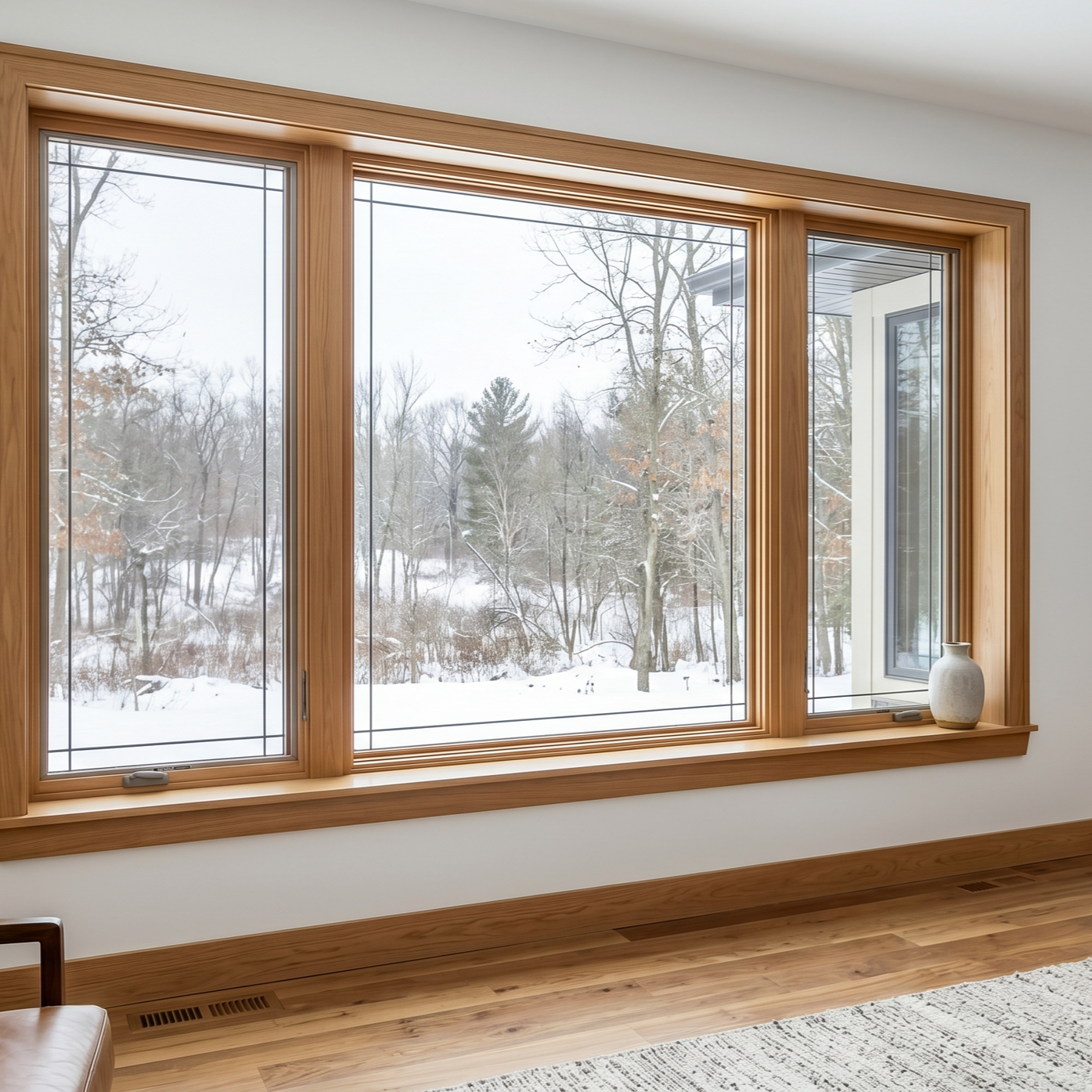
It's January, somewhere around 12°F outside, and you're standing next to the large picture window in your living room. You can feel the cold radiating off the glass from three feet away. Touch the glass, and it stings. There's frost built up in the bottom corners — on the inside. That's not a sealed-unit failure. That's just a double-pane window doing what it does in a Wisconsin winter: conducting cold straight through.
If you have been pricing window replacements, you have probably seen triple-pane options running 15–30% more than double-pane equivalents. The sales pitch sounds simple: more glass, better insulation, lower bills. It's not that simple. Triple-pane windows are worth it in Wisconsin — but not for every window in every house, and not for the reasons most people assume.
Here's what the physics actually means, what the cost difference buys you, and how to figure out whether the upgrade makes sense for your situation.
What the Numbers Mean: U-Factor, R-Value, and Why Cold Climates Change the Math
A standard double-pane window has an R-value of roughly 2–3. Triple-pane pushes that to 5–7. Wisconsin code requires R-49 in attic insulation — windows are always the weakest thermal link in the building envelope, regardless of how many panes you install.
When window manufacturers talk about thermal performance, two numbers come up constantly: U-factor and R-value. Understanding them matters before you spend any money.
U-factor measures how much heat escapes through the window per hour, per square foot, per degree of temperature difference. Lower is better. A quality double-pane window with low-emissivity (low-E) coating and argon fill hits a U-factor around 0.25–0.30. A triple-pane equivalent drops to 0.15–0.22. That's a roughly 30% improvement in heat retention — real, but not as dramatic as some advertising implies.
R-value is the inverse — resistance to heat flow. A low-E argon double-pane window lands around R-3.0 to R-4.2. Triple-pane with dual low-E coatings and argon fill hits R-4.5 to R-6.0. High-end triple-pane units using krypton gas in narrower cavities reach R-5.5 to R-7.5.
Here's where Wisconsin matters specifically: the U.S. Department of Energy places most of the state in climate zone 6, one of the coldest residential zones in the contiguous 48 states. Zone 6 in Wisconsin averages around 7,000–7,500 heating degree days per year. Compare that to Charlotte, North Carolina, at roughly 3,000, or even Chicago at about 6,100. More heating degree days means more hours when cold is trying to push through your glass — which is exactly when the difference between U-0.28 and U-0.18 adds up to real dollars on your utility bill.
Think of it this way: a double-pane window in Wisconsin is like wearing one wool sweater in a January windstorm. It helps — a lot — but you can still feel the cold working through it. Triple-pane adds a second air gap—a second sweater. The cold has to cross two thermal barriers instead of one before it reaches your interior glass surface.
The gas fill matters, too. Argon is six times denser than air, which slows the convection currents that transfer heat across the gap. Krypton is 12 times denser than air and outperforms argon in narrower cavities — but it costs more. Most triple-pane windows use argon in both chambers, which is plenty for Wisconsin applications.
The Cost Premium — and Whether It Pays Back in Wisconsin
Triple-pane window replacement typically runs 15–30% more than an equivalent double-pane unit. On a per-window basis, expect to add $100–$400, depending on size and frame material. A full-house replacement of 20 windows might cost $3,000–$8,000 more for triple-pane than for quality double-pane.
That premium buys a real reduction in heating bills — but the numbers require honest expectations. Studies from the Pacific Northwest National Laboratory found HVAC savings of 3–18% during the heating season when upgrading from double-pane to triple-pane windows. At the lower end (3%), a home spending $2,400 per year on heating saves about $72. At the upper end (18%), that same home saves $432. The wide range comes from how leaky your existing windows are, how big your window-to-wall ratio is, and which directions your windows face.
Payback period runs 12–18 years on average. That's a long time, and it's worth being honest about it.
Two things shift the math in Wisconsin's favor.
The IRA federal tax credit. Energy-efficient window replacements that meet ENERGY STAR Most Efficient criteria qualify for a 30% federal tax credit, capped at $600 per year for windows and skylights. On a $6,000 upgrade, that's $600 back at tax time, which compresses your payback by a couple of years.
Wisconsin Focus on Energy rebates. Many Wisconsin utilities offer additional rebates for ENERGY STAR certified window replacements — typically $5–$15 per window. Not life-changing, but it adds up when you're replacing 15 or 20 windows.
And Wisconsin's climate makes triple-pane windows valuable in ways payback calculations alone don't capture. When the interior glass surface stays 8–12°F warmer on a -10°F night, you stop getting frost in the corners, you stop getting condensation that soaks into your sills and trim, and that wall stops feeling like a cold zone. That comfort benefit is real, even if it doesn't show up neatly in a spreadsheet.
Where Triple Pane Wins Outright: Cold-Weather Performance
The strongest argument for triple pane isn't the energy bill — it's condensation control.
When warm indoor air hits a cold glass surface, moisture condenses. In Wisconsin winters, a single-pane window is basically a water magnet. Double-pane windows are much better, but on the coldest nights (sub-zero, with interior humidity around 35%), even double-pane glass can hit the dew point on the interior surface. Triple-pane keeps the interior glass surface noticeably warmer — often 8–12°F warmer than an equivalent double-pane on the same frigid night — which keeps it above the condensation threshold.
Over the years, this matters for more than comfort. Condensation that repeatedly soaks into your window sill and trim boards causes rot. It feeds mold in the corners. It's slow damage, and most homeowners don't connect the dots between their double-pane windows and the wood rot they keep finding until they pull the trim during a replacement project.
Wisconsin's freeze-thaw cycle compounds this. The state gets 40+ inches of annual snowfall across most of its southern tier and runs through more than 100 freeze-thaw cycles per winter — days when temperatures cross 32°F on the way up and on the way down. Each cycle puts thermal stress on the window assembly. The spacer bar at the edge of the glass conducts far more heat than the center of the glass — a weak point called edge-of-glass thermal bridging. Triple-pane units with warm-edge spacers (structural foam rather than aluminum) handle that junction better than double-pane units with conventional aluminum spacers. In a climate that crosses the freezing mark more than 100 times a winter, that edge performance matters.
One more factor that most articles skip: solar heat gain. In Wisconsin, south-facing windows can pull in meaningful passive solar heat on clear winter days. Triple-pane windows can be specified with a higher solar heat gain coefficient (SHGC) on south exposures — capturing winter sun while still keeping heat in at night. It works well, but you have to spec the right SHGC for each orientation. Order triple-pane windows without thinking about this, and you may end up with a low-SHGC north-facing spec on your south wall, blocking the solar gain you were counting on.
Noise Reduction — Good, But Not as Simple as You Think
Triple-pane windows reduce noise better than double-pane windows. But pane count is only part of the story.
Standard triple-pane windows with three identical panes of glass hit an STC (Sound Transmission Class) rating of about 28–35, versus 26–30 for typical double-pane. That 2–4 point difference is real but modest — most people wouldn't notice it. The bigger gain comes from asymmetric glass — using panes of different thicknesses, like 3mm/3mm/5mm instead of 3mm/3mm/3mm. Different thicknesses break up sound waves at different frequencies. A triple-pane with asymmetric glass and a laminated outer pane can reach STC 35–40. That's a difference you'd actually notice next to a highway.
If noise is your primary reason for upgrading, ask specifically about the glass thickness configuration. A standard triple-pane with uniform glass won't outperform a well-spec'd double-pane with laminated glass by nearly as much as the marketing suggests.
When Double Pane Is the Better Answer
Triple-pane isn't automatically the right call. There are real situations where a good double-pane makes more sense.
Weight. Triple-pane units are 30–50% heavier than equivalent double-pane. Older homes with deteriorated sills or undersized rough openings may need structural work before they can carry the added load — which adds cost that can wipe out the energy benefit entirely. Get the rough opening and structural condition looked at before you commit.
Short-term ownership. Planning to sell in five to seven years? The payback math works against you. Quality double-pane with low-E argon gets you 80% of the thermal performance at lower cost, and appraisers rarely capture the triple-pane premium dollar-for-dollar.
Windows with limited exposure. A small bathroom window facing a covered porch doesn't need triple-pane. Put the premium where it counts: north-facing windows with no solar gain, large picture windows in main living spaces, and bedroom windows where nighttime cold infiltration is keeping people awake.
Retrofit fit issues. Replacing windows in frames built for double-pane units can require frame modification for triple-pane units, adding labor. "Thin triple" technology — triple-pane units built to the same depth as standard double-pane — has solved this in many cases, but not all. Confirm frame compatibility before pricing the project.
Double Pane vs. Triple Pane: Side-by-Side Comparison
| Feature | Double-Pane (Low-E Argon) | Triple-Pane (Dual Low-E Argon) | Best For |
|---|---|---|---|
| U-factor | 0.25–0.30 | 0.15–0.22 | Triple for cold climates |
| R-value | R-3.0 to R-4.2 | R-4.5 to R-6.0 | Triple in zone 6 |
| Noise (STC) | 26–30 | 28–35 (standard) | Triple with asymmetric glass |
| Cost premium | Baseline | 15–30% more | Double for budget |
| Weight | Lighter | 30–50% heavier | Double for older frames |
| Condensation resistance | Moderate | Strong | Triple for Wisconsin winters |
| Payback period | — | 12–18 years (before credits) | Triple with IRA credit |
| Best use | Most homes, mild exposure | Large windows, north-facing, high-cold-zone | Situation-dependent |
What to Look for When You're Shopping
Performance labels are where most homeowners get confused. A few things worth knowing before you sign anything.
NFRC label, whole-unit U-factor. The National Fenestration Rating Council label shows the whole-unit U-factor, which accounts for frame performance. Some manufacturers advertise "center-of-glass" U-factors that look great on paper but don't reflect how the window actually performs at the edges and frame — where most heat escapes. Compare whole-unit numbers only.
ENERGY STAR Most Efficient certification. For zone 6 (most of Wisconsin), ENERGY STAR requires a U-factor of 0.20 or lower. "Most Efficient" designation is the top tier and is the threshold for the 30% IRA tax credit. Confirm the specific model qualifies — not just the brand.
Argon vs. krypton fill. Argon is standard and appropriate for most Wisconsin applications. Krypton outperforms argon in narrow-cavity triple-pane units but costs noticeably more. For windows with standard 1/2-inch or 5/8-inch cavities, argon performs well. Krypton is most valuable in space-constrained thin-triple configurations.
Low-E coating placement. A double-pane window gets one low-E coating; a triple-pane gets two. The additional coating surface provides more control over heat transfer and solar gain. Ask about SHGC: higher SHGC (0.30–0.40) for south-facing windows, lower (0.20–0.25) for north and east, where solar gain is minimal.
Air leakage rating. The AL number on the NFRC label measures air infiltration, not heat conduction — and in Wisconsin, poor air sealing around the frame often causes more heat loss than the glass itself. A well-installed double-pane with good air sealing outperforms a sloppy triple-pane install every time. Who's installing it matters as much as what you're buying.
Frequently Asked Questions
For most Wisconsin homeowners replacing large windows in main living areas — especially north-facing windows or rooms where cold drafts are a problem — yes. The combination of better U-factor, condensation resistance, and the 30% IRA tax credit makes the premium defensible. For smaller windows, garage windows, or windows in rooms you rarely use, quality double-pane is usually the better value.
Expect to pay 15–30% more per window. On installed prices, that typically means an additional $150–$400 per window, depending on size and frame material. A full-house replacement of 20 windows might run $3,000–$8,000 more for triple-pane.
In most cases, yes. Triple-pane keeps the interior glass surface 8–12°F warmer than equivalent double-pane on cold nights, which usually keeps it above the dew point even at typical indoor humidity levels. If you're seeing frost on the corners of your windows in winter, triple-pane will solve that.
Typically, 12–18 years through energy savings alone. Factor in the 30% IRA federal tax credit and any Wisconsin Focus on Energy rebates, and you can get that closer to 8–12 years. Homeowners who stay in a house long-term and are replacing the whole house typically see the most value.
Not always. Thin-triple technology has made triple-pane units that fit conventional double-pane frames, reducing retrofit complexity. That said, triple-pane units are still 30–50% heavier, so the condition of the sill and structural rough opening matters. Have a contractor assess the existing framing before committing to triple-pane throughout.
Yes, and it often makes sense. Prioritize triple-pane for your largest, most exposed windows — living room picture windows, bedroom windows facing north, and any window where you currently feel cold radiating into the room. Double-pane is perfectly appropriate for smaller or more protected windows. That's not cutting corners — it's spending the premium where it actually does something.
Schedule an estimate — Craftsman Exteriors handles window replacement across Madison, Verona, Fitchburg, Middleton, Sun Prairie, and southern Wisconsin. We can assess your existing windows and rough openings, advise on which units warrant triple-pane and which don't, and spec windows that qualify for the IRA federal tax credit. Call (608) 975-5747.
