
Fiber Cement vs. Vinyl Siding: 7 Factors That Decide It
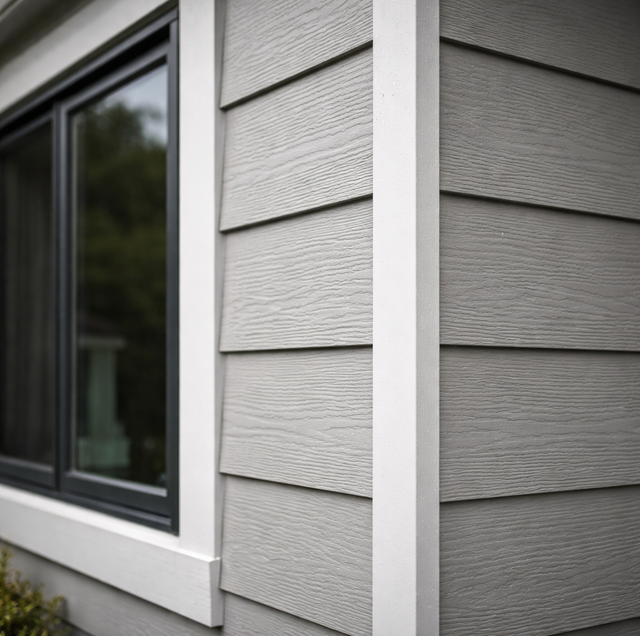
Two houses on the same block can wear completely different skins, and both be right. One owner wants the deepest wood-grain look money can buy and plans to stay for decades. The next wants solid protection at a friendly price and would rather never think about the walls again. Fiber cement and vinyl siding split along exactly those priorities, and the material that fits one goal often frustrates the other.
Quick Answer: Fiber cement is a dense cement-and-fiber board that resists fire, impact, and denting and takes paint like wood, but it is heavy and needs careful pro installation. Vinyl is a lighter PVC panel that costs less, installs faster, and never needs repainting, but it can crack under hard impact and warp near intense heat. Choose fiber cement for a premium, long-life exterior; choose vinyl for lower cost and near-zero upkeep.
What Each Material Actually Is
Before comparing them, it helps to know what you are buying. Fiber cement is a manufactured board made from Portland cement, sand, and cellulose fiber, pressed and cured into rigid planks or panels. The cement gives it hardness and fire resistance; the cellulose fiber keeps it from being brittle like plain concrete. James Hardie is the best-known brand, which is why installers sometimes call the whole category "Hardie board," but several manufacturers make it.
Vinyl siding is extruded from polyvinyl chloride, the same PVC family used in plumbing pipe, with additives that resist sunlight and lock in color. The panels are hollow and lightweight, formed to interlock and hang on the wall in overlapping courses. Because the color runs all the way through the material rather than sitting on the surface as paint, a scratch on vinyl shows far less than a scratch through painted material.
Durability and Impact Resistance
This is where the two diverge most sharply. Fiber cement is dense and hard, so it shrugs off the knocks that dent or puncture thinner materials: a stray ball, a ladder set against the wall, hail, or a lawnmower flinging gravel. It will not dent, and its rigidity means it does not oil-can or ripple across a large wall.
Vinyl is tougher than its reputation in everyday use, but it has two weak points. Hard, concentrated impact can crack a panel, and cold makes that worse because the plastic grows more brittle as temperatures drop, so a stone strike on a frigid morning is more likely to split a panel than the same strike in mild weather. Thicker, premium-grade vinyl handles impact better than the thin builder-grade product, so the gauge you choose matters as much as the material name.
Fire Resistance
Fiber cement is noncombustible. It will not ignite or feed a flame, which is why it is a common choice near grills, fire pits, and in areas where wildfire exposure is a concern. Vinyl, being a plastic, will melt and can burn when exposed to enough heat; a barbecue placed too close to a vinyl wall can distort the panels without any flame at all. For a homeowner weighing worst-case scenarios, this is one of the clearest advantages fiber cement holds.
Appearance and Paintability
Fiber cement is molded to mimic wood grain convincingly, and it comes primed or pre-finished. Its real edge is paintability: because it holds paint well, you can repaint it any color later so that a house can change from gray to deep green years down the road without new siding. The trade-off is that a painted finish is not permanent and will eventually need refreshing.
Vinyl arrives in a fixed palette, and the color is molded through the panel. That means no painting is ever required, which many owners love. The two limits are that you are choosing from the manufacturer's colors rather than any custom shade, and darker vinyl colors can fade over years of sun exposure. However, modern UV-stabilized formulas hold up far better than older vinyl did. Up close, high-end fiber cement still reads as the more premium, wood-like surface, while vinyl reads as vinyl.
Maintenance Over the Years
Vinyl wins the low-maintenance contest outright. An occasional rinse with a garden hose to clear dirt and mildew is essentially the whole routine, and there is no repainting, ever. Fiber cement asks a little more. The board itself is stable and rot-proof, but the paint film on top is the part that ages, so plan on repainting on a long cycle measured in many years, not annually. Caulk at joints and trim also needs periodic inspection on both materials. Neither is high-maintenance compared with real wood, which needs frequent scraping and sealing.
Weight, Installation, and Cost
Fiber cement is heavy. The planks are dense and awkward, installation is slower, and the crew needs the right blades and fasteners, so it is firmly a professional job.
Cutting fiber cement releases crystalline silica dust, which is a genuine respiratory hazard. It has to be cut outdoors with a dust-reducing blade or a saw paired with a vacuum, and anyone cutting it should wear a proper respirator rather than breathing the dust This is a major reason fiber cement is not a realistic weekend project and why the labor portion of the job runs higher.
Vinyl is light and interlocks quickly, so installation is faster and less labor-intensive, which keeps the overall project more affordable. Qualitatively, vinyl is the lower-cost option in both material and labor, while fiber cement sits at the premium end for both. A hollow-body vinyl panel also cuts with simple tools and produces no silica dust. Whichever material goes up, the wall behind it matters as much as the siding: proper house-wrap, flashing at windows and doors, and correct moisture detailing are what keep water out, and ladders or scaffold need to be set safely for the whole install.
How Each Handles Moisture and Expansion
Both materials resist rot and insects far better than wood, but they manage water and movement differently. Vinyl is installed loose on purpose. The panels are nailed so they can slide, because PVC expands and contracts a lot with temperature, and locking it down tight causes it to buckle or wave. That designed-in movement is also why vinyl is not fully watertight by itself; it sheds most water but relies on the weather-resistant barrier underneath as the real drainage plane.
Fiber cement moves very little with temperature, so it installs tight with painted, caulked joints and stays flat and stable across seasons. It is dimensionally steady, but because the paint and sealant are doing the water-shedding work at the seams, that detailing has to be right and maintained. Think of vinyl as a rain jacket worn loose over the real waterproof layer, and fiber cement as a fitted, painted shell that seals at every joint. Both keep the house dry when installed correctly; they get there by opposite strategies.
A Note on Weather, Year-Round
It is tempting to pick based on one season, but a wall faces every condition your climate throws at it. Cold makes vinyl more brittle and raises the odds a hard impact cracks a panel, while intense, sustained heat, whether from summer sun on a dark wall or a nearby heat source, can soften and warp vinyl. Fiber cement is largely indifferent to both extremes; it neither embrittles in the cold nor warps in the heat. Because your siding lives through the full temperature range every year, weigh both the cold-impact and the heat-warp behavior together rather than optimizing for the season you happen to be shopping in.
Matching the Choice to Your Home
The decision usually comes down to how long you plan to stay, how much you value appearance, and your tolerance for upkeep and upfront spend. Fiber cement rewards owners who want the most durable, fire-resistant, premium-looking exterior and plan to keep the house long enough to enjoy its long service life. Vinyl rewards owners who want dependable, low-maintenance protection at a friendlier price and are happy with a molded color they never have to repaint. There is no universally correct answer; there is only the one that fits your priorities and how long you intend to live behind those walls.
Frequently Asked Questions
Vinyl is sometimes installed over old, sound siding using furring strips to create a flat nailing base, which can save a tear-off. Fiber cement is generally installed on a properly prepared wall over house-wrap rather than layered over old siding, both because of its weight and because manufacturers specify a clean substrate to honor the warranty. An installer should inspect for hidden moisture damage before covering anything, since siding over a wet or rotted wall traps the problem.
No. Older fiber-cement products made decades ago did use asbestos fiber, which is why homeowners sometimes worry about it, but modern fiber cement uses cellulose (wood) fiber instead. The health caution with today's product is crystalline silica dust released when it is cut, not asbestos, which is why cutting is done outdoors with dust control and respirators.
Oil-canning is a visible waviness or rippling across a flat panel, most associated with metal and thinner rigid sidings. Vinyl can show a related waviness if it is nailed too tightly and cannot expand, which pins the panel and makes it buckle. Fiber cement's rigidity and low thermal movement keep it flat, so it rarely shows this. Correct fastening spacing is the fix on vinyl.
Fiber cement resists hail well and typically survives strikes that would mark softer materials, though a severe hailstorm can still chip the paint or crack a plank at the edge. Vinyl can crack or hole under large hail, and the risk climbs in cold weather when the plastic is more brittle. After any major storm, a close inspection of the sun-facing and storm-facing walls is worth doing, since a single cracked vinyl panel lets water reach the barrier behind it.
Standard versions of both offer little insulation on their own, since siding is a cladding, not an insulator. Insulated vinyl exists, with a foam backing bonded to the panel that adds a modest R-value and also stiffens the panel so it resists denting and lies flatter. Fiber cement relies on the wall assembly and any continuous exterior foam board behind it for thermal performance rather than the plank itself.
Yes, both are repairable, but differently. A cracked fiber cement plank can be cut out and a new piece spliced, caulked, and painted to match, which blends well because you can paint the repair. A damaged vinyl panel is unhooked from its neighbors and swapped, but matching color can be hard if the surrounding vinyl has faded or the exact shade is discontinued, so keeping a few spare panels from the original job is smart.
Book a siding consultation — get a straight comparison for your exact home and goals. Craftsman Exteriors serves Madison, Verona, and Fitchburg. Call (608) 843-5007.
