
How Long Does Vinyl Siding Last?
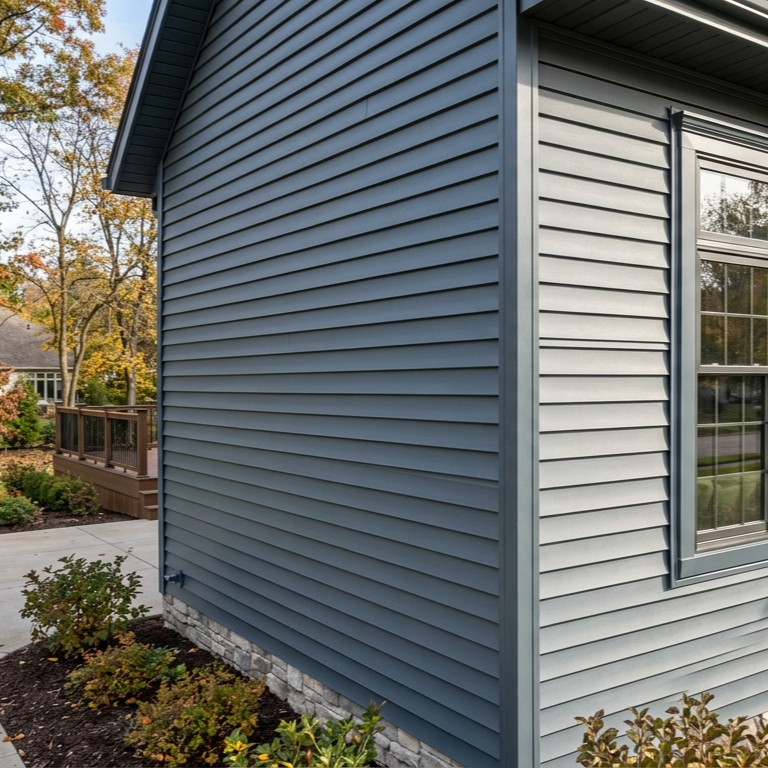
You noticed it in March, during that first real thaw after the long stretch of sub-zero nights. One panel on the north face of the house had a clean crack running diagonally across it — not a dent, not a scratch, a snap like someone had broken a piece of plastic in half. You pressed the panel edges. Chalky. Dry. Nothing like the slightly flexible material it used to be.
That crack didn't happen in March. It happened in January, when temps hit -8°F and a chunk of ice flew off the roofline. The siding was already brittle from years of UV exposure. The impact just finished the job.
How long does vinyl siding last? Industry answer: 20 to 40 years. The real answer: it depends on which winter gets it first.
The 20-to-40-Year Range Hides a Lot
Twenty years and 40 years look very different from the inside. A house sided with premium vinyl in 1995, installed correctly, might still have a solid decade left. A house sided with economy-grade material in 2005, installed without proper expansion gaps, may already be showing failure — and the homeowner has no idea why.
What determines the number you actually get: panel grade, installation quality, and weather exposure. In cold-climate states, that last variable does more work than most people expect.
Economy-grade vinyl runs about 0.035 to 0.040 inches thick. Standard-grade is around 0.044 to 0.046 inches. Premium grade is 0.046 inches or thicker, often with a foam-insulation backing bonded to the rear face. That fraction-of-an-inch difference changes everything — how the panel handles cold-weather impact, how well it holds color over time, how it survives 20 years of temperature swings. More on grade in a minute.
Why Freeze-Thaw Cycles Shorten the Clock
Vinyl is a polymer. Like most plastics, it gets less flexible as temperatures drop. Below about 10°F, standard vinyl siding starts losing the impact resistance it has in warmer weather. A piece of ice off the roof, a storm-driven branch, or a hailstone that would have dented the panel in September can crack it clean in January.
Then there is expansion and contraction. Vinyl moves — roughly 1/2 inch per 12-foot panel across the full temperature range from deep winter to midsummer. A panel fastened at 50°F sits at its midpoint. On a January night at -15°F, it's contracted. On a July afternoon at 95°F in direct sun, it's fully expanded. Years of that cycling work on every fastener, every seam, every caulk joint around windows and trim.
Walk your siding every spring and probe caulked joints with a flathead screwdriver. If the caulk pulls away from the substrate in hard pieces, it needs replacing before the next freeze-thaw season starts.
Installers who skip adequate expansion gaps — about 1/4 inch at each panel end — create panels that buckle in summer heat and stress their fasteners through winter. After 15 years of that, things start to let go.
Think about bending a plastic straw back and forth. It doesn't break the first time. Not the 50th either. Somewhere around the 200th cycle, it just goes. Cold climates average more than 100 freeze-thaw cycles per winter season. Each one is a small mechanical stress event on the panels, their fasteners, and every sealant around every penetration. The damage is invisible until suddenly it isn't.
Panel Grade Decides Your Floor, Not Your Ceiling
Most homeowners don't know what grade of vinyl is on their house. Installers rarely explain it, and it's not printed anywhere visible. But panel thickness is the single most reliable predictor of long-term performance.
Economy grade — roughly 0.035 to 0.040 inches thick — is entry-level vinyl, sold for budget replacements and production new construction where cost drives the decision. It lasts 20 to 25 years in mild climates. On exposed north and west faces in cold-weather states, the figure is closer to 15 to 20 years, where UV depletion and cold-weather brittleness work faster.
Standard grade runs around 0.044 to 0.046 inches and is what most full vinyl siding installation jobs use. With decent installation and basic upkeep, it reaches 25 to 35 years.
Premium grade comes in at 0.046 inches and up, often with foam-insulation backing. The foam adds structural rigidity that matters in cold-weather impacts — the panel has something solid behind it instead of dead air space. That extra support absorbs blows that would crack a thinner panel. When properly installed, premium vinyl can realistically last 40 years or more.
If you don't know what grade is on your house, a contractor can measure thickness with a simple gauge during an inspection. Houses sided in the late 1980s or early 1990s have early-generation economy or standard vinyl — that material is at or past its functional end-of-life.
Why Installation Decides Whether You Hit 20 Years or 40
Material grade gets all the attention. But installation quality is the bigger variable in how long a siding job actually lasts. Misinstalled premium vinyl fails faster than correctly installed standard vinyl. That's not an opinion — it's what the failure patterns look like after 15 years.
Missing expansion gaps are the most common error. Vinyl needs room to move. Panels nailed too tight buckle outward in summer heat and crack in cold snaps. The problem doesn't show up in the first few years. It shows up 10 to 15 years in, when walls that faced the sun start rippling.
Poor flashing around windows and penetrations is the second. Water finds the path of least resistance, and a window head flashing installed without proper overlap lets water wick behind the siding and into the wall cavity. That moisture doesn't surface for years — then it shows up as rot in the sheathing, or a faint mold smell in an upstairs bedroom wall.
Inadequate panel overlap at horizontal seams sends water behind the siding instead of over it. And in cold climates, that water freezes in the wall cavity, expanding roughly 9 percent in volume and widening every gap it sits in.
The last one is no moisture barrier behind the panels. Vinyl siding is a rain screen, not a waterproof cladding. Water that gets behind it needs to be stopped by housewrap or building paper underneath. Homes sided without a proper moisture barrier fail from the inside out. The vinyl looks fine until someone opens a wall.
Three Things That Degrade Vinyl Over Time
Knowing what's actually wearing your siding down helps you recognize which stage it's in.
UV degradation happens first on south- and west-facing walls. Vinyl manufacturers add titanium dioxide and other UV stabilizers to slow photodegradation, but those stabilizers deplete over years of sun exposure. Color fades first. Then the surface turns chalky. Then the panel loses flexibility. A chalky panel looks intact but is far more brittle than it was — cold-weather impacts and even minor stress can crack it now.
Thermal cycling fatigue is quieter. The repeated expansion and contraction from decades of temperature swings work on every fastener, seam, and caulk joint. This is why siding starts to loosen, buckle, or gap, even on houses with no visible panel damage. The failure isn't in the vinyl. It's in the connections.
And then there's moisture intrusion behind the panels. Even well-installed vinyl develops small gaps over time — at seams, around fasteners, at trim interfaces. Water that seeps behind the siding causes wood rot in the sheathing and framing. That damage has nothing to do with the vinyl itself, but it forces a full replacement anyway.
These don't run on a schedule. They happen when stress builds faster than the material can handle it. Climate, grade, and installation quality all affect how fast that clock runs.
How to Tell Whether Your Siding Has Years Left or Is Already Failing
Walk around the house and check these in order.
Run your finger across the panel face. If it comes away with a powdery white residue, the UV stabilizers are spent. The panel isn't failing yet, but it's in late life and has lost most of its impact resistance.
Look for cracks — along panel edges or running diagonally across the face. Those mean the material has lost its flexibility. Cracked panels no longer reliably shed water; they're letting it in at every crack edge, every freeze cycle.
Check for buckling or permanent waves. Panels that bow outward or show waves that don't change with seasons are either installed without expansion gaps or have been retaining moisture long enough to deform permanently.
Look at seams and trim. Any visible gap where a panel meets a window frame, corner post, or adjacent panel is a water entry point. A single gap is a repair. Widespread gapping means the installation has moved past reliable performance.
Last, press firmly on panels around window frames, at lower courses near the foundation, and at inside corners. If a panel moves inward or feels soft behind it, there's rot in the sheathing or framing. At that point, you're not just replacing siding — you're replacing what the siding was supposed to protect.
Basic Maintenance That Actually Extends the Life
You don't need a lot. But four things, ignored long enough, will shorten the life of any vinyl siding installation.
Annual cleaning keeps algae and mildew from holding moisture against the surface. North-facing and shaded panels are where this shows up. A light wash with a garden hose and mild soap once a year is enough. Don't pressure-wash upward — that drives water behind the panels rather than rinsing it off.
After hailstorms, high-wind events, or heavy ice loading, walk the perimeter. Look for cracked or loose panels. A cracked panel left through a winter lets water in at every freeze cycle, and it gets worse fast. Replacing one panel costs a fraction of what happens once that water reaches the sheathing.
Check the caulk around window frames, doors, and any penetrations — outlets, hose bibs, and light fixtures — every couple of years. Cold-climate caulk gets brittle. Once it cracks or pulls away, you've opened a direct water path behind the siding.
Keep shrubs and branches trimmed back. Vegetation that rubs against vinyl scratches through the surface coating and holds moisture against the panel face. Six inches of clearance is enough.
That's it. Vinyl doesn't need painting, sealing, or staining. What matters is keeping water out at the edges and catching damage early.
Frequently Asked Questions
Most vinyl siding lasts 20 to 40 years, depending on panel grade, installation quality, and climate exposure. Economy-grade vinyl installed in the late 1980s and early 1990s is at or near the end of its functional life.
No. Fiber cement typically lasts 30 to 50 years with proper maintenance and handles moisture, fire, and impact better than vinyl. It costs more to install — roughly $10 to $16 per square foot installed vs. $5 to $10 for standard vinyl — but holds up longer in climates with heavy freeze-thaw cycling.
Yes. Keeping seams caulked, cleaning off mildew and algae annually, trimming vegetation away from panels, and replacing cracked or loose panels before water gets behind them can add meaningful years to the installation.
Two likely causes: economy-grade vinyl that's reached its structural limit, or panels installed without adequate expansion gaps that have been under thermal stress for years. Once UV stabilizers are depleted, cold-weather brittleness takes over, and impacts that wouldn't have mattered a decade ago start cracking panels.
Vinyl siding replacement typically runs $5 to $10 per square foot installed, depending on panel grade, labor, and the complexity of the home's exterior. A 2,000-square-foot home with approximately 1,500 square feet of siding surface — accounting for windows and doors — generally lands between $7,500 and $15,000.
Industry remodeling data shows vinyl siding replacement typically returns 70 to 80 percent of its cost at resale. Beyond that, new siding stops hidden moisture damage that can cost far more to fix once it reaches the framing.
Schedule an estimate — Craftsman Exteriors handles vinyl siding installation and replacement across Madison, Verona, Fitchburg, Middleton, Sun Prairie, and southern Wisconsin. If your panels are cracking, chalking, or showing gaps after years of cold winters, we can tell you whether repair or full replacement makes sense. Call (608) 975-5747.
