
How to Spot Storm and Hail Damage Before It Leaks
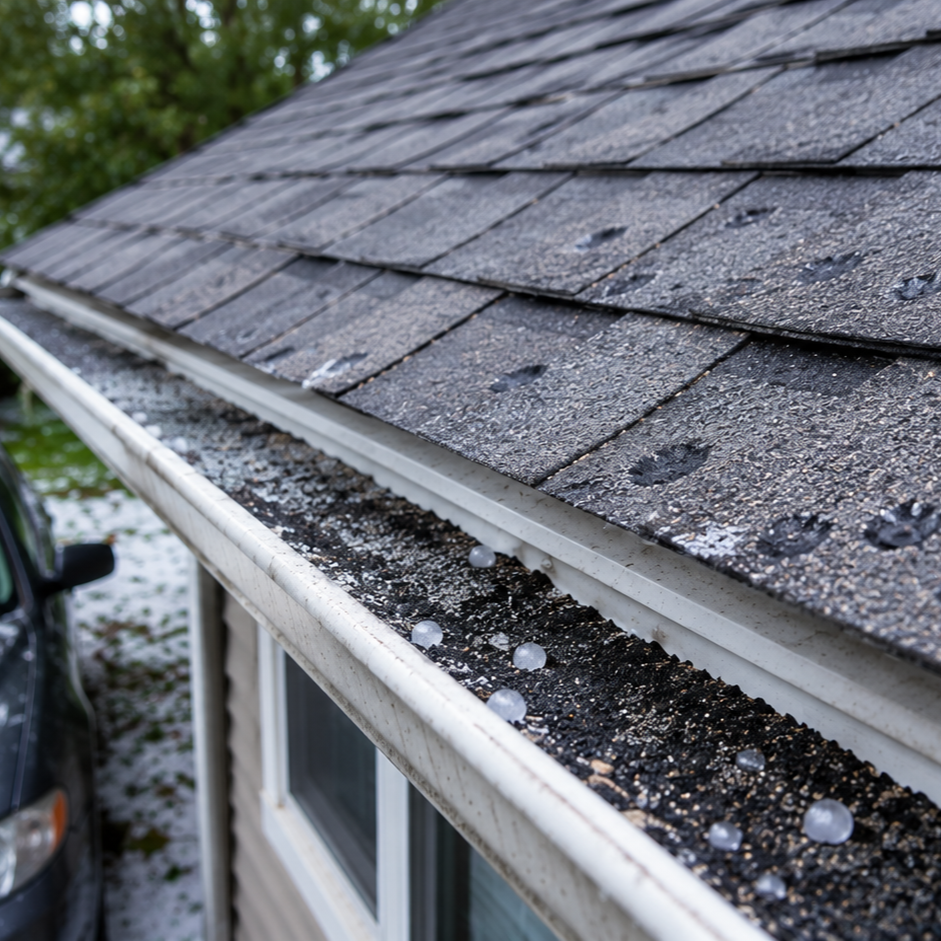
Quick Answer: After a storm, look for hail and wind damage from the ground and around the property first: dented gutters, downspouts, and metal vents; shingle granules washed into the gutters; shingles that are missing, torn, creased, or lifted; and dings on cars or siding that hint at hail size. On the shingles themselves, hail leaves dark bruises and knocks granules off in spots. Much hail damage is subtle and hard to see from the ground, so a professional inspection after a significant storm is the reliable way to catch it before it leads to leaks.
A storm rolls through Wisconsin, drops some hail, and by the next morning everything looks normal again — until you really look. Roof storm damage is often quiet. The shingles can take a beating that doesn't show as an obvious hole, and the leaks come weeks or months later, once the weakened spots let water in. Knowing what hail and wind actually do to a roof, and where to look for the evidence, helps you catch damage while it's still a simple fix and while it's freshest.
Storm Damage Is Often Subtle — Look in the Right Places
The mistake homeowners make is expecting storm damage to be dramatic — a tree through the roof, a tarp-worthy hole. Most hail and wind damage is far quieter than that. Hail bruises shingles and strips their protective granules; wind lifts, creases, and tears them. The roof can look fine from the curb while its weather protection has been compromised in dozens of small spots. So spotting storm damage is less about looking for a big hole and more about checking the specific places where the evidence collects — the ground, the gutters, the metal, and the shingles up close.
Start on the Ground
You can learn a lot without ever getting on the roof, which is also the safe way to do it.
Check the Metal and Gutters
Hail dents soft metal, so the gutters, downspouts, metal roof vents, flashing, and any metal trim are your easiest evidence. Dents, dings, and pockmarks in these surfaces tell you hail hit hard enough to damage the roof, too. While you're there, look in the gutters for a buildup of shingle granules — hail knocks granules loose, and a fresh pile of them after a storm is a strong sign of impact.
Look for Clues Around the Property
The rest of your property hints at what the roof took. Dents on cars, dings in siding, damaged window screens, split fence boards, or stripped leaves and branches all indicate hail size and wind force. Sizable hail that dented your car almost certainly affected the roof. Shingles, shingle pieces, or granules in the yard after a windstorm also point to roof damage.
What Damage Looks Like on the Shingles
If you can see the shingles clearly with binoculars from the ground, a few patterns stand out.
Hail Damage
Hail leaves dark spots or bruises where it struck, knocking granules off and exposing the darker asphalt underneath. The hits are usually random and scattered across the roof. You may see soft spots, dents, or circular marks. Because the granule loss exposes the shingle to the sun and weather, hail-struck shingles deteriorate faster, even when they are not obviously broken.
Wind Damage
Wind works differently. It lifts, creases, curls, and tears shingles, and it can peel them off entirely. Look for shingles that are missing, flapping, folded, or have a horizontal crease line where they were bent back and forth. Wind damage often shows up along edges, ridges, and exposed areas of the roof, and even shingles that have settled back down may be creased and weakened.
| Where to look | What you're looking for | What it means |
|---|---|---|
| Gutters, downspouts, metal vents | Dents, dings, granule buildup | Hail hit hard enough to damage roof |
| Yard and property | Dented cars, siding, screens; shingle bits | Indicates hail size and wind force |
| Shingle surface (from ground) | Dark bruises, missing granules | Hail impact damage |
| Edges and ridges | Missing, creased, lifted shingles | Wind damage |
Don't climb onto the roof to inspect storm damage yourself, especially when it's wet, steep, or icy. Falls from roofs cause serious injury. Inspect from the ground with binoculars, and leave the on-roof inspection to a professional who has the equipment and experience to do it safely.
What to Do After You Spot Damage
If the ground-level signs point to storm damage, the next step is a professional roof inspection. Much hail damage is genuinely hard to see and assess from the ground — the difference between cosmetic granule loss and damage that will lead to leaks takes a trained eye on the roof. Acting promptly after a significant storm matters for a few reasons: fresh damage is easier to attribute to the storm, catching it early prevents the weakened spots from turning into leaks and interior damage, and a documented professional assessment helps if you're pursuing an insurance claim for storm damage. The goal is to find and fix the compromised spots before the next rain finds them for you.
Frequently Asked Questions
You can spot the strong indicators from the ground, which is a safe way to start. Look for dented gutters, downspouts, and metal vents; granules washed into the gutters; missing, creased, or lifted shingles visible with binoculars; and collateral clues like dented cars and siding. These indicate the roof likely sustained damage. The catch is that much hail damage is subtle and needs a professional on the roof to fully assess, so ground signs are the trigger to call for an inspection.
Hail leaves dark bruises or spots where it struck and knocked the protective granules off, exposing the asphalt beneath. The hits are typically random and scattered, and you may see soft spots, dents, or circular marks. The damage isn't always an obvious break —granule loss is the key issue, as it leaves the shingle exposed to the elements and causes it to deteriorate faster, eventually leading to leaks if not addressed.
Wind and hail damage shingles in different ways. Hail strikes and bruises the surface, knocking off granules in scattered spots. Wind lifts, creases, curls, and tears shingles and can remove them entirely, with damage concentrated along edges, ridges, and exposed areas. A horizontal crease line where a shingle was bent is a classic wind sign. Both compromise the roof's water protection, but they leave different evidence, which helps identify what happened.
Promptly — ideally within a few days of a significant storm or hail event. Acting quickly means fresh damage is easier to identify and attribute to the storm, you catch weakened spots before they develop into leaks, and a timely professional assessment supports any insurance claim. Waiting risks the damage worsening unnoticed until water shows up inside, by which point the repair and the claim are both more complicated.
Often yes, because hail damage frequently leads to leaks down the road, even when the roof isn't leaking now. Hail strips the granules that protect shingles from sun and weather, so struck shingles deteriorate faster and eventually fail. Addressing the damage before it causes leaks prevents interior water damage and is usually the less costly path. A professional can tell you whether the damage is cosmetic or the kind that will progress to leaks.
Storm and hail damage to a roof is usually bruised shingles, stripped granules, creased edges, and dented metal, rather than a gaping hole. You can catch the strong signs safely from the ground: dented gutters and vents, granules in the gutters, missing or creased shingles, and collateral damage around the property. Because much of it is subtle and the roof is no place to be climbing after a storm, those signs are your cue to bring in a professional. Find the damage while it's fresh, and you fix weak spots before they become leaks.
Storm or hail roll through and worried about your roof? — Get a safe, thorough storm-damage inspection from southern Wisconsin's exterior pros. Craftsman Exteriors serves Madison, Verona, Fitchburg. Call (608) 843-5007.
