
What Are the Signs Your Front Door Needs to Be Replaced?
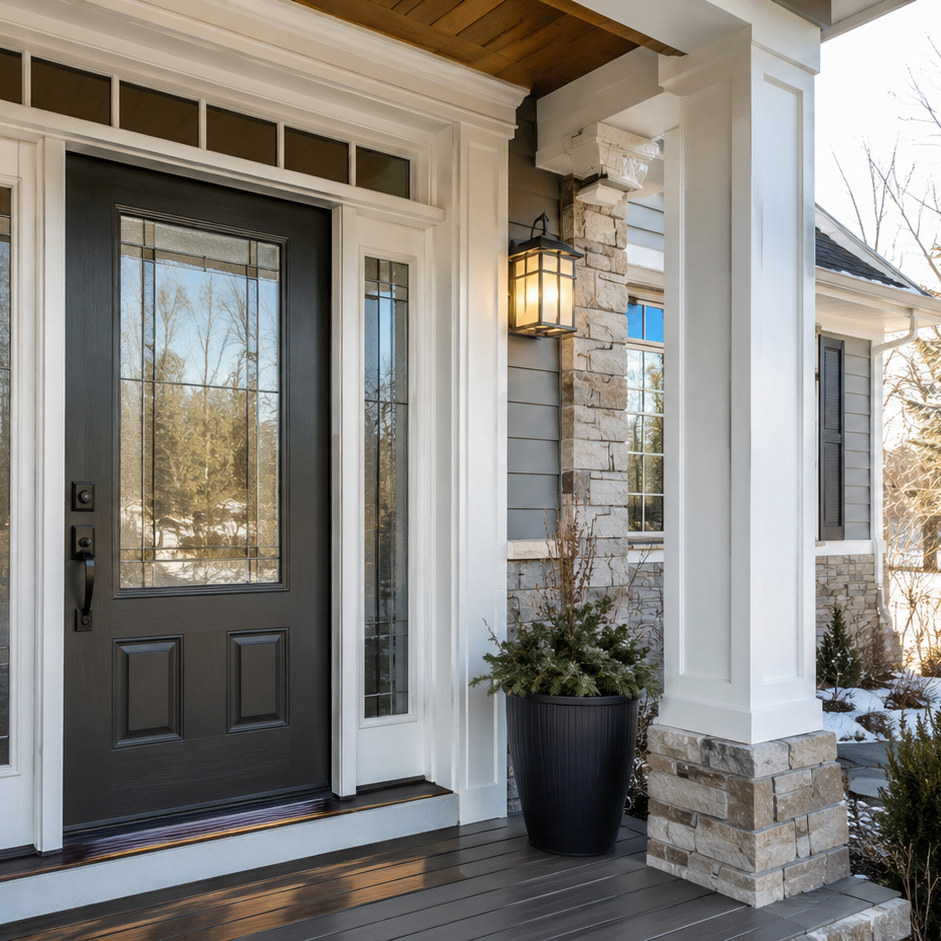
One fine day, the candle on the entryway table was flickering for no reason anyone could explain. The HVAC system running hard, the windows were all shut — but the air was bleeding straight through the front door frame. Not a crack you could see. Just a slow, steady bleed that had been costing money all winter long.
That's one of the clearest signs your front door is done, and most homeowners don't catch it until the heating bill shows up. Front doors fail slowly — a little more air leaking past the frame each winter, a little more wood swelling each spring thaw, a little more finish peeling every summer. By the time the problem is obvious, it's been developing for two or three years. Knowing what to look for early saves money and keeps the damage from traveling into the frame and subfloor.
How Long Should a Front Door Actually Last?
A properly installed fiberglass or steel entry door should last 30 years or longer. Wood doors are all over the map — a high-quality solid-wood door with regular maintenance can go decades, but a hollow-core or low-grade wood door in a cold climate can start failing in 10 to 15 years. Vinyl screen doors typically last 20 to 30 years.
But those numbers assume a solid original installation. A door put in without proper weatherstripping compression, without a foam-filled cavity between the frame and the rough opening, or without adequate flashing above the threshold will fail faster — regardless of material. Half the time, the installation is what goes first. Not the door itself.
Climate is what accelerates everything. Every freeze-thaw cycle beats on a door frame. When moisture soaks into wood, it expands. Freeze it, and it expands another 9% by volume. Thaw it, it contracts. Run 100 or more of those cycles in a single winter — which is normal here — and even a well-built wood frame takes damage a homeowner in Georgia would never see.
Your Door Won't Close or Lock Without a Fight
The first thing most people notice is function. The door drags at the bottom. It takes a shoulder to latch. The deadbolt won't seat cleanly without lifting the door by the handle. These aren't quirks. They're diagnostics.
When a door sticks, one of two things is usually happening. Either the house has settled and pulled the rough opening slightly out of square, leaving the door to bind at a corner — or the door has warped from moisture it absorbed through a failing finish and then dried unevenly. The third possibility, and the worst, is frame rot: what was once a square opening is now soft and compressing under the door's weight.
A door that won't lock is a security problem, full stop. Deadbolts seat into the strike plate. When the frame shifts — even by 1/8 inch — the bolt can't extend fully. Some homeowners chisel the strike plate down a quarter inch, which works for a while. If you've done that twice, you're patching a door that needs to go.
You Feel Cold Air When the Door Is Closed
Run your hand around the door perimeter on a cold day. If you feel moving air anywhere — hinge side, lock side, top, or threshold — the door is leaking. Cold air that gets in has to be replaced with heated air that goes out.
That leak usually comes from one of two places. The first is weatherstripping. The foam or rubber strips that compress against the door stop degrade with age and lose their ability to spring back. Most compressed-foam weatherstripping lasts 10 to 15 years before it stops rebounding. If your door is older than that, the seals are probably shot even if they look okay.
The second problem is the door core itself. Older entry doors — hollow-core wood doors, early steel doors from the '70s and '80s — have almost no insulating value. A modern fiberglass or steel door with a polyurethane foam core runs a U-value around 0.20 to 0.25, meaning it transfers far less heat than single-pane glass or an uninsulated wood door. If your door went in before 1990, its thermal performance is poor even if the weatherstripping is new.
Think of the cavity between the door frame and the rough framing like the insulation batt in an exterior wall: as long as it's packed solid and continuous, it works. One gap at a corner, one area where the foam settled, and cold air has a straight shot through. A single missing section of attic insulation can account for more heat loss than all the rest of the attic combined — the same physics apply here.
The Door Shows Visible Rot, Cracks, or Soft Spots
Press your thumb firmly against the door bottom, the corners, and along the frame on both sides. A solid door and frame don't budge. Any give — any sponginess at all — means moisture has gotten into the wood fiber. Rot is underway.
Rot doesn't stay put. It follows moisture, and moisture follows gravity. A soft spot at the door bottom will track down into the threshold, into the subfloor, and then into the floor joists below. Contractors who pull out rotted entry doors regularly find subfloor damage extending 12 to 18 inches into the room — flooring, sometimes structural repair — all from a door problem that started small and got ignored.
Fiberglass and steel doors won't rot, but they delaminate. The outer skin separates from the foam core, usually at a bottom corner where water pooled. Once the skin separates, water gets behind it. The process speeds up fast. Visible bubbling or lifting on any panel means it's time.
Cracks in a wooden door panel aren't cosmetic. The finish on a wood door is the only thing standing between liquid water and the wood fiber underneath. A crack that runs with the grain — even a hairline one — opens that barrier completely. Every rain, every spring thaw, water enters. A crack that looks minor in October can look like rotted pulp by April.
Water Stains or a Musty Smell Near the Entry
Water stains on the floor beside the front door, on the interior face of the door, or at the base of the wall beside the frame all mean the same thing: water is getting past the door assembly.
The usual entry points are the threshold, the flashing above the door header, and the end grain of any wood trim that wasn't sealed at installation. In climates with heavy snow loads — 30 to 40 pounds per square foot is standard here — ice can back up against a threshold and push melt water underneath during a thaw. A properly installed threshold is sloped with a rubber gasket that sheds water outward. An old or settling threshold loses that slope and starts collecting water instead.
And a musty smell near the front door, especially in spring? That's almost always mold. It needs moisture and organic material, and a wet wood frame has both. You probably can't see it from the interior — it grows on the back face of trim boards and inside the wall cavity. By the time you can smell it, the colony is weeks old. That's not something you fix with caulk and paint.
The Finish Is Peeling, and the Underlying Material Is Exposed
A door's finish — paint on wood, factory primer on fiberglass, powder coat on steel — isn't there for looks. It's the moisture barrier. Peeling paint on a wood door means bare wood is exposed to rain, dew, and freeze-thaw. Chalking or fading on a fiberglass door means the UV coating has failed, and the resin beneath is starting to degrade.
A worn, faded door is closer to failure than it appears. Surface condition tells you where the interior will be in two or three years. Repainting buys time — but it doesn't undo damage that's already in the wood fiber below.
The Door Lets in Street Noise or Looks Out of Place
Neither of these is a structural problem. But both are worth watching.
On noise: a door with a solid polyurethane foam core kills sound. A hollow-core door — still common on older homes, sometimes put in by builders looking to cut costs — lets in street noise and neighbor conversations like a hollow interior door would. If you can hear a normal conversation from outside while standing in your entry, the core isn't doing its job thermally or acoustically. Those two failures tend to travel together.
On appearance: a door that's been painted twice over chipping original paint, or one that's 30 years out of style, pulls the whole front of the house down visually. A new entry door typically returns 60%–65% of its cost in resale value. That's not a reason to replace a door that's functioning well — but if it's already showing other signs from this list, curb appeal tips the decision further toward replacement.
Repair or Replace? A Quick Guide
Not every door problem calls for full replacement. Here's how to sort it:
| Symptom | Likely Fix |
|---|---|
| Weatherstripping worn or gapped | Replace weatherstripping — $50–$150 DIY |
| Door drags slightly, hinges loose | Tighten hinges, add long screws into framing |
| Strike plate misaligned, deadbolt stiff | Adjust strike plate, recheck alignment |
| Door drags significantly, won't latch | Possible frame shift or warp — inspect closely |
| Visible rot at bottom corners or frame | Replacement — rot travels faster than repairs |
| Foam core delaminating, panel bubbling | Replacement — structure is compromised |
| Consistent drafts despite new weatherstripping | Replacement — door or frame has failed thermally |
| Water staining on interior floor or wall | Replacement — moisture intrusion is ongoing |
| Mold smell near door | Replacement + mold remediation before reinstall |
The dividing line is structural integrity. If the door and frame are square, solid, and dry — and the problem is limited to hardware, weatherstripping, or paint — repair makes sense. But if there's rot, delamination, significant warping, or evidence of chronic moisture getting in, repair is a temporary fix. The problem will come back.
A full entry door replacement, including installation, typically runs $1,000 to $3,500, depending on material, door size, and whether the frame needs work. That's real money. But it's far less than replacing a rotted subfloor or remediating mold that spread from an ignored threshold.
Frequently Asked Questions
Press on the exterior door frame along its full length. Solid, no movement — likely just the door. Any give, sponginess, or visible gap where caulk has pulled away from the frame-to-siding junction points to frame damage. A contractor can probe the frame with a screwdriver to confirm rot depth before recommending a full replacement versus reframing.
Not necessarily. Age alone isn't the trigger — condition is. A 15-year-old fiberglass door with intact weatherstripping, a solid frame, and no signs of moisture getting in can keep going for another 15 years. Run through the diagnostic checks in this article. If everything tests solid, schedule an annual inspection and leave it alone.
Sometimes, yes. If the frame is square and structurally sound, a door slab swap is possible and significantly cheaper than a full unit replacement. The catch: if the old door was a non-standard size — common in homes from the 1960s and '70s — finding a matching slab can be difficult, and a custom-ordered slab narrows the cost advantage. A contractor should measure the frame and check for square before quoting slab-only.
Wood moves with moisture. In a Wisconsin winter, humidity swings and freeze-thaw cycles cause wood door components to expand and contract repeatedly. If the door is borderline tight in dry fall conditions, those winter swings push it into binding. A door that's fine in summer and impossible in January either needs its hinge edge planed and properly sealed, or the frame is shifting seasonally — which warrants a closer look.
Fiberglass handles temperature swings better — it doesn't dent, doesn't rust, and won't feel ice-cold to the touch the way steel can in sub-zero weather. Steel is slightly stronger for security and typically costs less upfront. Both beat wood on moisture resistance, and both need a polyurethane foam core to actually perform thermally. For cold climates, either is a meaningful upgrade over an older wood or hollow-core door.
Most standard entry door replacements take four to six hours for an experienced crew. That includes removing the old unit, addressing any minor frame damage, installing the new prehung door, shimming and squaring, insulating the cavity, and finishing the interior trim. Frame rot that needs reframing adds at least a day. If the weather is cooperating, you'll have a working door by afternoon.
Schedule an estimate — Craftsman Exteriors handles door installation and replacement across Madison, Verona, Fitchburg, Middleton, Sun Prairie, and southern Wisconsin. We inspect the full door frame for rot and moisture damage before recommending repair or replacement, so you don't pay for more than you need. Call (608) 975-5747.
