
What Are the Signs of Rotting Fascia?
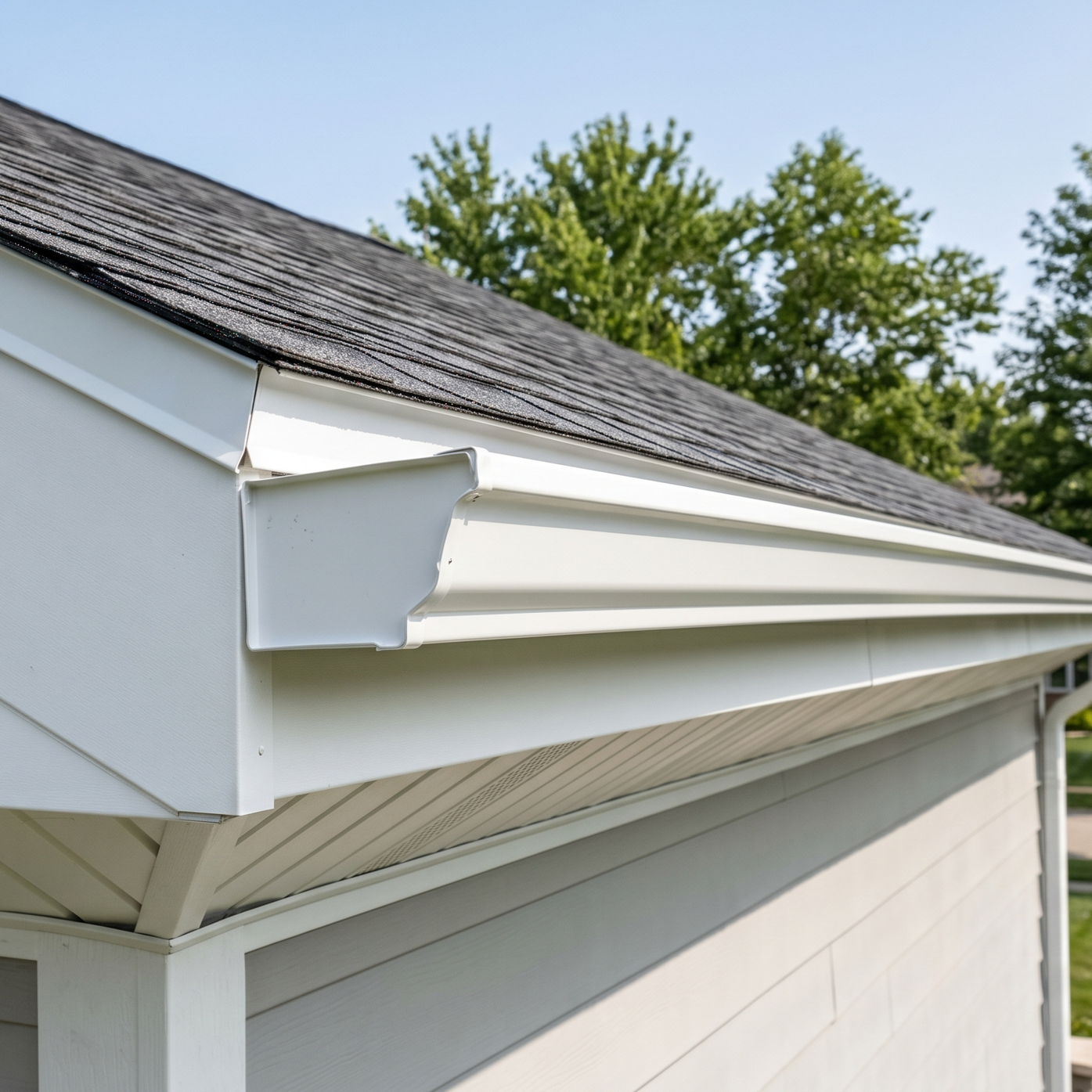
You pull down a gutter section to clean it out, and the fascia board behind it crumbles in your hand like wet cardboard. It looked fine from the driveway — painted, intact, nothing obviously wrong. That's the problem. Fascia rot works from the back side, while the painted face holds up just long enough to make you miss it.
It doesn't announce itself with one dramatic failure. It builds slowly, hidden behind gutter hangers and downspouts, until the gutters start pulling away or you notice dark staining on the wall below the roofline. By the time it's visible from the ground, the repair has almost always grown beyond a single board — and the bill has grown with it.
Catching this early is the difference between a $150 board swap and a full roofline repair that runs into thousands.
Why Fascia Rots: The Mechanism Behind the Damage
Fascia boards run horizontally along the lower edge of your roof, directly behind the gutters. They close off the rafter tails from the weather and give the gutters something solid to hang from. That position — right at the joint where the roof overhang meets the vertical wall — puts them in contact with moisture from multiple directions at once.
Water reaches the fascia from above when the drip edge or roof flashing fails, letting water wick down behind the shingles instead of into the gutter. It hits from the front when gutters overflow or hold standing water, keeping the face of the board wet for days at a time. And it creeps in from below when soffit vents are blocked, trapping humidity in the eave cavity against the back side of the board where it can't escape.
When wood stays wet long enough, two things happen. The grain swells and contracts with each wetting cycle, slowly breaking down the cellular structure. Then fungal decay — what most people call rot — sets in. The fungus doesn't need much: moisture above about 19% wood content, some oxygen, moderate temperatures. In a Wisconsin spring, after months of ice and snow sitting in the gutters, those conditions stick around for weeks.
Picture a sponge that's been sitting at the bottom of a dish rack all winter. The outside looks fine. Press into the center, and it falls apart. That's what freeze-thaw cycling does to fascia board over a few winters.
The 7 Signs Your Fascia Boards Are Rotting
1. Paint That Bubbles or Peels in the Same Spot Every Year
Paint doesn't fail randomly. When you see bubbling or peeling paint on your fascia — and it keeps coming back in the same spot after you scrape and repaint — moisture is pushing from inside the wood outward, lifting the surface layer off. Sound wood doesn't do that. Saturated, rotting wood does, because the paint film can't hold against water vapor working through it.
If it's happening in one specific area, something is reliably delivering water to that spot. A low section in the gutter. A gutter end cap that's leaking. A stretch of drip edge that wasn't lapped correctly over the fascia. Find the water source, and you'll find why that section keeps failing.
2. Soft Spots or Sponginess When You Press on the Board
This is the most direct test there is. Get a ladder and press a screwdriver firmly against the fascia at several points — near gutter hangers, at the ends of boards, anywhere the paint looks off. Sound, dry wood resists. Rotting wood gives. It feels hollow or spongy, or the screwdriver sinks in with very little pressure.
Press a flathead screwdriver firmly into the fascia at the corners, behind the gutter hangers, and along the bottom edge. If it sinks more than 1/4 inch without real resistance, the wood is soft enough to replace.
Rot usually starts at the back face or the top edge, where water pools and can't drain. A section that looks perfect on the painted front can already be badly compromised behind. Don't trust the surface. Probe it.
3. Gutters Pulling Away or Sagging at the Attachment Points
A 10-foot section of aluminum gutter holds several gallons of water and debris — 30 to 50 pounds hanging from the fascia via spikes or screws. Those fasteners are only as strong as the wood they're biting into. Once the fascia softens, the screws lose their grip, and the gutter starts tilting outward at the top.
If you see a gap between the gutter and the fascia board, don't assume it's a loose screw you can just drive back in. It probably is a loose screw — but it's loose because the wood behind it has turned to mush. A new screw into rotted wood buys you six months before the same problem comes back.
4. Staining or Discoloration on the Fascia Board Itself
Dark patches, black streaking, or a greenish tint on the wood are signs of active moisture retention and mold or algae growth. On fascia boards, this typically shows up first at the joints between sections, at the ends near walls, and directly below gutter end caps — wherever water concentrates.
Black streaking on the vertical face is sometimes just oxidation washing off the aluminum gutter above it. But if the discoloration is in the wood grain rather than on the surface, or if it doesn't wash off, the board is holding moisture instead of shedding it. That's where you start probing.
5. Visible Cracks or Gaps Between Fascia Sections
Wood fascia runs in long horizontal stretches with joints where boards meet. As those boards rot and lose their integrity, they shrink and warp unevenly. You'll see gaps opening at joints that weren't there before, or boards starting to cup or bow outward. Wisconsin's freeze-thaw cycles — which can top 100 repetitions in a single winter — make this worse, because the wood absorbs water and then that water expands when it freezes, literally pulling the grain apart from inside.
A board that's cupped, bowed, or gapping at the joints won't lie flat again. The cellular structure's been broken. It needs to come off.
6. Pest Activity or Evidence of Insects
Rotting wood attracts carpenter ants and wood-boring beetles. These insects don't create the rot — they move in after the damage is already there. But they make it dramatically worse. Carpenter ants hollow out galleries in soft wood fast enough to turn a 6-inch soft spot into a foot of useless board within a single season.
If you're seeing carpenter ants along your roofline in late spring or summer, check the fascia in that area. Sawdust-like frass below a soffit or fascia section is a direct sign of boring activity and means the rot underneath it has been going on long enough to attract tenants.
7. Water Stains on the Interior Ceiling Near the Roofline
Not all fascia rot shows up on the outside. When a board fails completely, water finds its way behind the soffit panel and into the eave framing. From there, it travels along rafters until it finds a gap — and shows up as a stain on your ceiling, often in a hallway, upper-floor closet, or bedroom corner.
This is the most alarming sign on the list. By the time interior staining appears, water has been traveling for a while. The exterior damage is almost always worse than what the ceiling stain implies.
How Far Does Fascia Rot Spread?
Rot doesn't stay in one board. Once a section fails, the adjacent components are next. Rafter tails — the structural roof timbers that the fascia covers — absorb moisture directly if the fascia lets water past. The soffit panels, which meet the fascia at a shared joint, are usually compromised too.
From the rafter tails, moisture travels up into the roof deck. And once the deck is wet, roofing repairs enter the picture. Full rafter tail replacement is more involved than swapping fascia boards. Decking repair means pulling the roofing material off. A fascia problem that started at $400 can work its way to $6,000 if it's left alone long enough.
Catching it at the soft-spot-and-bubbling-paint stage keeps it manageable. Waiting until the gutters are sagging and the ceiling is staining does not.
What Actually Causes Fascia to Rot Faster
Most fascia rot traces back to one of three things going wrong — usually at installation, sometimes through years of deferred maintenance.
Drip edge problems are the most common culprit. The drip edge is the L-shaped metal strip along the lower edge of the roof that directs water over the fascia and into the gutter rather than behind it. When it's missing, backward, or has gaps, water runs behind the fascia on every rain. A drip edge inspection is the first thing to check when the fascia keeps rotting in the same spot year after year.
Gutter slope matters more than most homeowners realize. Gutters drain toward the downspout at about 1/4 inch of drop per 10 feet of run. When they're flat or pitched the wrong direction, water pools in the gutter for hours or days after a storm. That standing water keeps the face of the fascia board wet continuously, and over time, the paint breaks down, and the wood follows.
Soffit ventilation failures cause rot from the back. The soffit — the underside of the roof overhang — needs airflow to let moisture escape from the attic and eave cavity. When soffit vents are blocked by insulation, painted over, or improperly installed, humidity builds up and condenses on the back side of the fascia, where you'd never see it from the ground. You can have perfect gutters and a perfect drip edge and still rot out the fascia by trapping moisture behind it.
Wood vs PVC vs Aluminum Fascia: How Material Affects What You're Looking For
Traditional fascia is pine or fir — inexpensive, easy to work with, and prone to rot the moment it stays wet. Some homeowners replace rotted wood fascia with cellular PVC or composite, which won't rot because it doesn't absorb water. PVC costs about 30-50% more than painted wood, but removes the rot vulnerability entirely.
The trade-off with PVC is thermal movement. It expands and contracts more than wood with temperature swings — in Wisconsin, the range between a January morning and a July afternoon can top 100°F. PVC fascia needs proper joint spacing, or it buckles in summer. Without proper relief gaps at the joints, the expansion can push gutter hangers right out of alignment on south-facing runs.
Aluminum fascia, standard on a lot of newer construction, doesn't rot — but it fails differently. Look for dents from hail impact, separation at the seams where sections overlap, and oxidation streaking below the bottom edge. Water can still get behind aluminum fascia at unsealed joints, rotting the wood substrate underneath, even when the aluminum face looks clean and intact.
If you're replacing one section in an otherwise sound wood run, matching wood makes sense. If this is the second time the same section has failed, upgrade to PVC and don't look back.
When to Repair vs Replace
If the rot covers less than 20% of a single board and hasn't reached the rafter tails, epoxy wood filler is a legitimate short-term fix. Epoxy doesn't rot, bonds well to sound wood, and takes paint. But it's not a permanent solution — you still have to find and stop whatever is delivering water to that spot, or you'll be doing the same repair in two years.
Full board replacement is necessary when the rot covers more than a third of the board's length, when the back face is more compromised than the front, when the rafter tails behind it are soft or staining, or when you've already repaired the same board before and it failed again. And if gutter screws are pulling out no matter how many times you drive them back in, that board is done — the wood can't hold a fastener anymore.
Rafter tail damage changes the scope entirely. That's a structural repair, not a carpentry repair, and it needs someone who can assess how far the moisture has traveled before any work starts.
Frequently Asked Questions
Use a screwdriver or awl and press against the wood in several spots — near gutter hangers, at the ends of boards, anywhere the paint looks discolored. Rotting wood gives way with light pressure. If you can, pull a gutter section temporarily in a suspect area and look at the face and top edge of the board directly.
Yes. If rot spreads to the rafter tails, moisture reaches the roof deck. Once the deck is wet, shingles above it can blister and fail prematurely. The repair chain goes: fascia → rafter tail → deck → roofing material. Each step in that chain costs more than the last.
No — it makes things worse. Paint over rotting wood traps moisture inside instead of letting the board dry out. It speeds up deterioration and makes the rot harder to find later. The rotted section has to come out, the moisture source has to be fixed, and then sound material goes in. There's no shortcut.
In dry conditions, painted pine or fir fascia can last 20 to 30 years. With chronic moisture exposure — clogged gutters, missing drip edge, blocked soffit vents — it can fail in five to seven years. Lifespan depends almost entirely on how well water is managed at the roofline, not on the wood itself.
Not necessarily. If the gutters are sound and the rot came from a specific leak or drip edge failure rather than the gutters themselves, you can reattach existing gutters to new fascia. But if the gutters are old, corroded, or improperly sloped, replacing them at the same time avoids pulling them off twice and potentially damaging new fascia in the process.
Wood fascia materials run $1 to $3 per linear foot. PVC fascia runs $2 to $5. Labor adds $4 to $8 per linear foot, depending on roofline complexity and whether rafter tails need work. For a typical single-story house with 150 to 200 linear feet of fascia, full replacement usually comes in between $1,000 and $2,500.
Schedule an inspection — Craftsman Exteriors handles fascia replacement across Madison, Verona, Fitchburg, Middleton, Sun Prairie, and southern Wisconsin. If your gutters are pulling away from the roofline, your paint keeps bubbling in the same spot, or you haven't looked behind your gutters in years, we'll get up there, probe the boards, check the rafter tails, and tell you exactly what you're dealing with before it spreads. Call (608) 975-5747.
