
Should You Replace Windows and Siding at the Same Time?
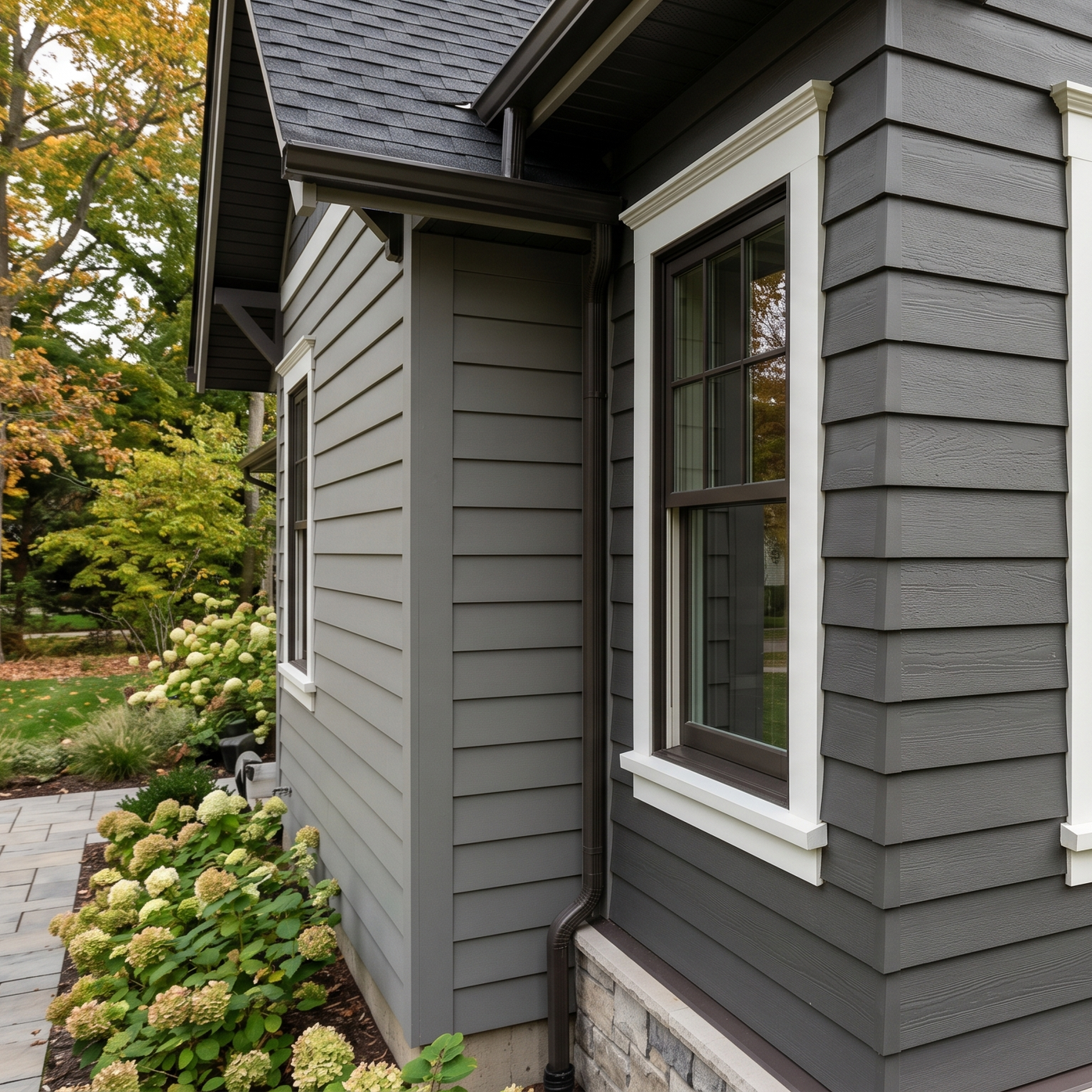
The contractor pulled off a section of trim to check the rough opening and found gray, spongy wood behind it. You'd called for a window estimate. Now you're standing in the yard with a flashlight, looking at rot that probably started three winters ago. That's when "replace three windows" turns into a much bigger conversation — and whether to do the siding at the same time stops being hypothetical.
The real question isn't whether doing both costs more. It does. The question is whether splitting the projects will cost you more in the long run, and whether getting the sequencing wrong will compromise one installation because of the other.
Why Windows and Siding Share the Same Failure Points
On the exterior of a house, windows and siding look like separate systems. They are not. They share a continuous water barrier — and where they meet, at the perimeter of every window opening, is where both systems are most likely to fail.
Every window sits inside a rough opening cut into the wall framing. The gap between the window frame and the exterior surface is covered by trim (the casing you see from outside), flashing that bridges the joint between the window and the siding, and the weather-resistant barrier behind the siding. When any one of those three fails, water tracks down the wall cavity, soaks the sheathing, and starts working on the framing — quietly, for months, before anything shows up inside.
In cold climates, the caulk joints at these intersections get worked harder than anywhere else on the house. A joint that looks fine in October has been through 40–80 freeze-thaw cycles by March. Water gets into a hairline crack, freezes, expands roughly 9%, pries the joint slightly wider, then thaws. Repeat that all winter, and a barely adequate joint becomes a real gap. That's why window-siding perimeter failures hit hardest in regions with real winters — it's not age so much as the number of thermal cycles the joint has survived.
Think of the window-siding junction like a zipper on a waterproof jacket. Both the window and the siding are part of the same continuous barrier. Open it at one end to install something new, and you need to close it up correctly — or water gets in at the seam every time it rains.
When Doing Both at Once Makes Financial Sense
The case for combining projects is real, but it depends on how close each system is to the end of its useful life.
Both window and siding crews need scaffolding, ladders, and multiple workers. Scheduling them to overlap or back-to-back means one mobilization instead of two — on a typical house, that's $1,000–$2,500 in combined labor savings right there. But the bigger gain is what happens at the window perimeters.
When windows go into new siding in the same project, the crew integrates the flashing correctly from the start. The siding installer wraps the opening, the window goes in over the integrated flashing, and the trim gets installed last. One continuous water barrier, no legacy seams. Compare that to splitting the projects: every time a window is replaced, the exterior siding gets disturbed at the perimeter. If the siding was done first and the windows come a year later, the window crew cuts into fresh siding at every opening. A year after that, if the joint wasn't re-sealed properly, you're looking at moisture issues in brand-new materials.
And when both systems come off simultaneously, the contractor has full access to the wall sheathing. In older homes, the house wrap behind the original siding is often degraded, torn, or improperly lapped. Fixing it piecemeal when only one system is replaced is harder and more expensive. While the wall is already open, it is the least expensive.
| Situation | Relative Cost | Long-Term Water Risk |
|---|---|---|
| Replace siding, leave aging windows | Siding cost only | Moderate — windows will disturb the fresh siding later |
| Replace windows, leave aging siding | Window cost only | Moderate — siding panels disturbed at each opening |
| Replace both in the same project | 15–25% more than siding alone | Low — integrated flashing, one disturbance |
| Replace both in separate years | Two full mobilization costs | Higher — double disturbance at window perimeters |
The math tips toward doing both when your siding and windows are within 5–7 years of each other in remaining service life. If one system has a decade of life left and the other is failing, split the projects.
When Splitting the Projects Is the Right Call
Not every house needs both at once. Plenty of situations call for doing one system at a time.
Say your siding is failing, but your windows are under 10 years old. A window installed properly by a quality crew has 20–30 years of service life. If the glass isn't fogging between panes, the frames are sitting flat, and you're not feeling drafts in cold weather, there's no reason to pull new windows early. A skilled siding crew can work around existing windows — they'll flash to the existing trim and terminate the siding cleanly. It takes more care at each opening. But it's standard work.
The reverse situation is common too. Original 1970s windows in a house where the siding was replaced five years ago. The window contractor will remove trim at each opening, install the new unit, and re-trim it. If the siding panels around each opening are in good condition, they cut cleanly and re-seat. You pay for extra detail work at each window, not a full siding redo. One thing worth specifying upfront: ask the siding contractor to install the window trim with screws rather than nails. When the window crew comes through later, they can remove the trim without prying against the adjacent siding panels — which means less risk of cracking or breaking material right at the opening where you least want damage.
Budget timing is legitimate, too. Prioritize whichever system is actually failing. Visible rot, wet insulation you can feel by pressing on the interior drywall near a window, or daylight visible around a window frame from inside — those need attention soon. Cosmetic wear or windows that are aging but still functional can wait.
The Sequencing Mistake That Creates New Leaks
The same failure shows up repeatedly on houses where windows and siding were done in the wrong order: water getting in at the window perimeters on a house where everything looks brand new.
Here's how it happens. Siding goes in. The panels run up to the existing window trim. The installer applies caulk at the joint and moves on. Six months later, a window crew arrives. Installing a window requires removing the exterior trim — they pull the old unit from the rough opening, slide in the new one, and reinstall the trim. When they set the trim back against the new siding, the existing caulk joint at the siding-to-trim line gets broken open. If the new joint isn't applied properly and given time to cure before rain hits, water runs down behind the trim into the wall cavity.
This is why experienced window installers slow down at the exterior trim detail on houses with recently replaced siding. The installation itself is fast — 45 minutes to an hour per unit for a straightforward replacement. The finish work at the perimeter is where the water gets in if you rush it.
Do windows first, siding second — if you're splitting the projects deliberately. The siding crew comes in over fresh, properly flashed window installations, laps their panels up to the new trim, and integrates the flashing from the outside in. Terminating siding against something new is always cleaner than retrofitting around existing work.
What to Check Before You Commit
A few things are worth looking at before you decide which way to go.
Sheathing condition at the window corners. Soft spots, discoloration, or previous water staining around window openings — visible from inside an unfinished attic or basement — mean there's already a moisture problem in the wall assembly. New siding or new windows alone won't fix that. The sheathing, and possibly some framing, needs to come out first.
Age gap between the two systems. Siding over 15 years old and windows over 20 years old are likely in the same replacement window, and doing both makes practical sense. Five-year-old siding with 25-year-old windows is a different situation. A contractor looking at both systems can probe the flashing condition at a window corner in five minutes and tell you whether it's holding up.
Window condition. Fogging between the panes means the inert gas fill has escaped, and the insulating value is gone — that window is done regardless of the siding situation. Drafts you can feel with your hand pressed near the frame in cold weather, condensation forming on the interior glass surface, or daylight visible around the frame from inside all points in the same direction.
Flashing quality at existing windows. A contractor who pulls back a piece of trim can tell you immediately whether the flashing is properly lapped and sealed or just sitting there. If it's already compromised, that's a strong reason to address both systems at once so the flashing gets properly integrated from the start.
Frequently Asked Questions
It typically saves on labor — shared mobilization, one crew, no second disturbance at the window perimeters. On a full house, that's roughly $1,000–$2,500 in combined savings. The total project cost is still higher than doing just one, but you avoid paying again for trim and flashing work when the second system eventually needs replacing.
It depends on how carefully the work is done. A siding contractor working around existing windows needs to remove and reinstall the trim at each opening. Done right, the adjacent panels stay intact, and the flashing gets integrated correctly. Done carelessly, the trim-to-siding joint gets left with gaps. Ask your contractor specifically how they handle window perimeters before work starts.
If existing flashing gets pulled or damaged and isn't properly replaced, water will find the gap. You may not see evidence of it for months, until the wall insulation is saturated and the sheathing has started deteriorating. If a siding contractor is working around your existing windows, confirm that the scope includes checking and, if necessary, replacing the flashing at each opening.
Windows first, siding second. The siding crew comes in last, laps their panels up to the new window trim, and integrates the flashing from the outside in. If you do siding first, the window crew has to cut into fresh siding at every opening and disturb the joint all over again.
Costs vary by house size, material choice, and local labor rates. A mid-size house might run $20,000–$45,000 for a combined project — windows typically in the $8,000–$18,000 range and siding replacement in the $12,000–$27,000 range, depending on material (vinyl, LP SmartSide, fiber cement). The combined price is higher than either alone, but usually 15–20% lower than doing each project independently with its own full mobilization.
Window warranties typically require that the window be properly flashed and the perimeter sealed against moisture entry. If a siding job damages the existing flashing or trim without proper remediation, it can create a gap in warranty coverage. Get clarity from both your window manufacturer and your siding contractor before work starts if this is a concern.
Making the Call
Doing both at once is often the cleaner path — one crew, one flashing installation, no second disturbance at the window perimeters. It's not always necessary. If one system has real life left, split the projects and do windows first.
What matters most isn't the timing. It's the quality of the flashing and caulk work at every window opening. That's where water gets in. Get that right, and the rest holds up.
Schedule an estimate — Craftsman Exteriors handles window replacement and siding replacement across Madison, Verona, Fitchburg, Middleton, Sun Prairie, and southern Wisconsin. We assess the flashing and sheathing condition at every window opening before any work starts. Call (608) 975-5747.
