
Is a Metal Roof Worth the Extra Cost in Wisconsin?
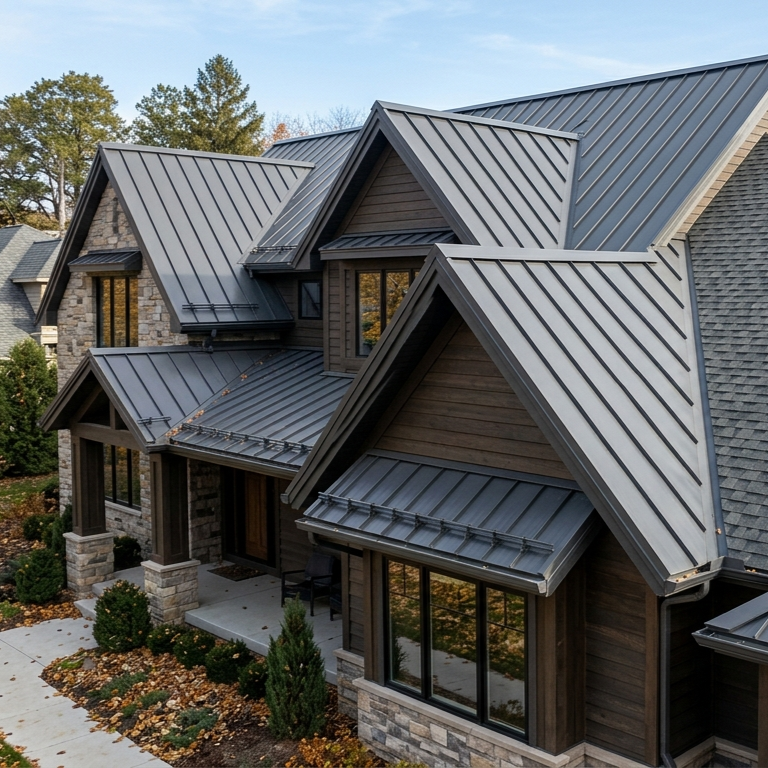
You got the quote. Asphalt shingles came in at $11,000. Standing-seam metal came in at $24,500. You folded both papers, set them on the kitchen counter, and have been walking past them for three days. That gap is real. And it's not going away by staring at it.
Whether metal is worth it comes down to two things: how long you are staying in the house, and what Wisconsin winters do to each material over time. Get those two answers right, and the rest of the math follows.
Why Metal Costs More Than Asphalt — and What You're Paying For
The price gap starts with labor, not material markup. A standing-seam metal panel system uses steel or aluminum roll-formed off a coil, cut to the exact length of your roof slope, and locked together with concealed fasteners. No exposed screws to back out. No laps to seal against wind-driven rain. A skilled installer moves slowly — you're paying for precision, not speed.
Asphalt shingles are a different world. Fiberglass mat, saturated with asphalt, coated with mineral granules. A good crew installs 30 squares in a day. Materials run $80–$120 per square; metal runs $300–$600, depending on profile and gauge.
For a typical 2,000-square-foot Wisconsin ranch with a moderately pitched roof (say, 25 squares), that shakes out to:
Asphalt (architectural shingles, 30-year): $8,500–$14,000 installed
Standing-seam metal (26-gauge steel): $18,000–$28,000 installed
Metal roofing panels (screw-down/exposed fastener): $12,000–$18,000 installed
The screw-down panels — the kind you see on pole barns — are cheaper than standing seam, but they've got a built-in clock. Every exposed screw has a neoprene washer that degrades over 15–20 years. Eventually, it leaks. Standing seam costs more because it kills that failure point before it starts.
How Wisconsin Freeze-Thaw Cycles Treat Each Material Differently
Wisconsin gets more than 100 freeze-thaw cycles per winter. Not 100 cold days — 100 crossings of the 32°F threshold where liquid water inside your roofing materials freezes, expands, and thaws, over and over. Sustained cold doesn't do this. It's the cycling that wears things out.
Asphalt shingles absorb water. Not much, but enough. Once water works into the mat and granule surface — especially on shingles that have already shed granules from hail or UV — it freezes, expands about 9%, and forces any micro-crack a little wider. Do that 100 times a winter for 15 winters. Those micro-cracks become visible cracking. That's why 30-year shingles in Wisconsin often look like 25-year shingles. Most honest contractors won't guarantee a 30-year shingle performs to its rated life in this climate.
Metal doesn't absorb water. It sheds everything. Freeze-thaw does cause thermal expansion in metal panels, but standing-seam systems are built with floating clips specifically so panels can move without buckling or snapping fasteners. Screw-down systems can't do that — which is exactly why they eventually leak.
Think of asphalt shingles in Wisconsin like a concrete sidewalk. Fine until enough freeze-thaw cycles find the small voids and crack from the inside out. Standing-seam metal is more like a bridge expansion joint — built to move with temperature swings rather than fight them.
Lifespan Side-by-Side: What the Numbers Actually Look Like
| Factor | Architectural Asphalt Shingles | Standing-Seam Metal |
|---|---|---|
| Installed cost (25 sq. roof) | $8,500–$14,000 | $18,000–$28,000 |
| Expected lifespan in Wisconsin | 20–25 years | 40–70 years |
| Cost per year (midpoint) | $440–$560/year | $370–$520/year |
| Snow load capacity | 20–25 lbs/sq ft (depends on deck) | Shed snow faster; lower static load |
| Freeze-thaw performance | Granule loss accelerates year 10–15 | Unaffected by moisture absorption |
| Hail resistance | Impact rating varies; granule loss common | Class 4 impact-resistant options available |
| Energy efficiency | Standard reflectivity | Cool-roof coatings reduce cooling load 10–25% |
| Maintenance | Spot repair as shingles curl/crack | Minimal; inspect flashing every 5–7 years |
| Resale signal to buyers | Expected; neutral | Premium perception; some appraisers add value |
The cost-per-year column is the honest number. Metal's higher upfront cost spreads over twice the lifespan. If you replace asphalt twice during the life of one metal roof — and you will, if you stay long enough — you've spent more on asphalt in total.
But that math only holds if you're in the house for more than 20 years. Or if the buyer who eventually takes it off your hands understands roofing well enough to price it accordingly. Appraisers are all over the map on this. Don't count on that premium transferring at closing.
What Wisconsin Snow Load Does to Each Roof
A wet Wisconsin snowpack hits 30–40 lbs per square foot. That's a structural question — it's about your roof deck and rafters, not the roofing material. Both asphalt and metal are light enough that the covering itself isn't the load issue. What matters is how snow gets off the roof.
Metal sheds snow fast. The slick surface releases snowpack before it piles to maximum load — a real benefit in a heavy snow year. The problem is it releases all at once. A sheet of snow sliding off a steeply pitched metal roof can flatten gutters, damage landscaping, or knock someone flat on their way to the car. Most metal roofs over driveways, entryways, and walkways need snow guards. Individual guards run up to $15 each, and you may need dozens; bar-style retention systems can hit $40 per linear foot. Add it up and snow guards tack $1,500–$8,000 onto the project, depending on roof size and layout.
Asphalt holds snow longer. More sustained load, but no sudden release. For a roof directly over a garage door or side entry, that's not nothing.
Ice Dams: Where Each Material's Real Weakness Shows Up
Metal doesn't prevent ice dams. Nothing does except proper attic insulation and ventilation. But what metal does is change what happens when water backs up behind one.
Ice dams form when heat escaping through your roof deck melts snow from the underside. That meltwater runs down to the cold eave and refreezes. The dam grows until backed-up liquid water has nowhere to go but under whatever's covering the slope.
Under asphalt shingles, water finds nail holes, underlayment seams, and any lap that wasn't tight enough. It soaks into the wood deck. The leak shows up on your bedroom ceiling three weeks later — long after the ice is gone, which makes the source nearly impossible to pinpoint without pulling up shingles.
Under standing-seam metal, there are no horizontal seams for water to sit in. The panels run continuously from ridge to eave. If the underlayment and ice-and-water shield were put down correctly, water backing up from a dam has almost nowhere to go. That's not a guarantee — bad installation leaks at ridge caps and around penetrations regardless of material — but a well-installed standing-seam system handles ice-dam conditions better than asphalt in practice.
And then there's hail. Metal is tough, but hailstones as small as ¾ inch in diameter can dent steel panels, chipping the protective coating and exposing bare metal underneath. Once that coating goes, rust can show up within 10–20 years, depending on gauge and finish. Asphalt handles hail differently — Class 3 shingles are tested against 1.75-inch steel ball impacts dropped from 20 feet, which covers most hail events in southern Wisconsin. If you're in a hail-prone area, ask specifically about Class 4-rated panels and what the coating thickness actually is.
When Metal Is Worth the Premium — and When It Isn't
Metal makes sense when:
You plan to stay in the house for more than 15 years and want to replace the roof once, not twice
Your current roof has active ice dam problems, and you're doing attic work at the same time
You want Class 4 impact-resistant panels ahead of hail season (some insurers offer 5–15% premium discounts for qualifying impact-resistant materials — ask your insurer before committing to a specific panel)
The house has a complex roof with multiple valleys and penetrations where long-term leak risk is higher
You're doing a major renovation and amortizing the cost over the full project
Asphalt makes more sense when:
You're selling within 10 years, and a buyer won't pay a premium for metal
Budget is the primary constraint — a well-installed architectural shingle roof is not a bad roof
The neighborhood price ceiling limits what you can recoup on a premium exterior
Your existing roof deck needs significant repair work that will add to either project's cost
A 30-year architectural shingle installed correctly — proper ice-and-water shield at the eaves, sealed valleys, and adequate ventilation — performs well in Wisconsin for 20–25 years. It's not a consolation prize. It's what most Wisconsin homeowners choose, and there's nothing wrong with that call.
Metal earns its premium for the right house and the right owner. Those two things have to line up.
Frequently Asked Questions
A standing-seam steel or aluminum roof, properly installed with continuous ridge ventilation and sealed penetrations, typically lasts 40–70 years. Painted finishes usually carry 40-year fade warranties. Real-world performance in Wisconsin's climate supports more than 50 years for quality systems.
Not if it's installed over solid decking (OSB or plywood) with underlayment. The noise problem is associated with pole barn-style metal over open purlins with no insulation. A residential metal roof over a solid deck is quieter than most homeowners expect — roughly the same as asphalt in heavy rain.
Some insurers offer discounts of 5–15% for Class 4 impact-resistant roofing materials, which certain metal panel systems qualify for. This isn't universal — it depends on your insurer and how your area rates for hail exposure. Get your insurer's current rate on file before committing to a specific panel.
In most cases, no — and in Wisconsin, you never want to install new shingles over old material anyway. Ice-and-water shield needs to go down on clean decking. A proper installation tears off the existing roof, inspects and repairs the deck, and starts fresh.
Buyer perception is positive, but appraisers are inconsistent about assigning formal value. In a competitive market, a metal roof can be a tiebreaker. In a market with a hard price ceiling, you may not recover the premium on resale. Local real estate agents who know your specific neighborhood can give you a more accurate read than any national figure.
Standing-seam panels run from ridge to eave in continuous lengths with concealed, floating fasteners. Metal shingles are designed to resemble traditional shingles and use exposed or semi-hidden fasteners. Standing seam is the higher-performing system for snow and ice because there are no horizontal seams where water can collect; metal shingles have more seams and are typically less expensive but less resilient in freeze-thaw conditions.
Schedule an estimate — Craftsman Exteriors handles metal roofing installation and roof replacement across Madison, Verona, Fitchburg, Middleton, Sun Prairie, and southern Wisconsin. We can walk you through standing-seam and asphalt options side by side so you know exactly what you're comparing before you decide. Call (608) 975-5747.
