
What Are the Biggest Mistakes Homeowners Make When Buying Replacement Windows?
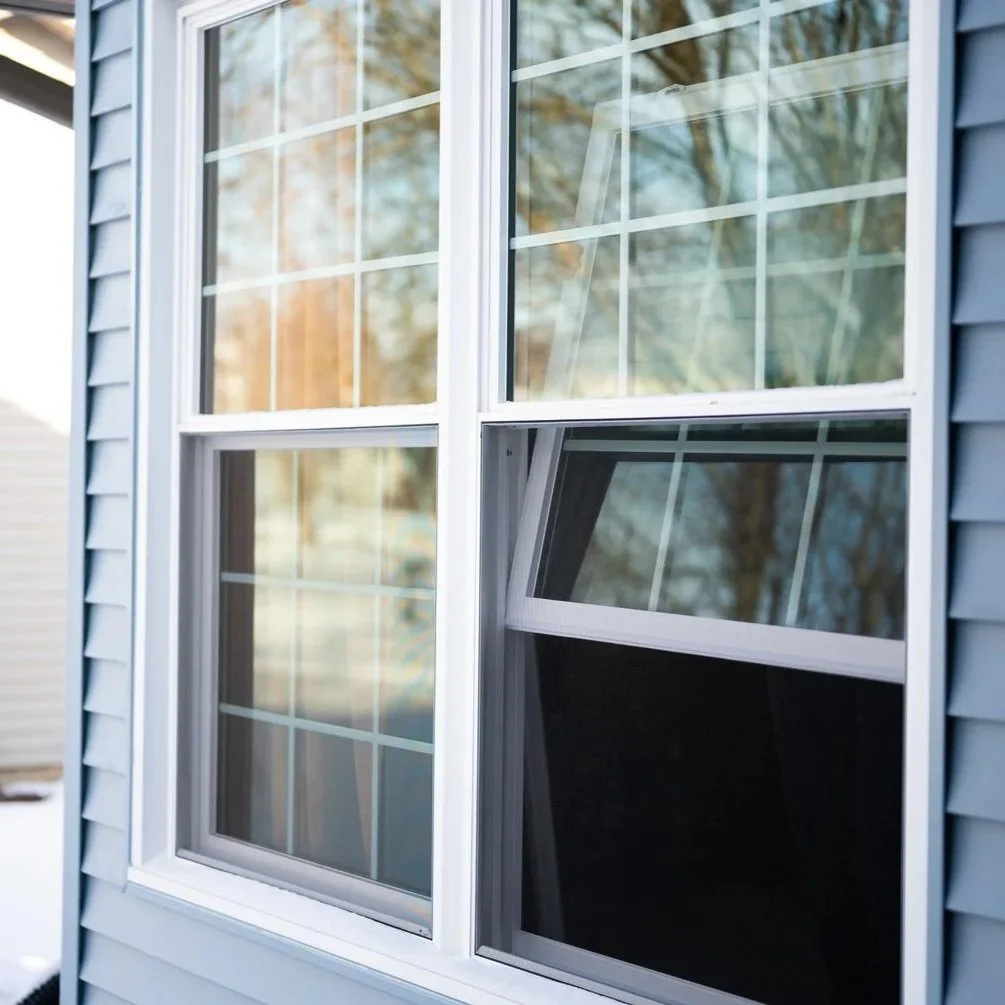
You run your hand along the window frame, expecting it to feel better. You had new windows put in eight months ago. But there it is — that same cold seeping through the corners, a faint draft when the wind gusts, and a thin line of condensation forming where the frame meets the drywall. The windows look fine. They're just not doing much.
Bad replacement windows aren't usually bad glass. They're the result of mistakes made before the first measurement was taken — in the showroom, on the phone with a salesperson, or in the moment you signed the quote. Knowing where those mistakes happen is the difference between windows that cut your heating bills and windows that look identical to the ones you replaced.
Choosing a Window by Price Instead of Specs
This is the most expensive mistake in the long run. A $250 vinyl insert and a $600 double-hung with a low-E coating look similar in a brochure. They perform completely differently once winter arrives.
The spec that matters most in cold climates is the U-factor — a measure of how quickly heat transfers through the entire window assembly: glass, frame, and spacer combined. Lower is better. A window rated U-0.30 loses heat roughly twice as fast as one rated U-0.17. That difference isn't theoretical. On a 10°F morning, it's the cold rolling off the glass that you feel standing anywhere near the window, and it's the heat your furnace burns trying to keep up.
The second spec worth understanding is the Solar Heat Gain Coefficient (SHGC), which measures how much solar heat passes through. In cold climates, a higher SHGC on south-facing windows can actually reduce your heating load — the sun does some of the work. On north-facing windows, a lower number is fine.
Energy Star sets regional minimums, but those are floors, not targets. A window that just clears the minimum is not a well-performing window — it cleared a threshold. Look for a whole-unit U-factor of 0.27 or lower, and ask specifically whether the rating covers the whole unit or just the center-of-glass. Center-of-glass ratings are optimistic. Whole-unit ratings tell you how the window actually performs in a wall.
| Specification | What It Measures | Target for Cold Climates |
|---|---|---|
| U-Factor (whole unit) | Heat loss through the entire window | ≤ 0.27 (lower is better) |
| SHGC | Solar heat admitted through the glass | 0.25–0.40 (higher on south-facing) |
| Air Leakage | Air infiltrating the frame | ≤ 0.30 cfm/sq ft |
| Visible Transmittance | Daylight passing through | 0.40–0.70 (personal preference) |
Choosing by price means choosing by cost to manufacture, not by how the window will actually perform for the next 20 years.
Assuming Insert and Full-Frame Replacement Work the Same Way
They don't. The installation method changes what the window can fix — and what it can't.
An insert replacement (sometimes called a pocket replacement) slides the new window into the existing frame. The old frame stays. This is faster, cheaper, and the right approach when your existing frames are solid, square, free of rot, and properly sized. A well-installed insert in a sound frame performs exactly as rated.
The problem is that "sound frame" is often assumed, not verified. Old window frames, especially in homes built before 1990, frequently have soft wood at the corners where moisture has worked its way in over the decades. A frame that looks painted and intact can be 40% rotted at the sill. When an insert goes into a frame like that, it goes in crooked, the seals compress unevenly, and by the next winter, the air leakage numbers are climbing.
Measurement errors also show up here. Frames in older homes shift as the house settles — what was a square 36-by-48 opening in 1975 may measure slightly out of square today. An insert ordered off old dimensions rather than fresh field measurements won't fit, no matter how good the product is.
Full-frame replacement removes everything — frame, sill, all of it — down to the rough opening. The new window gets shimmed square against properly prepared framing and flashed from scratch. It costs more, typically $150–$300 more per window in labor, and takes longer. But it's the only way to address a deteriorated frame, and it's the only way to change the opening size if you want a larger or smaller unit.
The mistake is letting a contractor recommend an insert replacement without physically inspecting the existing frames first. Press a screwdriver into the sill corners. Soft spots, visible rot, or paint bubbling around the frame edges tell you which method the window actually needs.
Skipping Proper Air Sealing at the Rough Opening
This is the gap between an install that performs and one that doesn't — invisible once the trim goes back up.
When a window goes into a rough opening, there's a gap between the window frame and the surrounding framing. That gap needs to be filled. The right approach is low-expansion spray foam or fiberglass batt insulation applied in the cavity before the trim covers it. The wrong approach is nothing, which is what happens when an installer is moving fast.
Think of it like the gasket on a car door. The door can close perfectly and still let wind noise in if the rubber seal is missing or compressed incorrectly. A window frame that's shimmed square and locked tight to the rough opening still has that perimeter gap. Without insulation filling it, outside air has a direct path from the wall cavity into your living space, right around the edges of the frame you just paid to install. You'll feel it as a draft along the sides or bottom of the window — not through the glass, but around the frame.
The fix takes about 10 minutes per window and costs almost nothing in materials. Ask your contractor what they use to fill the rough-opening gap before installation day, and verify it before the interior trim goes up. "We'll caulk the trim" is a different thing — caulk seals the visible joint, not the cavity behind it.
Buying from a Contractor Who Won't Put the Window Brand and Specs in Writing
Some installers sell you "replacement windows" with a total price, a warranty pitch, and not much else. The brand, series, and specs aren't on the quote. The U-factor isn't listed. The frame material is described as "high-quality vinyl" with no manufacturer name attached.
This matters because windows vary enormously in quality within the same rough price point. A quote for "double-pane low-E vinyl replacement windows at $650 per window installed" could describe a window rated U-0.28 with a reinforced frame or one rated U-0.36 with a hollow frame that flexes in wind. Both technically match the quote's description.
Get the manufacturer name, the product series, and the NFRC label data in writing before you sign. Reputable manufacturers — Andersen, Pella, Marvin, ProVia, Alside, and Simonton, among others — publish their specs. You can look up the exact product and verify what you're getting. A contractor who won't commit to a specific product in writing is telling you something useful about how the rest of the project will go.
Misreading "Lifetime Warranty"
"Lifetime warranty" sells windows. It also means almost nothing without reading the actual document.
Most window warranties are pro-rated — coverage shrinks, often sharply after the first 10 years. A window that fails in year 15 may be covered at 20% of replacement cost, leaving you paying 80% out of pocket. That's still technically a warranty. It's just not the protection the phrase implies.
A few other terms worth checking:
The warranty on the glass package (the insulated glass unit, or IGU) is separate from the warranty on the frame and hardware. Seal failure — when argon gas leaks from between the panes and the glass fogs up — is one of the most common window problems after 10–15 years. Some manufacturers cover it for 20 years, others for 10. That's the clause that matters most.
Many warranties are also non-transferable, meaning they belong to the original homeowner and don't convey with the house. If you're planning to sell in the next five years, a non-transferable warranty has limited practical value.
Check whether the warranty covers labor or just materials. A window whose seal fails in year 8 may get a replacement unit under warranty — but you still pay labor to swap it, typically $150–$300 per window. Some premium manufacturers include labor coverage for the first 10 years. Most don't.
Ignoring the Frame Material Question
Vinyl is the most common replacement window frame, and it performs well in most applications. But "vinyl" isn't one thing — there's a real performance gap between a reinforced vinyl frame and a low-cost hollow-chamber frame, and it shows up specifically in cold weather.
Vinyl contracts when temperatures drop. A frame installed at 70°F shrinks measurably at -10°F, especially on longer horizontal runs. Low-quality vinyl frames can rack slightly under thermal stress, which stresses the weather-stripping and lets air in. Well-built vinyl frames have internal reinforcement — steel or fiberglass inserts inside the frame chambers — that holds geometry stable across temperature swings from -20°F to 100°F.
Fiberglass frames handle thermal movement better than vinyl because fiberglass expands at roughly the same rate as the glass itself. The seal between frame and glazing stays tight across the full temperature range. Fiberglass costs more — typically 20–40% over equivalent vinyl — but it's worth considering for high-exposure windows on north- or west-facing walls where the temperature differential is sharpest.
Wood-clad frames (wood interior, aluminum- or vinyl-clad exterior) perform well thermally and suit older homes where matching interior trim profiles matters. They need more attention on the exterior cladding over time compared to a full-vinyl frame.
| Frame Material | Thermal Performance | Maintenance | Typical Cost Premium Over Basic Vinyl |
|---|---|---|---|
| Hollow vinyl | Moderate | Low | Baseline |
| Reinforced vinyl | Good | Low | 15–25% |
| Fiberglass | Excellent | Low | 25–45% |
| Wood-clad | Good to excellent | Medium | 40–80% |
| Aluminum | Poor (thermal bridging) | Low | Varies |
Frequently Asked Questions
Have the installer — or someone independent — inspect the existing frames before deciding. Press firmly into the sill corners with a screwdriver. Soft spots, visible rot, or paint bubbling around the frame are signs that the frame needs to come out. If the frames are solid and square, insert replacement usually works fine. If you're also seeing water stains near the frame, rot in the exterior casing, or windows that have always felt drafty, full-frame replacement addresses what insert replacement can't.
Target a whole-unit U-factor of 0.27 or lower for heating-dominated climates. Triple-pane windows can reach 0.15–0.20 and make a noticeable difference on north-facing windows or in rooms that have always run cold. Double-pane low-E windows in the 0.22–0.27 range represent the most common choice and balance performance against cost well. Avoid anything above 0.30 if you're replacing specifically to reduce heating costs — the performance improvement won't justify the disruption.
At least three, from companies that have been operating locally for at least five years. Ask each to itemize the quote — brand, series, specs, labor, and warranty terms — not just a total price. Wide variation between quotes (say, $400 per window versus $900 for similar specs) usually reflects real differences in product quality or installation. The middle quote isn't always right, but it tells you where the market sits.
Yes, arguably more. A well-specified window installed without proper shimming, air sealing, and flashing will underperform a mid-grade window installed correctly. Ask potential installers specifically how they handle air sealing at the rough opening and what flashing detail they use at the head. A good installer has a specific, consistent answer. A vague one doesn't.
In climates with extended cold temperatures and high heating costs, the upgrade often pays back — particularly on north- and west-facing windows that get little solar gain. The premium over equivalent double-pane low-E windows runs roughly $100–$200 per window, depending on brand and size. For a home with 15 windows, the payback period for lower heating costs typically runs 8–12 years, depending on energy prices. South-facing windows with good solar exposure get less benefit because the sun offsets some of the heat loss through the glass.
A professional crew can install 10–15 windows in a single day on a standard replacement job. Full-frame replacement with flashing takes longer — budget 1.5 to 2 days for the same count. The home will be open to outside air during the swap, so scheduling matters in extreme weather. Most crews work one window at a time, leaving each opening exposed for 30–60 minutes. A coordinated team plans the sequence to keep exposure time short.
What the Right Decision Looks Like
Get the specs in writing — U-factor, SHGC, frame material, warranty terms. Inspect the existing frames before settling on an insert or full-frame. Ask about air sealing at the rough opening before installation day, not after. Verify the flashing detail at the window head. Get at least three quotes from established local contractors and compare them on specs and process, not just total price.
The windows that disappoint aren't usually a brand failure. They're the result of a decision made without the right questions on the table.
Schedule an estimate — Craftsman Exteriors handles window replacement across Madison, Verona, Fitchburg, Middleton, Sun Prairie, and southern Wisconsin. We assess existing frames before recommending insert or full-frame replacement and include air sealing at every rough opening. Call (608) 975-5747.
