
What Are the Signs That Windows Need to Be Replaced?
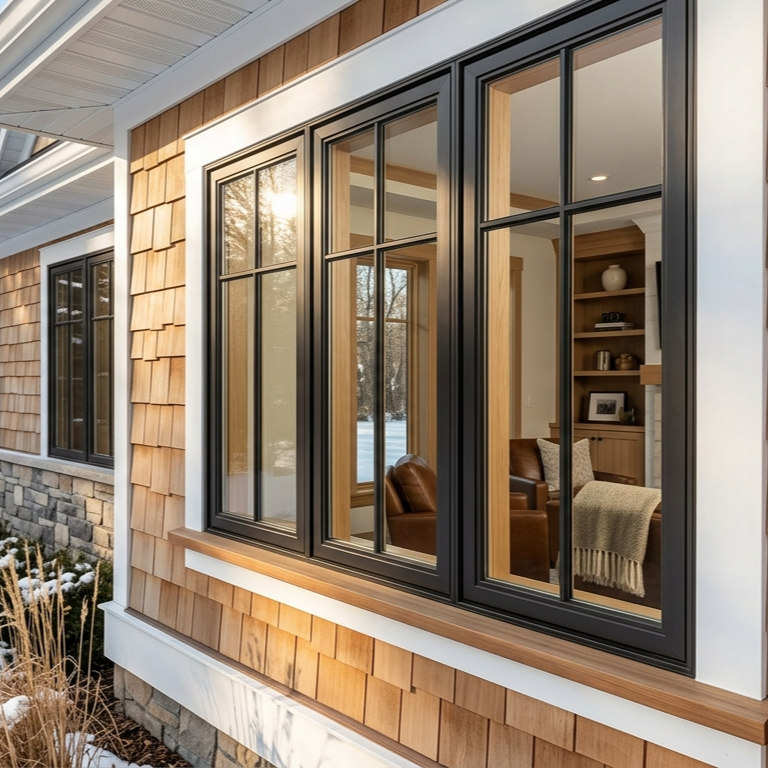
Press your palm flat against the glass on a chilly morning. Cold — but manageable. Now slide it to the corner of the frame. That's a different kind of cold. Outside cold. The kind that tells you the barrier between your living room and whatever's happening outside has quietly stopped doing its job, and whatever you're spending to heat that room is trickling out through a quarter inch of failed caulk and a frame that's been losing its grip for years.
Most people get to that moment and start thinking about new windows. The real question is whether they're catching it early or late.
Windows don't fail overnight. They wear down slowly, and the signs show up well before anything stops working entirely. The trick is knowing which signs point to something fixable — a worn weatherstrip, a loose crank — and which ones mean the window itself is done.
Your Heating Bills Are Climbing, and Nobody Can Explain Why
This one is easy to miss because it doesn't spike. It creeps. Bills go up a little each winter, you blame the gas company, and three years later, you're spending 30% more to keep the house at the same temperature.
Here's what's actually happening. A functioning double-pane window holds argon gas between the panes — argon conducts heat about 34% less efficiently than regular air, which is the whole point. When the seal around the insulated glass unit fails, the argon slowly escapes and is replaced with ordinary air and moisture. The glass loses roughly 20% of its insulating value, not all at once, just gradually. You won't feel a sudden draft. You'll just feel like the thermostat is fighting harder than it used to.
Single-pane glass is worse. The thermal resistance (R-value) of a single pane is roughly 0.9. A double-pane window with Low-E coating runs R-3 to R-4. That gap shows up in your monthly bill every single winter.
Test it yourself. On a cold day, hold your hand near the center of the glass, then move it to the frame edges and corners. If the corner is noticeably colder than the wall surface, the window is underperforming. A lit candle held near the frame corner shows airflow you can't feel with your palm — if the flame bends, air is moving.
There's Fog Trapped Between the Panes
You've probably seen this. A hazy, milky film between the glass that doesn't wipe off because it's not on the surface — it's inside the sealed unit. That's not a cleaning problem. That's a dead window.
The sealed space between double-pane glass holds desiccant material to absorb any residual moisture when the unit is manufactured. The seal keeping that system intact is under constant stress. Glass expands when it warms and contracts when it cools. Over 15 to 25 years of that cycle, the seal fatigues and starts to admit outside air and humidity. Moisture enters, condenses on the inner glass surfaces, and has nowhere to go.
Some days the fogging looks worse than others, depending on temperature swings. But once the seal's gone, it's gone. There's no repair that restores a failed insulated glass unit — the glass unit needs replacement. And on older windows, replacing just the glass unit often costs close to what a new window costs anyway. Worth getting a quote on both before you assume the cheaper option is actually cheaper.
The Frame Has Gone Soft, or It's Pulling Away from the Wall
Run your fingers along the bottom of a wood window frame on the interior side. If it feels at all spongy — if a thumbnail sinks in without much effort — that's active rot. Not weatherstripping deterioration. Rot.
Wood frames rot when moisture gets behind the paint film and into the wood fiber. It starts at the sill, where water collects, or at any joint where paint has cracked, and water can wick in. Once rot takes hold, it moves. The wood loses its structure, the window stops seating tightly against the rough opening, and you get air leaking in, water leaking in, or both. You can paint over it. That buys you a season.
Vinyl frames fail differently. They don't rot, but old vinyl warps, and the corner welds crack. The frame pulls away from the surrounding trim, leaving a small gap — maybe an eighth of an inch. Doesn't sound like much. But a cold wind at 20 mph doesn't need much space. Air infiltration through a 1/16-inch gap around a window frame can add 15 to 20 cubic feet of cold air per hour to that room.
Either way, caulk doesn't fix this. You're patching over a structural problem, and the frame keeps degrading behind whatever you apply to the surface.
The Window Won't Open, Won't Stay Up, or Won't Lock Tight
Casement windows that won't crank all the way. Double-hung sashes that need two hands and a pry bar to unstick. Sliders that jump the track. One sticky window is usually a hardware or adjustment issue. Four sticky windows in the same house is a frame problem.
Wood frames absorb moisture and swell. Swollen enough, the sash binds in the frame and won't slide or crank without force. Vinyl and aluminum frames warp from years of thermal cycling, causing the same bind. Old double-hung windows with failed balance springs — the mechanisms that hold sashes in position — slam shut on their own. And any window that won't latch properly isn't just annoying. The sash isn't pulled tight against the weatherstripping, which means there's a gap, which means heat loss and cold air entry.
But here's the thing about operational problems: the lock is the part homeowners forget. A window that latches but doesn't lock securely has a real security problem on top of the energy problem. Both are worth addressing. If the hardware is the issue and the frame is still sound, you can repair it. If the frame itself has moved, warped, or rotted, hardware won't fix it.
Water Is Getting In Around the Frame — and the Damage Is Already Spreading
A wet windowsill after heavy rain can be a maintenance issue — failed exterior caulk, debris blocking a weep hole. Water that's staining the drywall below the window, bubbling paint on interior trim, or leaving a soft spot in the wall is a different situation entirely.
Windows are installed with flashing — layers of water-resistant material that lap over each other to direct water away from the rough opening and out over the siding below. When that flashing fails, either from poor original installation or because the materials have simply aged out, water finds its way behind the window frame and into the framing lumber. By the time you see interior staining, water has typically been moving through that wall for one or two full seasons. The framing behind the drywall may already be showing early rot.
Think of it like a slow shower leak. The tile looks fine for years while water moves behind it and destroys the substrate. A window replacement in that situation also means repairing the surrounding wall structure, which raises the cost substantially compared to catching it one winter earlier.
The Glass or Frame Has Visible Physical Damage
Cracks in the glass. Chipped corner welds on vinyl frames. Split wood on older window casings. Any of these compromises the window's ability to seal, insulate, or keep out moisture, and all of them get worse over time rather than staying stable.
A crack in one pane of a double-pane window typically admits air into the sealed unit, accelerating seal failure and leading to fogging. A cracked frame corner on vinyl lets the frame flex slightly in the wind, which means the weatherstripping doesn't press uniformly against the sash. Even a small gap pulls heat out fast — and in cold weather, that gap also lets condensation form on the interior glass, which can run down and damage the interior sill if it goes on long enough.
Broken glazing compound around old wood windows is worth dealing with immediately. What starts as a hairline crack opens with each freeze-thaw cycle until water is moving freely behind it and into the frame.
The Window Is Over 20 Years Old and Showing More Than One Problem
Age alone doesn't determine when a window needs replacement. It depends on what you're working with. Well-installed vinyl windows typically last 20 to 40 years; wood windows, 30 or more years with regular maintenance; fiberglass, 40 to 50 years; and aluminum, 15 to 30 years. Material quality and installation quality both matter as much as age.
But age matters a lot when it stacks with other symptoms. A 22-year-old vinyl window with drafts at the frame, a fogged IGU, and a sash that doesn't latch cleanly isn't three separate small problems. It's one window that has degraded uniformly with age, and repairing each issue in isolation adds up quickly. New weatherstripping here, caulk there, a glass unit replacement in the spring — you can easily spend 50 to 60% of replacement cost while extending the life of a window that's already past its useful performance window.
The break-even math isn't complicated. If repair quotes approach half the installed cost of a replacement window, replacement usually wins. A new window comes with a 10- to 20-year manufacturer's warranty on the sealed glass unit. A repaired seal comes with nothing.
What's Actually Fixable vs. What Isn't
Not every window problem needs replacement. Worn weatherstripping on the sash perimeter is a straightforward fix — cheap materials, manageable DIY, done in an hour. Failed exterior caulk between the frame and trim is worth maintaining regularly, regardless of window age. Faulty crank or lock hardware can be replaced on most casement windows without pulling the whole unit.
But some things can't be patched. Fog or haze between the panes means the IGU is done — you can sometimes replace just the glass unit if the frame is still sound, but it's worth pricing full replacement before assuming the cheaper option saves money. A soft, rotted frame isn't repairable with surface treatments; the structure is gone. Water getting into the wall cavity behind the window means the flashing system has already failed, and the damage is probably larger than what's visible from inside. And any window showing multiple operational problems after 20-plus years is a candidate for replacement, not another round of repairs.
Some homeowners spend a few hundred dollars patching windows two or three times over five years, then replace them anyway once the frame finally fails. The money spent on patching didn't extend the window's life — it just delayed the decision. Sometimes the repair makes sense. Often, once you get into the math, it doesn't.
Frequently Asked Questions
Surface condensation on the inside or outside of the glass is caused by humidity and isn't a window problem. Fog or haze that sits between the panes — visible when you wipe both glass surfaces clean, and it still doesn't come off — means the IGU seal has failed. That doesn't respond to humidity adjustments.
Yes, particularly if they were lower-quality units or installed incorrectly. A sill that wasn't pitched to drain, flashing that wasn't lapped right, a frame that wasn't shimmed level — any of these can accelerate degradation significantly. A poorly installed window ages years faster than the same unit installed properly.
It depends on what you're replacing. Going from single-pane to double-pane Low-E windows can cut heat loss through glass by 25 to 50%. Upgrading from older double-pane to new high-efficiency units with a U-factor below 0.25 typically shows more modest savings — around 10 to 15% reduction in window-related heat loss. The biggest gains come from eliminating air infiltration around degraded frames, which newer windows seal far better.
Exterior caulk between the frame and trim is worth maintaining — it's cheap, and it blocks surface water from reaching the flashing. But caulking around the sash itself, or applying rope caulk to a drafty window, is temporary. It doesn't fix frame degradation or a failed IGU seal.
Insert replacement drops the new window into the existing frame, which stays in place. It's faster and less expensive, but only works if the existing frame is structurally sound and still plumb. Full-frame replacement removes everything down to the rough opening — necessary when there's rot, water damage, or significant frame movement.
In houses where all the windows were installed at the same time, they tend to fail around the same period. If one window is showing serious problems and the rest are similar in age and material, it's worth having all of them inspected at the same time. Bundling replacements usually reduces cost per window and means you're not doing this again in two years when the next one fails.
Schedule a window inspection — Craftsman Exteriors handles window replacement across Madison, Verona, Fitchburg, Middleton, Sun Prairie, and southern Wisconsin. We'll tell you which windows are worth fixing and which ones aren't, without overselling. Call (608) 975-5747.
