
What Are the Signs Your Siding Needs to Be Replaced?
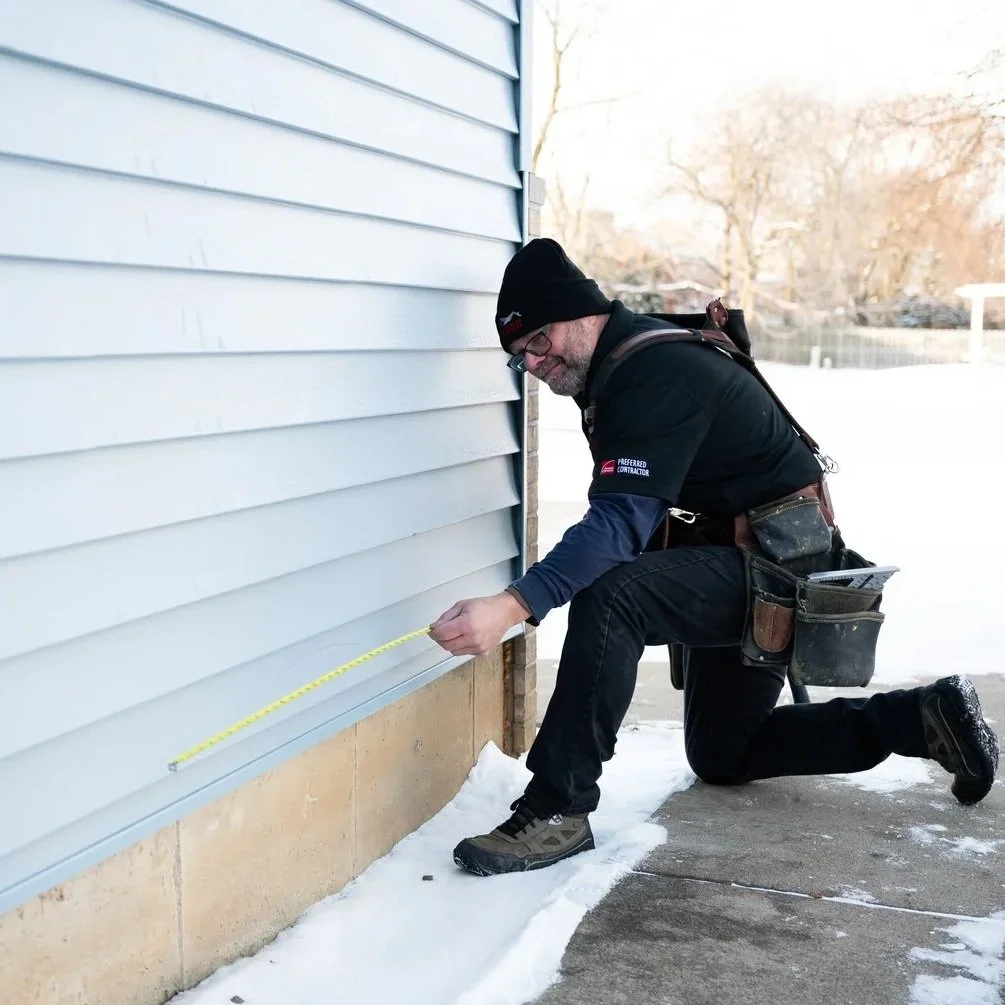
You noticed it last fall: a section of siding near the front porch that had started to bow outward, subtle enough that you figured it was just how the light was hitting it. By spring thaw, it had pulled away from the wall by a full inch, and there was soft, gray wood visible behind it. That's not a cosmetic issue. That's water that's been working its way behind the panel for at least one full winter cycle, and the damage underneath is almost always worse than what you can see from the driveway.
Siding fails gradually, then suddenly. Most homeowners don't notice the early warnings until something obvious—a cracked panel, a stain on the interior wall, a utility bill that's jumped 25%—forces the issue. By then, the wood sheathing, housewrap, or framing behind the siding may already be compromised. Catching the signs early is the difference between a siding replacement job and a siding-plus-structural-repair job.
Here's what to look for.
Warping, Buckling, or Panels Pulling Away from the Wall
Siding panels are designed to stay flat and flush against the wall. When they warp, buckle, or pull away at the edges, it means one of a few things is happening: the panels have absorbed water and swollen, the fasteners have failed, or the wall behind the siding has shifted or rotted to the point where the panels can no longer sit properly against it.
With vinyl siding specifically, warping happens when the panels overheat. Vinyl expands and contracts with temperature—it can move as much as half an inch over a 10-foot panel between a cold winter morning and a hot summer afternoon. If the panels were nailed too tightly during installation (a common mistake), they have nowhere to go when they expand. They buckle outward. This is different from water damage, but the visual result looks the same from the street.
With wood-based or fiber cement siding, warping almost always means water. When moisture infiltrates the panel, it swells the material unevenly—the face stays intact while the back face absorbs and expands. The panel cups or bows. Once that moisture gets behind the panel and into the wall cavity, freeze-thaw cycles accelerate the damage. Water expands about 9% when it freezes; that 9% expansion happens in every crack and gap repeatedly through a winter with 100 or more freeze-thaw cycles, and the damage compounds fast.
When is this worth repairing? If the buckling is isolated to a handful of panels and the wall behind them is solid—no soft spots, no discoloration—you can often replace those panels only. If buckling is widespread or if pushing on the panel reveals soft, spongy material underneath, replacement is the better call.
Rot at the Bottom Edges, Corners, and Around Windows
Rot is the most reliable indicator that water has gotten behind the siding and stayed there. It shows up first at the lowest points—the bottom edge of the siding run, J-channel corners, and the trim around windows and doors—because that's where water pools before it eventually runs off or evaporates.
The mechanism is straightforward. Siding, trim, and corner posts all have cut ends. Even factory-primed products have raw wood exposed at those cuts unless they're sealed properly during installation. When water contacts those raw ends, it wicks into the material by capillary action—the same way a paper towel draws up water it's set into. Once moisture is inside, it creates the conditions that wood rot fungi need: temperatures between 40°F and 100°F, moisture content above 20%, and oxygen. A Wisconsin home gives them all of those things for roughly eight months of the year.
Push on any area you suspect. Solid wood gives back resistance. Rotted wood is soft and may dent under finger pressure. If you find softness at a corner post, check the adjacent wall framing—corner posts sit directly against the structure, and rot there often means the framing has been wet long enough to begin deteriorating.
Localized rot—a single window sill, a few bottom courses—can be repaired. Rot that runs continuously along the base of a wall, or that appears in multiple separate locations simultaneously, means there's a systemic water management failure behind the siding. That requires replacement and investigation of the housewrap and sheathing.
Cracked, Chipped, or Impact-Damaged Panels
A single cracked panel from a wayward lawnmower stone isn't a reason to replace your whole siding. But widespread cracking is a different story.
Vinyl gets brittle at low temperatures. Below about 10°F, it doesn't flex the way it would on a warm day—it shatters. Vinyl siding hit by a piece of ice or hail at sub-zero temperatures will crack all the way through rather than deflecting the impact. If a severe winter storm or hail event hits your area and you notice crazing—fine surface cracks across multiple panels—the panels are structurally compromised even where they haven't broken all the way through.
Fiber cement and LP SmartSide handle cold-weather impacts better. LP SmartSide is rated to an ASTM D2444 impact resistance score of 24, compared to vinyl's 12. But they're not immune. Hail at 1.5 inches in diameter, traveling at 50 mph, delivers roughly 15 foot-pounds of impact energy. At that level, even fiber cement can chip or crack at the surface, and the exposed substrate will absorb water immediately.
Cracked siding panels don't just look bad. They create direct pathways for water and wind-driven rain to reach the housewrap and sheathing. A crack at the face of a panel is essentially an open seam. Think of it like a crack in a windshield—small now, but it will propagate under the next significant stress.
Pest Activity Around the Siding and Trim
Woodpeckers, carpenter ants, and termites don't create new problems in healthy siding—they find problems that already exist. Woodpeckers drill into wood siding and trim looking for insects; if they're working on your house, they've found a food source, which usually means carpenter ants or beetles have already established. Termites target moisture-softened wood. Carpenter ants excavate galleries in wood that has reached a moisture content above about 15%.
The visible damage—holes, tunnels, sawdust trails along the base of the wall—tends to understate the actual extent. Pest damage typically extends several feet beyond the entry point by the time you spot it from the ground. Pull back any affected panels, and you'll often find channels running horizontally through the wall framing.
Fiber cement and vinyl have no organic content, so insects don't target them directly. Engineered wood like LP SmartSide uses a zinc-borate treatment against insects and fungus—but any product that has cracked or developed gaps at the trim joints becomes an entry point regardless. When pest gallery damage appears in multiple locations or in the framing itself, replacement combined with pest treatment is the right sequence.
Visible Fading, Chalking, or Color Change
Fading on its own isn't a functional failure, but severe or uneven fading can signal that the siding's UV-protective coating has broken down.
Vinyl's color runs through the full material thickness—no separate top coat—so it doesn't peel or chip, but it does fade as UV degrades the pigment. Chalking is a related sign: a powdery residue that transfers onto your hand when you run it across the panel. That means the UV stabilizers have been fully depleted, and the surface layer is breaking down.
Fiber cement and LP SmartSide have a factory-applied primer coat that requires periodic repainting. If the paint is peeling or showing bare material, the protective system has failed—and left bare, fiber cement absorbs moisture across its entire face, not just at cut ends. If repainting would restore the panel, that's a reasonable short-term fix. If the surface won't hold paint anymore, replacement is more cost-effective than repeated paint cycles.
Interior Signs: Wall Stains, Damp Insulation, and Mold
By the time your siding failure is showing up inside the house, the damage has progressed well beyond what's visible on the exterior. Interior wall stains, especially at the baseboards or around windows, mean water is getting all the way through the exterior wall assembly: past the siding, past the housewrap, and into the insulation and drywall.
The smell is often the first indicator. A musty odor concentrated near an exterior wall, particularly in winter when the house is closed up, usually means mold has established in the wall cavity. Mold can begin growing within 24 to 48 hours on wet organic material at temperatures above 40°F, and wall cavities, once wet, stay wet for a long time because there's no air circulation.
These interior symptoms require more than siding replacement alone. You'll need to open the wall from the exterior to assess the sheathing, insulation, and framing before new siding goes on. The sheathing is often the deciding factor—oriented strand board (OSB), the most common sheathing material in homes built after the 1990s, swells, delaminates, and loses structural integrity when it's been wet repeatedly. Replacing damaged sheathing adds to the project cost, but skipping it means your new siding will be installed over a compromised substrate.
High Heating and Cooling Bills Without Another Explanation
Siding doesn't provide the primary thermal barrier in your wall—the insulation inside the wall cavity does that—but siding failure can indirectly drive up energy costs in two ways.
First, cracks and gaps in the siding allow wind to drive air directly into the wall cavity, bypassing the housewrap and reducing the effective R-value of whatever insulation is behind it. Wind-washing, as it's called in building science, can reduce the effective performance of batt insulation by 20% to 40% in areas with persistent wind.
Second, if the insulation itself has gotten wet—from water infiltration through failed siding—wet insulation performs dramatically worse than dry insulation. Fiberglass batts at 15% moisture content by weight perform at roughly 50% of their rated R-value. Saturated insulation is, for thermal purposes, nearly useless.
If your heating bills have increased 15% or more without a rate increase or obvious mechanical failure, and you've already ruled out attic air sealing and HVAC issues, the exterior wall assembly is worth investigating.
How Old Is Your Siding? The Age Factor
Even a siding that looks acceptable at a glance may be approaching the end of its functional life. Material type determines that range:
Vinyl siding: 20-40 years under normal conditions. At the lower end of that range, it's builder-grade material from the early 2000s.
LP SmartSide and other engineered wood: 30+ years with proper maintenance (repainting every 7-10 years, caulking maintained at trim joints). Shorter if installation left cut ends unsealed.
Fiber cement (e.g., HardiePlank): 30-50 years. Requires periodic repainting, but the substrate itself is highly durable.
Original wood siding on older homes: Lifespan varies widely—well-maintained cedar can last 60+ years, while pine siding with failed paint and decades of deferred maintenance may be structurally compromised in sections.
Siding approaching the top of its expected range doesn't need to fail visibly before you start planning for replacement. A proactive replacement before full failure keeps you out of emergency scheduling and lets you make material choices without pressure.
The Repair vs. Replace Decision
Not every siding problem requires a full replacement. These situations typically support targeted repair:
Isolated panels damaged by a single impact event
Localized rot confined to one trim board or corner post with solid material on either side
A failed caulk joint at a window or door opening
One or two panels that have blown loose in a storm but are otherwise intact
Replacement becomes the better answer when:
Damage appears in multiple separate areas simultaneously (indicating systemic failure, not isolated events)
The material is past 25 years and showing multiple symptoms together—fading, some cracking, some rot
You're patching the same panels or repainting the same sections season after season—escalating maintenance is a reliable signal that the material is done
Interior water symptoms are present
The sheathing behind the siding is soft or delaminated
You're replacing windows or doors at the same time (since removing and re-installing surrounding siding for window work often costs more than replacing the whole run)
A complete siding replacement on an average 1,500-square-foot home typically runs $8,000 to $20,000, depending on material choice, with vinyl at the lower end and LP SmartSide or fiber cement in the middle to upper range.
Frequently Asked Questions
Isolated damage from a single event—one cracked panel, one rotted trim board—usually supports a repair. When you find problems in multiple separate locations, or when the damage involves the wall structure behind the siding, replacement is generally more cost-effective.
Soft spots that dent under finger pressure, discoloration at the bottom edges and corners (often dark brown or black), and panels that have pulled away from the wall at the base. The paint surface may still look intact while the material underneath is failing.
Yes. Cracks and gaps let wind drive air into the wall cavity, and if insulation has gotten wet from water infiltration, its thermal performance drops significantly—sometimes by half. A 15% or higher increase in heating costs without another explanation is worth investigating from the exterior.
Vinyl siding has a general lifespan of 20 to 40 years. Budget-grade materials from homes built in the late 1990s through mid-2000s often land at the lower end of that range. Premium vinyl with UV stabilizers tends to last longer but will still degrade eventually.
Some minor movement is normal—vinyl expands and contracts with temperature swings. Permanent warping or buckling that doesn't recover when temperatures moderate is not normal. It usually means improper installation (fasteners too tight) or water damage behind the panels.
Don't just clean the mold and paint over it—that treats the symptom, not the cause. You need to identify the water source, which means a careful inspection of the exterior siding and wall assembly at that location. In most cases, opening the wall from the outside is necessary to assess the damage properly.
Schedule an estimate — Craftsman Exteriors handles siding replacement across Madison, Verona, Fitchburg, Middleton, Sun Prairie, and southern Wisconsin. We'll inspect the full wall assembly — not just the surface — so you know exactly what you're dealing with before any work begins. Call (608) 975-5747.
