
What Causes Shingles to Curl or Buckle? 7 Culprits
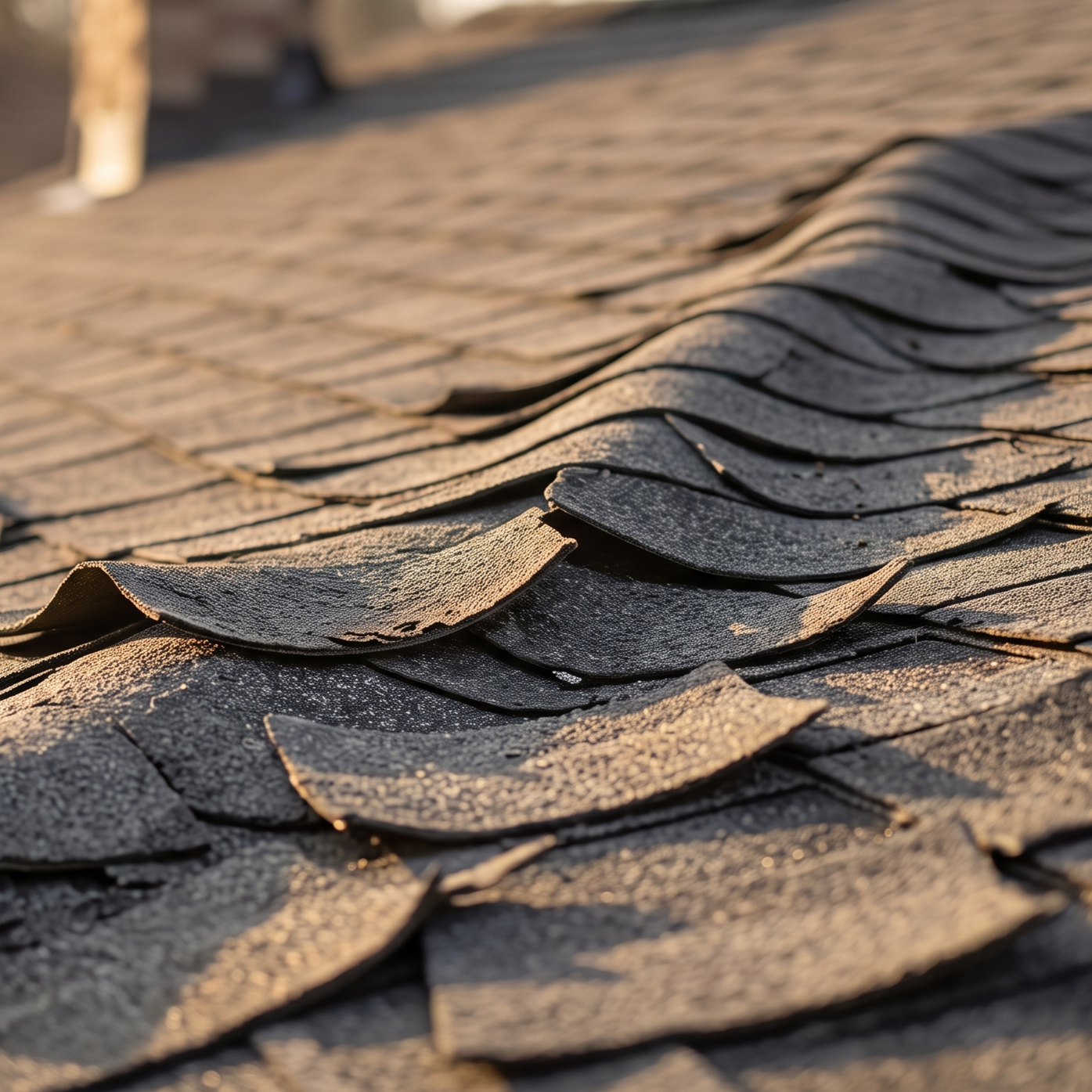
From the driveway, a healthy shingle roof reads as a flat, uniform plane. So when the surface starts to look restless, with edges lifting or a long ripple running across a slope, your eye catches it before you can name it. Those two distortions, curling and buckling, are not the same problem, and telling them apart is the first real clue to what is happening underneath. One usually points to age or heat; the other often points to moisture or to the way the roof was installed. Reading the shape correctly saves you from replacing shingles that a ventilation fix would have saved, or from patching over a problem that keeps coming back.
Curling Versus Buckling: Two Shapes, Two Stories
Curling shows up at the individual shingle. It comes in two forms that a roofer will name precisely. Cupping is when the edges of a shingle turn upward while the middle stays down, so the tab looks like a shallow bowl. Clawing is the reverse: the edges stay put, but the center lifts and the tips press down, giving the shingle a hunched, claw-like set. Both mean the shingle has lost the flexibility it had when new and is shrinking and distorting as its mat and asphalt dry out.
Buckling is a different animal. Instead of a curling tab, you see a wavy ridge or a wrinkle that runs across several courses of shingles, as if something pushed up from below. Buckling is rarely about the shingle itself aging. It is almost always about what the shingle is nailed to, or what was rolled out beneath it. Where the wave lands tells the story: a ripple that lines up with the seams of the roof deck panels points one direction, and a random wrinkle that ignores those seams points another. More on that below.
Age And The End Of A Shingle's Life
Every asphalt shingle has a service life, and curling is one of the ways it announces the end of that life. Over years of sun and weather, the asphalt hardens, and the shingle loses volatile oils, so it grows stiff and begins to shrink. As it shrinks unevenly, the edges cup or the center claws. When curling is spread evenly across the whole roof, and the shingles are well into their expected span, that is aging, plain and simple. You will often see granule loss in the same time frame, since the protective mineral surface sheds as the shingle weathers. A roof showing broad, uniform curling near the end of its rated life usually indicates it is ready for replacement rather than repair.
Poor Attic Ventilation, The Heat From Below
The most common reason shingles curl years before they should is a poorly ventilated attic. A roof is meant to breathe: cooler air enters low at the soffit vents under the eaves and rises out high through a ridge vent or roof vents, carrying heat and moisture with it. When that path is broken, the attic turns into an oven and a moisture trap, and the shingles cook from the underside.
Two failures are behind most of it. Soffit vents often get blocked by attic insulation stuffed tightly into the eaves, with no baffle to keep an air channel open, so intake air never gets in. Or there is no proper exhaust at the ridge, so hot air has nowhere to go. Either way, deck and shingle temperatures climb and stay high, the asphalt ages faster, and cupping or clawing appears while the roof is still relatively young. This runs both ways through the year in a climate with real seasonal swings: summer heat drives attic temperatures up and bakes the shingles, while in the cold months, trapped indoor moisture condenses on the underside of the deck and works on the wood and fasteners. Ventilation problems are not a one-season issue.
An Improper Second Layer Or Nails In The Wrong Place
How the roof was installed can set curling and buckling in motion from day one. Laying a new layer of shingles over an old one is one culprit. The new shingles telegraph the uneven, worn surface beneath them, and the doubled assembly holds more heat, so shingles over a second layer tend to curl sooner than shingles on a clean deck.
Nailing is the other install-side cause. Nails driven too high on the shingle, above the designed nailing zone, miss the reinforced strip and fail to pin the course above correctly, leaving tabs free to lift. Overdriven nails that cut into the shingle, or underdriven nails left proud of the surface, both create local distortions that can read as a small buckle. These are workmanship issues, not aging, and they often show up as scattered problem spots rather than a whole-roof pattern.
Moisture In The Decking And A Wrinkled Underlayment
Here is where buckling separates itself from curling. According to the Asphalt Roofing Manufacturers Association, buckling on a new or reroofed roof is most often caused by wrinkles in the underlayment or movement of the wood decking, and the pattern tells you which. When roof deck panels take on rain or dew before the roof is dried in, the wood absorbs moisture and swells; as it later moves, the shingles above distort in lines that match the joints of the deck panels or boards. Panels are meant to be spaced roughly an eighth of an inch apart precisely so they have room to expand without buckling, and board decks can move as adjacent planks gain and lose moisture at different rates.
A wrinkled underlayment produces a different signature. If felt or synthetic underlayment absorbs moisture and wrinkles before the shingles go on, or if old, brittle felt is left in place under a new layer, the shingles buckle in random ripples that do not line up with any deck seam. So the diagnosis is in the geometry: distortion that follows the deck joints means the wood moved, and distortion that ignores them means the layer beneath the shingles wrinkled. Thermal cycling, the daily expansion and contraction of the whole assembly as it heats and cools, adds stress on top of all of this and can push a marginal install into visible buckling over time.
The Shape You See And What It Points To
Because curling and buckling each split into recognizable forms, the appearance is a genuine diagnostic. This is one place where a quick reference earns its keep.
| What you see | The name | What it usually points to |
|---|---|---|
| Edges turn up, middle stays down | Cupping | Aging, or heat from a poorly ventilated attic |
| Center lifts, edges and tips press down | Clawing | Aging and shrinkage; sometimes a moisture or install issue |
| Wavy ridge lining up with deck seams | Buckling (deck) | Wet or moved roof decking |
| Random wrinkle ignoring deck seams | Buckling (underlayment) | Wrinkled or old underlayment beneath the shingles |
| Isolated lifted or bulged spot | Localized distortion | A high or proud nail, or debris trapped under a shingle |
None of these is cosmetic. A curled or buckled shingle no longer lies flat, which means its sealed edge is broken and wind can get under it. Once wind lifts a raised tab, the shingle is far more likely to tear loose or blow off entirely, and every lifted edge is an opening that lets wind-driven rain and snowmelt run under the course and toward the deck. Distortion is the visible stage right before leaks and missing shingles.
Defective Shingles And When The Product Is At Fault
Occasionally, the shingle itself is the problem. Manufacturing defects, or damage from poor storage before installation, can leave shingles that distort even when the roof is well-built and well-ventilated. Shingles stored improperly, bent, or heat-stressed before they ever reach the roof, can carry a set that shows up as distortion once installed. A genuine product defect usually shows a consistent pattern across shingles from the same production run rather than the location-driven pattern you get from ventilation or decking. Manufacturers publish limited warranties, but those warranties assume the roof was installed and ventilated to their specifications, which is why the diagnosis matters before anyone files a claim.
Sorting Out What Your Roof Is Telling You
Curling and buckling are your roof's early warning system, and the fix follows the cause rather than the symptom. Broad, uniform curling on an old roof usually means replacement is due. Premature curling on a younger roof often traces back to ventilation, and correcting the airflow, clearing the soffits, and adding proper exhaust protects whatever life the shingles have left. Buckling that follows the deck seams is a decking-and-moisture repair; buckling that ignores them is an underlayment issue; and both, on a newer roof, point back at the installation. A professional inspection that looks in the attic as well as on the roof is what connects the shape you see to the repair that actually lasts, and it keeps you from replacing shingles when the real work is under them.
Frequently Asked Questions
Some is, once a roof is truly old. Asphalt shingles carry a service-life range, and manufacturers commonly rate basic three-tab shingles for a shorter span than the thicker architectural, or dimensional, shingles, so what counts as "old" depends on which product is up there. Toward the tail end of that rated life, light, even curling across the whole roof, is expected wear as the asphalt dries and stiffens. What is not normal is curling on a young roof. If shingles are cupping or clawing well before they should, the age judgment flips: the roof is not worn out, it is being aged early by an under-ventilated attic, a second layer, or a defect, and that cause is worth finding before you write it off as "just getting old."
You can check several signs from inside without walking on the roof. Head into the attic on a hot afternoon: if it is stifling, far hotter than the air outside, heat is not escaping. In the cold months, look at the underside of the roof deck for frost or damp patches, which are signs that moisture is condensing rather than venting out. Then check the eaves, where the soffit intake vents are. If insulation is stuffed tight against the roofline with no rafter baffle holding an air channel open above it, or if the soffit vents are painted or packed shut, intake is blocked. Finally, look for exhaust: a continuous ridge vent or roof vents near the peak. The system needs both halves, intake low at the soffit and exhaust high at the ridge, working together. Missing or blocked on either end, and the attic cannot breathe.
It depends on how widespread the distortion is and how old the roof is. A handful of curled or lifted shingles in one area, on a roof with years of life left, can often be swapped individually, though color-matching weathered shingles to new ones is rarely perfect. When curling is spread evenly across most of the roof, and the shingles are near the end of their rated span, spot repairs only chase the problem, and a full replacement is the sound call. The deciding factors are the share of the roof affected, the remaining service life, and whether an underlying cause, like ventilation, is fixed at the same time.
Yes, and it usually points to the installation rather than the shingles. Buckling that appears within weeks or months of a new install typically comes from underlayment that wrinkled due to moisture, or from wood decking that took on rainwater before it was covered and then moved. Because the industry treats these as workmanship and moisture-control issues, document it with photos and call the installer promptly, since the fix belongs with whoever did the work and may fall under a workmanship warranty. Note whether the ripples follow the deck seams or wander randomly, because that detail tells the roofer whether the deck or the underlayment is the culprit.
It can, depending on why the shingles curled. Manufacturer’s limited warranties are written on the condition that the roof was installed and ventilated to their published specifications, so curling that traces to an under-ventilated attic or an improper install is generally not the manufacturer's responsibility. A true material defect, showing a consistent pattern across shingles from the same run rather than a heat or moisture pattern, is what a warranty is meant to cover. This is exactly why a proper diagnosis comes before any claim: the cause determines whether the manufacturer, the installer, or normal aging is on the hook.
Only as a short-term stopgap. A dab of roofing cement under a lifted tab can hold it down for a while and reduce the immediate risk of blow-off, but a shingle that has cupped or clawed has already lost its flexibility, and forcing it flat tends to crack the brittle mat. It also does nothing about the reason it curled, so nearby shingles keep going the same way. Treat a glue-down as buying time until an inspection, not as a repair, and never walk a distorted roof in heat, when shingles scuff, or in cold, when they crack underfoot.
Seeing shingles curl or a ripple across your roof — get an attic-and-roof inspection that finds the real cause before it leaks. Craftsman Exteriors serves Madison, Verona, Fitchburg. Call (608) 843-5007.
