
Signs Your Siding Needs Replacing (Before Water Gets In)
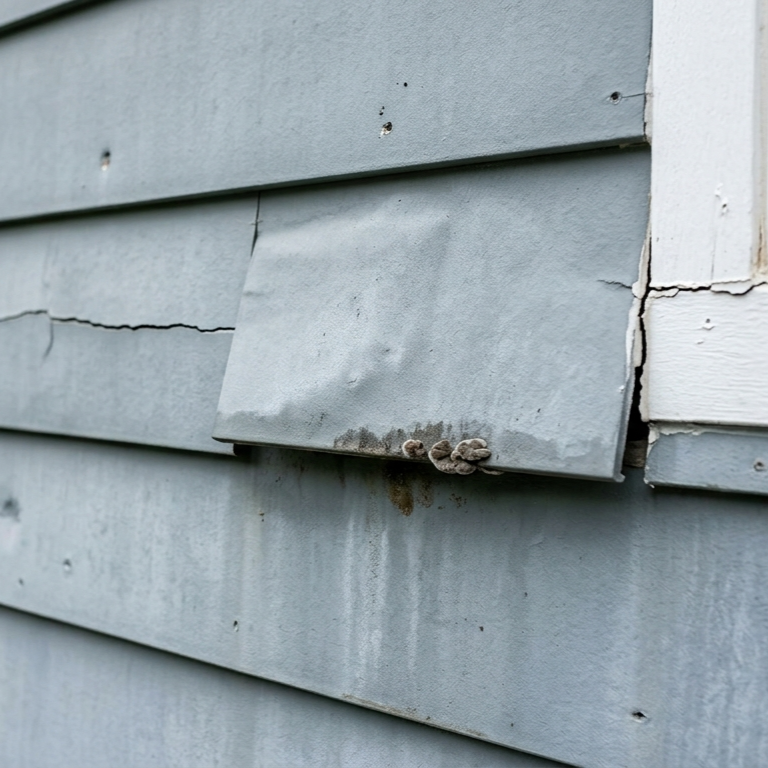
Siding is the part of your house you look at every day and think about almost never. It sits there, sheds rain, takes the sun, and mostly keeps quiet. So it is easy to assume that as long as it is standing, it is doing its job. But siding is not just the exterior color of your home. It is the outermost layer of a wall assembly, and its real job is to keep water and weather off the sheathing and framing behind it. When it starts to fail, the trouble rarely announces itself out front. It works its way behind the panels, into places you cannot see, and by the time it reaches the house, it has usually been going on for a while.
That is why knowing the difference between siding that looks tired and siding that has actually failed matters so much. One is a paint problem. The other is a water problem waiting to become a structural one.
How Siding Actually Protects Your House
Think of your wall like a jacket worn in bad weather. The outer shell takes the rain and wind, and underneath sits a water-resistant layer, and then the insulation and structure that keep you warm and dry. Siding is that outer shell. Behind it, there is usually a house wrap and then the sheathing, the flat panels nailed to the framing that give the wall its strength.
When the siding is intact, water runs down the face and off the house. When a panel cracks, warps, or pulls loose, that path breaks. Water finds the gap, gets behind the siding, and sits against the wrap and sheathing. Wood sheathing that stays wet begins to soften and rot. Framing behind it can follow. Because all of this happens out of sight, siding failure is often well advanced before anyone notices, which is exactly why early reading of the signs is worth the effort.
Signs That Point To Replacement, Not Just Repair
Not every flaw means the siding is finished. The goal is to tell cosmetic wear apart from functional failure, the kind that lets water past. These are the signs that lean toward replacement.
Cracked, split, warped, buckled, or loose panels- A single cracked panel from a stray impact is often a patch. But panels that are warping, buckling, or working loose across an area are no longer sitting flat and sealed. Each gap is a place for water to enter.
Rot, soft spots, or fungus on wood and hardboard- Press on the siding where you suspect trouble. If it gives, feels spongy, or crumbles, the material has absorbed water and begun to break down. Fungus or mushroom-like growth on the surface is a clear sign that moisture has been trapped in the material.
Holes or pest damage- Woodpeckers, insects, and rodents create holes that both weaken the panel and provide a direct route for water. A few small holes may be patched, but widespread damage usually means the material has become an easy target because it is already soft.
Widespread fading, chalking, and paint that will not hold- Some fading is normal aging. But heavy chalking, a powdery film that rubs off on your hand, and paint that peels again soon after a fresh coat suggest the surface can no longer hold a finish. When siding stops taking paint, repainting stops being a real fix.
Moisture, mold, or stains showing up inside- This is one of the most telling signs, because it means water has already made it past the siding. Water stains on interior walls, peeling interior paint, or musty odors near an exterior wall indicate a leak in the outer shell.
Bubbling or blistering- Blisters on the siding surface mean moisture is trapped under the finish or within the material, pushing outward.
Separating seams and growing gaps- Where panels meet, or where siding meets trim and windows, seams should stay tight. Gaps that open up let wind-driven rain in at exactly the joints that are hardest to keep sealed.
Higher energy bills- When siding and the sheathing behind it degrade, the wall assembly loses insulating value and air leaks through the gaps. A heating or cooling bill that keeps climbing without any other explanation can be traced back to a wall that is no longer sealing properly.
Visible daylight or gaps- If you can see light through a wall from inside or find gaps you can slide a finger into from outside, the barrier has real holes in it.
Hail and impact damage- Dents, cracks, and punctures from hail or debris break the surface. Scattered marks may be cosmetic, but concentrated impact damage can compromise whole sections.
Cosmetic Versus Functional: The Distinction That Decides It
The line worth holding in your head is this. Cosmetic problems change how the siding looks. Functional problems change what the siding does. Faded color, dated style, and light chalking are cosmetic. The house is still dry behind them. Soft spots, rot, buckling, and moisture inside are functional failures, and they are the ones that allow water to reach the structure.
The reason the distinction matters is the cost of delay, not the cost of the siding. A cosmetic issue can wait for the right season without any harm done. A functional failure that waits keeps feeding water into the wall, and hidden water damage, mold, and structural rot are far more involved to fix than the siding itself.
Repair Or Replace: How To Weigh It
Isolated damage usually leans toward repair. One panel cracked by a thrown baseball, a small rotten section at a downspout splash zone, a woodpecker hole or two, these can often be patched or swapped without redoing the wall.
The picture shifts toward replacement when the problems are widespread, when rot is present, or when the same spot keeps failing after being repaired. Repeated failure in one area is usually a sign that water is getting in somewhere upstream, and the surface fix is not addressing the source.
There is one step that separates a lasting fix from a cosmetic one, and it is easy to skip. Before you replace siding, check what is behind it. The house wrap and sheathing carry the consequences of years of siding failure, and if water has been getting past the old siding, the sheathing may already be compromised. Putting new siding over rotted sheathing hides the damage instead of fixing it. A proper replacement involves examining that layer and addressing what it shows.
Material matters here too, because siding types age differently and fail in their own ways. That difference shapes both what you are seeing now and what you choose to put back up.
A Word On The Climate
It is tempting to blame siding failure on one season, but the wear comes from both ends of the year. In a cold, wet climate with hard freeze-thaw cycles, water that works into a crack can freeze, expand, and widen the opening, and repeated freezing stresses can damage caulk joints and seams. At the same time, summer heat and constant sun do their own damage all season long, drying out and embrittling material, driving fading and chalking, and causing panels to expand and contract until seams loosen. Siding is not fighting winter or summer. It is fighting the swing between them, year after year, which is why evergreen wear, and not any single cold snap or heat wave, is the honest way to think about it.
When To Bring In A Professional
Some of this you can read from the ground. Fading, obvious cracks, and stains on interior walls are visible without any climbing. But two things push an inspection toward a professional. The first is height. Checking siding up high means ladders and footing on uneven ground, and a close look at the parts most exposed to weather is not worth a fall. The second is hidden damage. The most important questions, whether the sheathing is sound and how far water has traveled, cannot be answered from the surface. A trained eye knows where water tends to collect, which signs point to trouble behind the panels, and when a patch will hold versus when the wall needs to come off. If you are seeing moisture inside, spreading soft spots, or damage you cannot reach safely, that is the point to have it assessed rather than guessed at.
Frequently Asked Questions
There is a quick physical test that settles it. Press a screwdriver tip or an awl into a suspect board: if the point sinks into soft, spongy wood, that is rot, and the board needs replacing. A surface that stays hard under the tip but looks faded or chalky is only cosmetic, so the board can stay and be refinished. Do this at several spots rather than one, because rot often starts at a single wet junction and spreads from there, and a board can be sound at one end and gone at the other.
Not always, and the direction of the peel tells you which problem it is. Paint that lifts with a clean underside, no old finish stuck to its back, means moisture is pushing out from behind the siding, and that is a water problem the board itself may not survive. Flakes that still have old paint bonded to their back point instead to a prep or adhesion failure, a bad surface, or a coat applied over chalk, which a proper sand and repaint can fix. Peel one flake and look at its back before you decide whether to repaint or replace.
Beyond the house wrap and the sheathing, check the flashing. The metal flashing at windows and doors, and the kickout flashing where a roof edge meets a wall, are the junctions where water most often slips behind siding and rots the sheathing. If those are missing, corroded, or installed incorrectly, new siding over them will fail the same way the old did. A thorough replacement inspects each of those points and corrects them before the new material goes up, so the base underneath is truly sealed and not just covered.
Sometimes. An isolated impact or a small rotten section can be patched or swapped without redoing the wall. The catch is matching aged siding to a color and texture that new pieces rarely blend with, so repairs can stand out. And when failures are repeated or spread across the wall, patching becomes a losing game, and a full replacement is usually the sounder and more lasting call.
Yes, and knowing your material helps you read the signs. Vinyl tends to crack and warp in the cold and can even soften or melt near a heat source like a grill or reflected sunlight. Wood and hardboard rot and swell when they stay wet. Fiber cement is durable, but its painted surface and caulked joints still need upkeep to stay sealed. Because the failure modes differ, the warning signs you watch for depend on what is on your walls.
It can, though the bigger driver is usually air leakage rather than a loss of R-value alone. Gaps at loose panels and warped boards let conditioned air move in and out freely, and that constant exchange costs more than a slight dip in wall insulation would on its own. There is a second hit too: any wall insulation that got wet behind failing siding loses most of its rated R-value until it is dried out or replaced, so a soaked wall underperforms even after the siding is fixed.
Have your siding assessed by a professional — before hidden water turns a surface problem into structural repair. Craftsman Exteriors serves Madison, Verona, Fitchburg, and the surrounding area. Call (608) 843-5007 for a free estimate.
