
What Is the Best Decking Material for Wisconsin Weather?
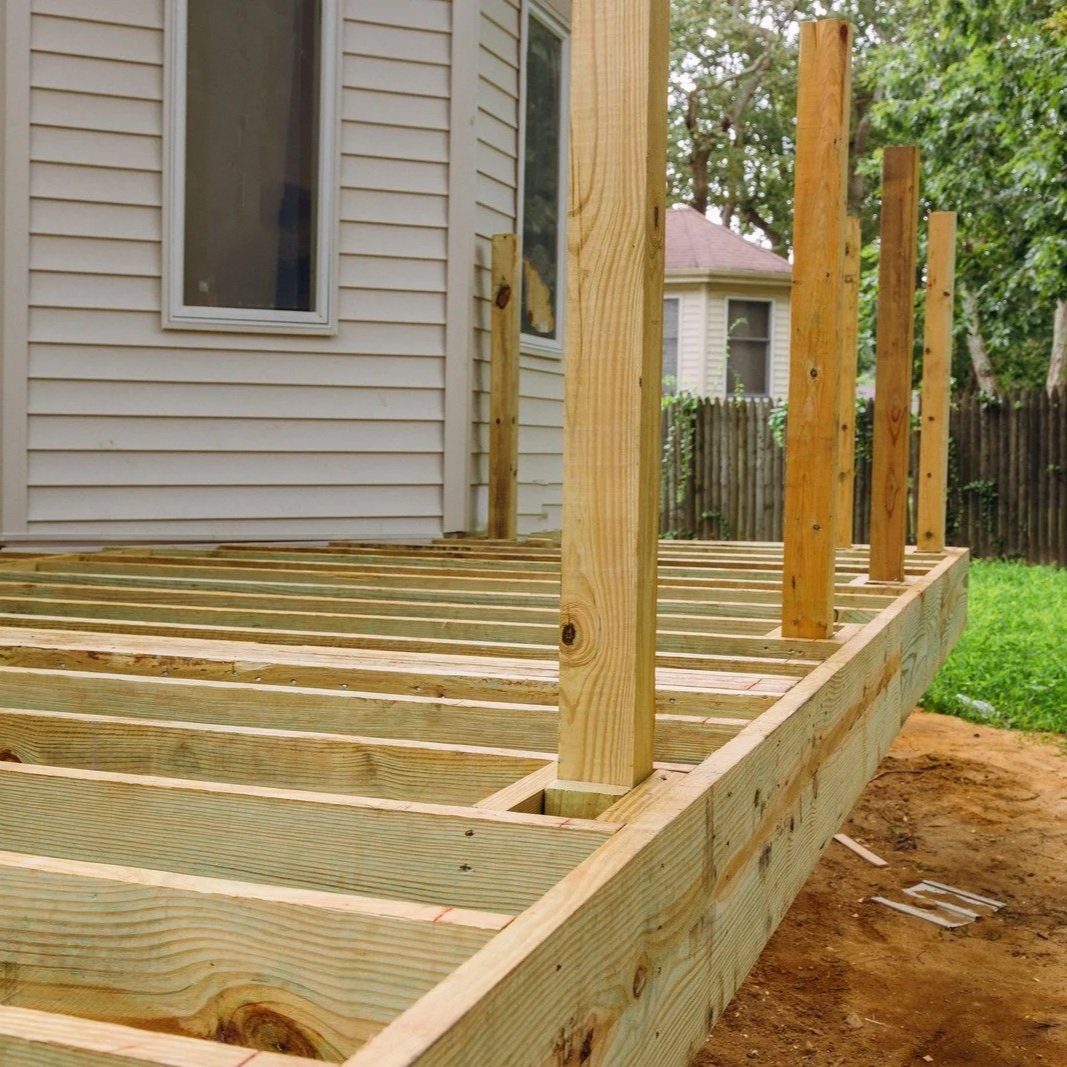
You spent the last weekend staining your deck — two coats, brushed into every board, corners, and all. By April, half the boards had checked, and a couple near the steps had started to cup. The wood looked worse after one winter than it did before you touched it. That's not unusual here — and it's why the material you choose matters more in a Wisconsin climate than almost anywhere else.
Wisconsin puts decking through roughly 100 freeze-thaw cycles per year. Not just cold — sustained freezing followed by full thaws, sometimes multiple times per week during late winter and early spring. Add 40 inches of average annual snowfall with peak loads hitting 30–40 pounds per square foot, plus spring hail storms that crack softer materials, and you've got a climate that exposes every weakness in a deck within the first three seasons.
Four options dominate the market: pressure-treated wood, composite, PVC, and cedar. Here's what each one actually costs, how long it lasts, and how it holds up under the specific abuse Wisconsin dishes out.
Why Wisconsin Freeze-Thaw Cycles Do More Damage Than a Straight Cold Winter
People underestimate this. Cold by itself doesn't destroy decks. The cycling does.
Water is denser in liquid form than as ice. When it freezes, it expands roughly 9%. Any water that's worked its way into the pores and checking of a wood deck board goes through that expansion every time the temperature drops below 32°F, then contracts again as it thaws. Over 100 cycles a year, that constant push-and-pull forces wood fibers apart from the inside. A board that looks fine in September will have multiple surface checks by May. Not because you did anything wrong. Just because the physics of your climate made it inevitable.
That's also why sealers fail faster here than in moderate climates. The surface sealer cracks open as the wood beneath it moves. Once the seal breaks, moisture enters faster than it would on untreated wood.
Composite and PVC don't have wood fibers. They don't absorb water the same way. That's why they outlast wood in freeze-thaw climates — not marketing, physics.
Pressure-Treated Wood — The Most Common Starting Point and Its Real Limits
Pressure-treated lumber is what most Midwest decks are built from. Least expensive upfront, widely available, and any carpenter can work with it. Those things are all true.
The current standard treatments are ACQ (Alkaline Copper Quaternary) and CA (Copper Azole). Both force preservatives deep into wood fibers under pressure to prevent rot and insect damage. On a dry interior structure — posts, rim joists, framing — pressure-treated wood performs well for decades.
On a walking surface in a Wisconsin climate, it's a different story. The treatment doesn't stop moisture absorption. A fresh pressure-treated board arrives at the lumber yard with a moisture content above 25–30%. It needs to acclimate and dry before you apply any finish. Stain it too soon, or pick the wrong stain chemistry for the treatment formulation, and you'll watch it peel before the first real winter is over.
Even when maintained correctly, the plan is to sand, clean, and reseal every 2 to 3 years. Skip a cycle, and the wood weathers fast. The deck surface will need to be replaced in 10–15 years, though the structural framing underneath can last 25–30 years if it stays protected.
Deck failure concentrates in the same spots regardless of material: stairs and stair landings take heavy traffic and hold moisture far longer than open deck boards; shaded corners where leaf debris collects stay wet for days after rain; and ledger connections where the deck meets the house need proper flashing, or you'll have rot in the rim joist well before the surface shows a problem.
Installed cost ranges from $15–$25 per square foot for a basic pressure-treated deck, depending on the design and local labor rates.
Composite Decking — What the Numbers Actually Mean
"Composite" covers a wide range of products. Early composites from the 1990s and early 2000s were often wood fiber mixed with polyethylene — cheap, faded fast, and notorious for mold growth in joint lines. A lot of those decks are still around, and they gave composite a bad name it mostly doesn't deserve anymore.
Current composite decking from major manufacturers is capped. The wood-polymer core is wrapped in a co-extruded shell of PVC or another polymer, and that cap is what you're walking on. It doesn't absorb water, it resists staining, and it won't grow mold the way the old uncapped versions did.
In freeze-thaw conditions, the capped composite holds up far better than wood. Water can't penetrate the surface, so there's nothing inside the board to expand and contract. The main failure point in cold climates is at cut ends — any saw cut through the cap exposes the core, and that core can pull in moisture if the ends aren't sealed during installation. A thorough installer handles this. A sloppy one doesn't.
But there's a real tradeoff. Composite expands and contracts more with temperature swings than wood does — not less. In direct summer sun, a dark-colored composite board can hit 150°F at the surface and expand measurably along its length. Think of it like a railroad track: rails look perfectly straight until they buckle at a joint where the expansion gap was too small, and then they go sideways fast. Boards installed too tight in January will buckle in July. Proper installation gaps are non-negotiable.
Lifespan runs 25–30 years on the surface. Most manufacturers offer 25-year fade and stain warranties on capped products. Mid-range capped composite runs $25–$45 per square foot installed; premium profiles with extended warranties go $40–$60.
PVC Decking — The All-Plastic Option
PVC decking contains no wood fiber at all. It's cellular PVC — the same material family as PVC pipe, engineered to look and feel like a wood surface. No organic content means nothing for mold to feed on and nothing to pull in moisture.
One real edge PVC has over composite: it expands and contracts less during extreme temperature swings. It's also lighter, which matters on raised deck structures with tighter load limits.
The tradeoffs are feel and price. PVC boards feel less dense underfoot. Knock on them, and they sound hollow — some homeowners notice that, some don't. They also run 10–20% more than equivalent composite products at the mid-range.
For a shaded deck with heavy tree cover, where moisture and organic debris increase mold risk, PVC earns its premium. For a deck in full sun, capped composite does nearly as well for less money. Installed cost runs $35–$55 per square foot.
Cedar — The Premium Wood Option and Where It Falls Short
Western red cedar is the top end of the natural wood options. Its built-in oils act as natural preservatives — more rot-resistant than pressure-treated pine without chemical treatment. And a well-maintained cedar deck looks warmer than anything manufactured.
Cedar holds stain better than pressure-treated lumber and keeps it longer — typically four to five years between re-sealings, versus two to three for pressure-treated lumber. That matters in a climate where maintenance often gets pushed back.
But those natural oils don't last forever. They slowly leach out of the wood over the years, and once they're gone, the board is just fiber. Depending on sun exposure and moisture, that process takes 10–20 years on a maintained deck. And cedar is softer than pressure-treated pine — considerably softer than composite. It dents, it scratches, and a spring hailstorm can leave visible marks across an entire deck surface.
Use tight-grain, clear, or B-grade cedar to keep knots to a minimum. Knots are where surface checking starts first in a freeze-thaw climate, and budget cedar loaded with knots will look rough within a few seasons. Premium tight-grain cedar runs $20–$35 per square foot installed; knotty grades run $15–$25.
Decking Material Comparison for Wisconsin Conditions
| Material | Installed Cost/Sq Ft | Surface Lifespan | Maintenance | Freeze-Thaw Performance | Mold Risk |
|---|---|---|---|---|---|
| Pressure-Treated Wood | $15–$25 | 10–15 years | High — reseal every 2–3 years | Fair — checks and cups over cycles | Low if properly sealed |
| Cedar | $15–$35 | 15–25 years | Moderate — reseal every 4–5 years | Moderate — holds better than PT | Low to moderate |
| Capped Composite | $25–$60 | 25–30 years | Low — annual wash | Excellent — no surface moisture absorption | Very low |
| PVC | $35–$55 | 25–30+ years | Very low — annual wash | Excellent | Negligible |
How to Choose What Actually Makes Sense for Your Deck
If you want a deck that runs 20-plus years without becoming a recurring weekend project, capped composite is the answer. The cost gap over pressure-treated narrows fast once you factor in 20 years of resealing labor and materials — $500–$1,000 every two to three years. Composite's lower maintenance costs win out in total cost of ownership beyond the 10-year mark. That math isn't close.
PVC is the right call for shaded locations with heavy tree cover, where sustained moisture and debris create real mold pressure. The premium over composite is worth it in those conditions.
Pressure-treated makes sense when the budget is the hard constraint, and you'll actually stick to a maintenance schedule. A maintained pressure-treated deck can last 15 years. The problem is that most don't get maintained on schedule — and in this climate, the ones that get neglected show it within three or four years.
Cedar earns its place if you want a natural wood look and you'll commit to the upkeep. Use premium-grade boards, not the knotty budget stock. Done right, it's a good-looking deck for 20 years.
Whatever surface material you pick, the structure under it — posts, beams, and joists — should be pressure-treated regardless. The deck boards get all the attention, but a rotted rim joist under composite is still a rotted rim joist. Make sure the framing design allows airflow under the deck, too; boards sitting in stagnant, damp air break down faster than the same boards in a ventilated structure, no matter what they're made of.
Frequently Asked Questions
Yes. Quality-capped composite handles freeze-thaw cycles better than wood because it doesn't absorb water at the surface. Snow and ice sitting on the deck for months won't damage the boards. Be careful with metal ice scrapers — a sharp edge will scratch the cap surface.
For a typical 400-square-foot deck, pressure-treated runs roughly $6,000–$10,000 installed, and mid-range capped composite runs $10,000–$24,000, depending on design complexity and product grade. That gap closes when you factor in maintenance costs over 15–20 years.
You can, though composite requires specific gap requirements that vary by product — especially critical in Wisconsin, where temperature swings are wide. Most manufacturers void warranties for decks not installed per their technical guidelines. The installation isn't complicated, but the details around gaps, hidden fasteners, and end-sealing matter.
In a standard Wisconsin climate with real winters and UV exposure, yes. Some years, you might stretch to three years with a quality penetrating sealer. Skip maintenance for five or more years, and you'll have significant weathering and checking in the surface boards.
Modern ACQ and CA treatments are considered safe for residential use. The older CCA (chromated copper arsenate) treatment was phased out for residential applications in 2004. If your existing deck was built before 2004 and you don't know the treatment type, it's worth testing before letting young kids play on it regularly.
PVC and capped composite are considerably more impact-resistant than wood. Hail can dent cedar and leave visible marks on pressure-treated boards. Composite's polymer cap surface is much harder and sheds most hail impacts without visible damage. Severe hailstorms can damage any deck surface, but the difference shows clearly after moderate spring hail events, which are common here.
Schedule an estimate — Craftsman Exteriors handles deck building and replacement across Madison, Verona, Fitchburg, Middleton, Sun Prairie, and southern Wisconsin. We will walk you through material options and give you a quote that covers the full structure, not just the surface boards. Call (608) 975-5747.
