
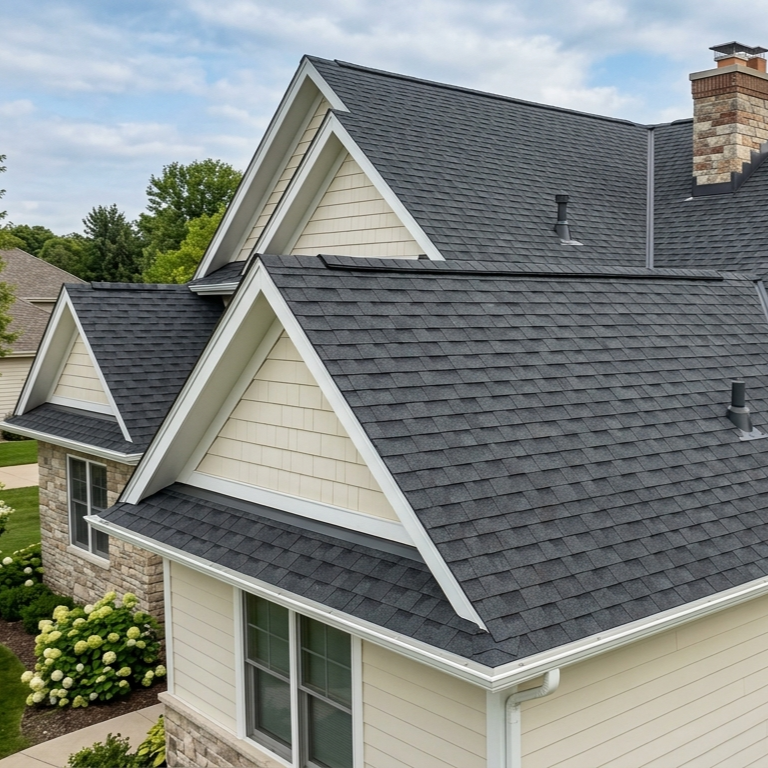
You got three quotes. One says $9,200. One says $13,400. One says $11,800. All three say "new roof" at the top and "asphalt shingles" somewhere in the middle, and you have no way to tell why the prices are so different — or whether any of them actually covers the same job.
That gap is almost never about one contractor being dishonest. It's usually about what's listed versus what's left out. Think of it like two car repair quotes that both say "engine work — $3,000." They look the same on paper, but one specifies the parts, the labor breakdown, the warranty, and what happens if something else is wrong once the hood is open. The other doesn't. Those aren't comparable quotes. A vague roofing quote isn't a bargain. It's a blank check for surprises once the old shingles come off and the crew finds soft decking, corroded flashing, or a ventilation system that hasn't moved air in a decade.
Here's every line item a complete roof replacement quote should have — and what to look for in each one.
Why Roof Replacement Quotes Vary by Thousands of Dollars
Two quotes for the same house can differ by $3,000 to $5,000, and the scope is almost always why. One contractor lists the shingles, the tear-off, and a single line for "underlayment." Another lists the shingle brand and product line, the underlayment type, the ice-and-water shield coverage zones, the number of pipe boots, whether flashing will be replaced or reused, the ventilation plan, and the per-sheet contingency price if decking turns out to be rotten.
Those aren't the same quote. They just look similar if you only read the total.
The practical test: if another contractor could build the exact same roof from the document in front of you, the quote is complete. If it has four or five line items and a total price, key work is probably implied — meaning optional, meaning extra when it shows up mid-job.
The Materials List: Brand, Type, and Grade, All Matter
"Shingles" tells you nothing useful. "GAF Timberline HDZ architectural shingles, 30-year warranty, Charcoal" tells you what you're actually buying.
Every material on the list should include a brand and product line, not just a category. The difference between a 3-tab shingle and an architectural shingle isn't just cosmetic — architectural shingles typically run 20–30% more per square, carry longer warranties, and hold up better under wind uplift in spring storms. If the quote just says "asphalt shingles," ask which grade before you sign anything.
The same logic applies to starter strips, hip-and-ridge cap, underlayment, and ice-and-water shield. These materials have a wide quality range. A quote that names brands is a contractor who's committed to what they're putting on your roof. A quote that says "standard materials" leaves the door wide open to substitution once work starts. Check for specifics on shingles (brand, product line, color, warranty term), starter strip, hip-and-ridge cap, underlayment (synthetic vs. felt, and the brand), ice-and-water shield (brand and where it goes), pipe boots and flashings (new or reuse noted), and drip edge (material and color). If any of those are missing, ask for them before you agree to anything.
Ice-and-Water Shield and Underlayment: The Lines That Separate Good Quotes from Bad Ones
This is where cheap quotes hide the most money — and where skipping details causes the most damage.
Underlayment sits between the decking and the shingles. It's the secondary water barrier for when shingles fail or get lifted. Felt paper is cheap and degrades in five to seven years. Synthetic underlayment lasts longer, handles foot traffic during installation without tearing, and pairs with the manufacturer's warranty systems on most modern shingles. The quote should name the type you're getting.
Ice-and-water shield is a self-adhering membrane that goes at the eaves, valleys, and around penetrations — the spots where water backs up, pools, or sits under pressure. Skip it in a Wisconsin winter, and here's what happens: an ice dam forms when heat from the attic melts snow from below. That meltwater runs down to the cold eave and refreezes. The dam builds higher. Eventually, the liquid water backed up behind it has nowhere to go but under the shingles, where it finds every nail hole and seam in the decking. That's how attic insulation gets soaked and bedroom ceilings stain in February.
But coverage zones matter as much as whether it's on the quote at all. For most Wisconsin homes, the membrane should run 3 to 6 feet up from the eave edge — enough to reach 24 inches past the exterior wall line, which is the zone where ice dam damage actually hits. A quote that says "ice-and-water shield included" without specifying footage or locations is better than nothing. A quote that doesn't mention it is a serious problem.
Flashing, Drip Edge, and Pipe Boots: The Small Items That Cause Big Leaks
Flashing seals the transitions — where the roof meets a chimney, a sidewall, a valley, or a skylight curb. Pipe boots seal the deck penetrations where plumbing vents poke through. Drip edge guides water off the eave and into the gutter instead of letting it wick back under the starter course.
All three get cut in low quotes. Reusing old flashing saves labor, but bent or corroded step flashing won't seat flat against new shingles. It'll leak within a few years, long before the shingles themselves fail. Step flashing — the interlocking L-shaped pieces that stair-step up a sloped roof where it meets a vertical sidewall — is expensive to reach and replace properly, which is exactly why some contractors seal around the old pieces and call it done.
A complete quote tells you whether all flashings are new, or lists which specific ones are being reused, and gives a reason for it. Pipe boots should include quantity and material (rubber, neoprene, or lead-free). Drip edge should include length in linear feet, material, and color. If the quote just says "flashing included," ask directly: new metal, or sealant over old metal?
Ventilation: The Line Item That Affects Both Warranties and Ice Dams
Bad attic ventilation is the most common reason ice dams form on Wisconsin roofs, and most homeowners have no idea. Here's the mechanism: when warm air builds up in the attic in winter, it heats the roof deck from below and melts snow. That meltwater runs toward the cold eave and refreezes. The dam climbs higher until backed-up water has no path except under the shingles. More insulation doesn't fix this. Better ventilation does, because a properly ventilated attic stays close to outside air temperature, and the melt cycle never starts.
And beyond ice dams, shingle manufacturers require adequate ventilation as a warranty condition. A roof installed over a poorly ventilated attic can void the manufacturer's warranty before the second winter. The general target is 1 square foot of net free area per 150 square feet of attic floor, split evenly between soffit intake and ridge exhaust.
A complete quote addresses ventilation in one of two ways: a clear confirmation that the existing system is adequate after inspection, or a specific plan for what gets added — ridge vent footage, soffit vent counts, or box vent quantities. "Ventilation will be checked" means nothing. "Existing ventilation meets manufacturer minimums per inspection" or "adding 40 linear feet of ridge vent" means something.
Labor, Tear-Off, and the Decking Contingency
Labor runs 55–65% of most roof replacement totals. That number needs to be broken out as its own line, not buried in a lump sum.
The tear-off line covers stripping everything — old shingles, felt, ice shield — down to bare decking. Some contractors skip this by installing new shingles directly over the old ones. Most jurisdictions allow one overlay, but it creates two problems. The crew can't inspect the decking for soft spots and rot, so damage gets covered over instead of fixed. And two layers of shingles add real weight. Wisconsin homes already carry 30–40 lbs per square foot of snow load in a hard winter. Piling a second roof on an older house pushes those numbers in the wrong direction. The quote should confirm full tear-off.
The decking contingency is the line most homeowners don't know to ask for. Once the old shingles are stripped, the crew can see rot, soft spots, and damaged plywood that weren't visible from the ground or a ladder. An honest contractor prices this upfront: typically $85 to $110 per sheet of plywood replaced, with a note in the quote that it's a variable cost pending what the inspection reveals. If that language isn't in the document, ask for it. A contractor who won't add a contingency price is a contractor who plans to have that conversation mid-job, when you have no roof on your house and no room to push back.
Check the cleanup language too. Dumpster rental, daily nail sweeps with a magnet, site cleanup, and final debris haul-off should all be listed. Some contractors own equipment; some rent. Either way, it belongs in the quote — not in a separate conversation after you've already signed.
Permits, Insurance, and Warranty: The Non-Negotiables
Wisconsin requires permits for most full roof replacements. The permit triggers an inspection for code compliance — decking fastening schedules, ice-and-water shield coverage, and ventilation minimums. The contractor should pull it. If they ask you to handle it or claim the job doesn't need one, push back. Permit responsibility shifts with permit ownership, and you don't want that liability on your side.
Every contractor working on your home needs to carry general liability and workers' compensation. Both should be referenced in the quote or in accompanying documentation. If a crew member gets hurt on your roof and the contractor has no workers' comp, your homeowner's policy gets a call it wasn't meant to receive. Ask for certificates of insurance before work starts — not when they're already on the ladder.
Two separate warranties apply to every new roof, and both need to be spelled out. The manufacturer's warranty covers defects in the materials themselves — shingle failures, delamination, and premature granule loss. These run 25 to 50 years, depending on the shingle line, but most go prorated after the first 10 years and require a certified installer to unlock the enhanced coverage tiers. The workmanship warranty covers installation errors — flashing leaks, improper nailing, and valleys that fail in the first storm. These run anywhere from one year to a lifetime, depending on the contractor, and a warranty under five years from a roofing company is below what a reputable crew should stand behind.
Both should appear in the quote with duration, what voids them, and whether they transfer to a future buyer. "Warranty provided" is not a warranty. It's a placeholder.
What a Complete Quote Looks Like vs. a Vague One
| Line Item | Complete Quote | Vague Quote |
|---|---|---|
| Shingles | Brand, product line, color, warranty term | "Asphalt shingles" or "3-tab shingles" |
| Ice-and-water shield | Brand, coverage locations, footage from the eave | "Ice barrier included" or not mentioned |
| Underlayment | Type (synthetic/felt), brand | "Underlayment" or "standard underlayment" |
| Flashing | New vs. reuse noted, locations listed | "Flashing included" or not mentioned |
| Drip edge | Material, linear footage, color | "Drip edge" or not mentioned |
| Pipe boots | Quantity, material (rubber, neoprene) | Not listed |
| Tear-off | Layer count, full vs. nail-over noted | "Remove old roof" |
| Decking | Per-sheet contingency price listed | Not mentioned |
| Ventilation | Assessment result or specific plan | "Ventilation checked" |
| Permits | Contractor pulls permit, cost included | Not mentioned |
| Insurance | COI available on request | Not mentioned |
| Workmanship warranty | Years, terms, transferability | "Warranty included" |
| Manufacturer warranty | Product line, term, certified installer status | "Manufacturer warranty" |
| Cleanup | Daily cleanup, magnet sweep, haul-off | "Clean jobsite" |
| Payment terms | Deposit %, milestone schedule, final payment on completion | 50% upfront, 50% on delivery of materials |
Frequently Asked Questions
Usually, it's scope. The cheap quote likely skips or vaguely implies several line items — ice-and-water shield coverage, new flashing, decking contingency, permit costs. Compare what's actually listed, not just the totals.
The contractor handles it. That's standard, and it keeps legal responsibility where it belongs. If a contractor asks you to pull it — or says the job doesn't need one — ask why. Most full replacements in Wisconsin require a permit.
The shingle company issues the manufacturer's warranty and covers defects in the product. The workmanship warranty is provided by the contractor and covers installation errors. You need both. A workmanship warranty of less than 5 years is below what a solid roofing crew should offer.
The crew won't know until the old shingles are off. Any honest contractor includes a per-sheet contingency price in the quote — typically $85 to $110 per sheet of plywood. If the quote doesn't mention decking at all, ask for that contingency price before you sign.
Should a quote mention ventilation even if I'm not adding vents?
Yes. The contractor should inspect your attic and either confirm that ventilation meets the shingle manufacturer's requirements or tell you what needs to change. Installing new shingles over an inadequate ventilation system can void the warranty and create ice dam problems every winter after.
No. Everything goes in writing — material specs, scope of work, timeline, payment schedule, and warranty terms. A verbal agreement protects no one. If something isn't written down, assume it isn't in the price.
Schedule an estimate — Craftsman Exteriors handles roof replacement across Madison, Verona, Fitchburg, Middleton, Sun Prairie, and southern Wisconsin. Every estimate is written, itemized, and reviewed line by line with you so you know exactly what's included before any work begins. Call (608) 975-5747.