
What Soffit and Fascia Do: The Roof Edge That Protects the Rest
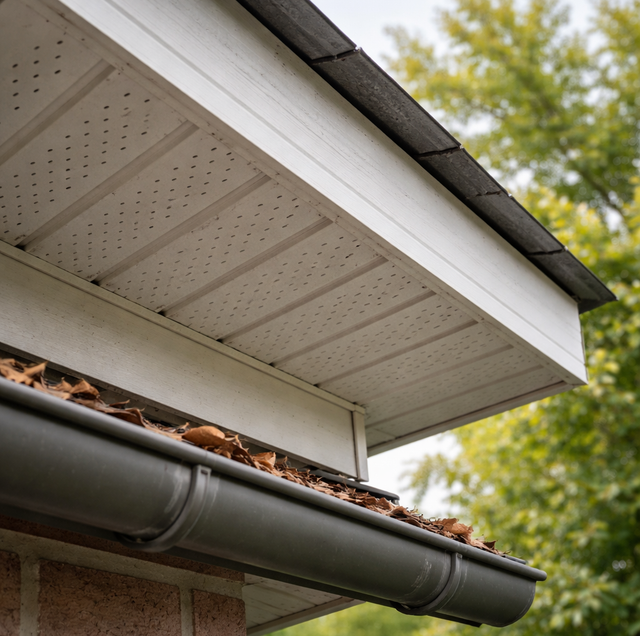
Quick Answer: Soffit is the finished underside of your roof overhang, and fascia is the vertical board running along the roof edge where the gutters attach. Soffit lets fresh air into the attic while fascia caps the exposed rafter ends and carries the gutter system. Together they keep moisture, rot, and pests out of the most vulnerable seam on the house.
Look up at the edge of almost any pitched roof, and you will notice the roof does not stop flush with the wall. It hangs out past the siding by a foot or two. That overhang has to be closed off underneath and finished off at its outer edge, and those two jobs belong to the soffit and the fascia. Homeowners tend to notice them only when paint starts flaking, or a gutter pulls loose, but the pair does quiet, constant work every day of the year.
What Soffit and Fascia Actually Are
The soffit is the horizontal panel you see when you stand under the overhang and look straight up. It closes the gap between the outer edge of the roof and the exterior wall, sealing off the underside of the eave. Most soffits are either solid or vented, and the vented type is perforated with small slots or holes that let outside air pass into the attic.
The fascia is the flat, vertical board that runs along the entire lower edge of the roof, right where the roof plane ends. It sits at the outer tips of the rafters or trusses, capping them so the raw ends of the framing are never exposed to weather. The fascia is also the surface your gutters bolt to, which makes it one of the harder-working boards on the house.
How the two work together: Think of the soffit and fascia as the trim and the frame around a finished picture. The fascia forms the clean outer border along the roof edge, and the soffit fills in the underside so nothing behind it- the rafter tails, the roof deck edge, the top of the wall- is left open to rain, wind, or animals. One handles the vertical face, the other handles the underside, and the seam between them is sealed so water sheds off the roof and into the gutter rather than back into the structure.
The Ventilation Job Most People Never See
The single most important thing a vented soffit does is feed air into the attic. Attics need a steady, slow exchange of air to stay dry and close to the outdoor temperature, and that exchange only works if air can get in low and escape high. The soffit vents are the intake. Cooler outside air enters through the perforated panels at the eave, travels up under the roof deck, and exits through exhaust vents at the top.
Intake at the soffit, exhaust at the ridge: Most homes pair soffit intake with a ridge vent running along the peak, or with gable or roof-mounted exhaust vents. The physics is simple: warm air rises and leaves through the high vent, which pulls fresh air in through the low soffit vents to replace it. If the soffit vents are painted over, stuffed with insulation, or blocked by debris, that loop stalls. The exhaust vent has nothing to draw from, and the attic stops breathing.
This ventilation matters in every season, not just one. In warm months, a well-vented attic sheds built-up heat instead of baking the underside of the shingles and driving cooling costs up. In cold months, that same airflow carries out the moisture from daily living, cooking, showers, and laundry that would otherwise condense on cold framing and sheathing. Balanced ventilation also helps keep the roof deck evenly cold in winter, which reduces the uneven melting that leads to ice dams at the eave. The airflow is the same year-round; only the problem it prevents changes with the weather.
How Soffit and Fascia Protect the Roof Edge
The lower edge of a roof is where water collects the most and is most likely to cause trouble, because every drop that lands on the roof eventually runs to that edge. The fascia and soffit are what stop that runoff from finding its way into the wood.
Capping the rafters and carrying the gutters: The fascia seals the exposed ends of the rafters, so the end grain of that framing, the part that soaks up water fastest, stays covered. It also gives the gutters a solid, continuous surface to mount to. A full gutter of water is heavy, and the fascia holds the gutter hangers and keeps the whole run pitched correctly toward the downspouts. When the fascia is sound, the gutters stay level and drain the way they should. When it softens, the fasteners lose their grip and the gutter begins to sag or pull away.
Keeping moisture and pests out of the structure: Closed, intact soffit and fascia leave no easy opening for water or animals to get behind the trim. That matters because the eave is a favorite entry point for squirrels, birds, bats, wasps, and mice, all of which look for a gap under the overhang to nest in the attic. A soft or missing panel is an open door. The same gaps that let animals in also let wind-driven rain reach the framing, and once wood stays damp, rot and mold follow.
Signs Your Soffit or Fascia Is Failing
Because these components sit at the roof edge, you can spot most problems from the ground with a slow walk around the house. There is no need to get on a ladder; a careful look from the yard tells you plenty.
What to watch for from the ground
- Peeling or blistering paint on the fascia board or soffit panels, which usually means moisture is working through the wood from behind.
- Soft, sagging, or visibly rotted fascia, sometimes showing dark streaks or a wavy, no-longer-straight edge line.
- Gutters that sag, tilt, or pull away from the roof edge, a common sign the fascia behind them has weakened.
- Stained, discolored, or drooping soffit panels, which point to trapped moisture or a leak above.
- Signs of pests, such as birds flying in and out of the eave, droppings on the ground below, or chewed openings in a panel.
- A stuffy or overly hot attic, or musty smells and damp insulation, which often trace back to blocked or missing soffit vents.
Any one of these is worth a closer professional look. Several of them together usually mean water has been getting in for a while, and the damage may reach past the trim into the roof deck or wall.
Materials: What Soffit and Fascia Are Made From
Soffit and fascia come in several materials, each with its own balance of appearance, upkeep, and durability.
- Wood is the traditional choice and takes paint beautifully, giving a classic look. It is also the most vulnerable to moisture and needs repainting and regular inspection to keep rot away.
- Aluminum resists rust and moisture, holds a baked-on finish for years, and is a common wrap for fascia and a frequent soffit material. It can dent under impact but requires little maintenance.
- Vinyl is light, low-cost, and does not rot or need painting. Vented vinyl soffit is popular because the airflow openings are built right into the panel, though the color can fade over many years of sun.
- Fiber cement is dense and stable, resists rot, insects, and moisture, and holds paint well, making it a durable option where wood-like looks are wanted without wood's fragility.
A common combination is a fiber cement or wood fascia wrapped in aluminum, paired with vented vinyl or aluminum soffit, so the visible fascia keeps its shape while the wrap and vents handle weather and airflow.
When to Repair and When to Replace
Not every problem calls for a full teardown. The right call depends on how far the damage has spread and whether the wood underneath is still sound.
Repair usually makes sense when: The damage is localized, a single soft section of fascia, one cracked soffit panel, a short run where a gutter tore loose, and the surrounding boards are still solid. In those cases, a section can be cut out and replaced, the gutter re-secured, and the finish matched, without disturbing the rest of the run.
Replacement is the better call when: rot is widespread, several panels or long stretches of fascia are soft, or moisture has already reached the rafter ends or roof deck behind the trim. Patching over hidden rot only traps it. If the soffit ventilation was undersized or blocked from the start, a replacement is also the moment to correct the intake so the attic finally breathes the way it should. Because all of this happens at roof-edge height, it is truly a job for a crew with the right fall protection and the experience to spot damage that has spread out of sight.
Frequently Asked Questions
Yes, and it is common. Vented soffit only helps if the total intake area roughly balances the exhaust at the ridge; many older homes have too few or too small vent openings. A contractor can cut in continuous vent strips or add individual round vents between the rafter bays to raise intake. Just as important, they will check that attic insulation has not been pushed down over the vents, since baffles, small channels that hold insulation back at the eave, are often what is missing rather than the vents themselves.
A drip edge is a thin metal flashing tucked under the first course of shingles and bent to hang slightly over the fascia. It directs runoff off the roof and into the gutter instead of letting it curl back and run down the face of the fascia board. Without it, water wicks behind the gutter and rots the top edge of the fascia first, often before any other sign appears. It is a small strip, but it is the detail that keeps the top edge of a wood fascia dry.
They can, indirectly. Clogged gutters overflow and stay heavy with standing water and debris, and that constant weight and spillover is one of the main ways fascia gets waterlogged and pulls loose. Guards keep the trough clearer, so the gutter drains fast and stays lighter, which means less prolonged moisture against the fascia and fewer overflow events soaking the board from behind.
Fascia runs along the horizontal eave, the low edge of the roof where the gutters hang. The rake board is its cousin on the sloped gable ends, running up the diagonal edge of the roof where there is no gutter. They look similar and are often the same material, but only the fascia carries a gutter load, which is why fascia tends to fail from water weight while rake boards more often fail from sun and wind exposure at the peak.
They can. Vented soffit has openings by design, and if the screening or perforation behind a vent panel is torn or the panel has separated at a seam, small birds and wasps can slip into the attic through a gap you cannot see from the yard. Starlings in particular will work a loose vented panel open. A gap the width of a quarter is enough, which is why a hands-on inspection at the eave finds entry points a ground-level look will miss.
They do, through the attic. When soffit intake is balanced with ridge exhaust, the attic stays closer to outdoor temperature, so in summer less heat radiates down into the living space and the cooling system works less. In winter, the same airflow removes humid indoor air before it condenses and degrades insulation, and dry insulation keeps its rated R-value. Blocked soffit vents undo both, which is why ventilation, not just added insulation, is part of an efficient attic.
Have your roof edge checked before a soft board turns into a leak — protect your attic, gutters, and framing in one visit. Craftsman Exteriors serves Madison, Verona, and Fitchburg. Call (608) 843-5007.
