
What to Expect During a Roof Replacement, Day by Day
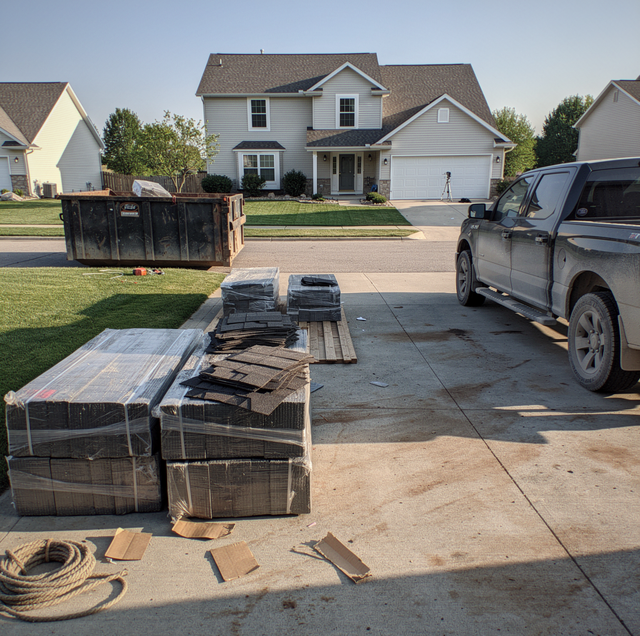
The dumpster shows up before you are even dressed, dropped at the curb with a soft crunch that rattles the storm door. By seven, a truck idles, and a crew is walking your yard, checking the ladder line against the flower bed you planted last spring. You watch from the kitchen window with coffee going cold, wondering how a job this loud gets done without wrecking everything underneath it.
A roof replacement is less a single event than an order you can follow once you know it. Staging comes first, then protection, then the noisy middle, and each stage changes what your yard looks like for a few hours at a stretch. Watched from your own porch, none of it needs to surprise you.
What Gets Staged in the Driveway Before the Crew Ever Climbs a Ladder
Materials arrive a day or two ahead of the crew, stacked in the driveway or hoisted onto the roof deck by a boom truck. The dumpster lands wherever it clears low branches and power lines, not always the spot closest to your door.
Expect the driveway to sit off-limits for parking during the work itself. Moving both cars out the night before saves the crew time it would rather spend on the roof. Roofers do not need to be inside your home, so you can stay put, though many homeowners send young children and pets somewhere quieter during the noisiest hours of the tear-off.
How the Crew Protects the Ground Around Your House
Before a single old shingle comes off, the crew lays tarps along the foundation line and over anything planted close to the house, then walks the yard checking sprinkler heads, low branches, and anything on wheels. Patio furniture, potted plants, and grills get moved back from the drip line, because falling debris does not aim.
Gutters and downspouts get the same attention, usually a strip of plywood or a foam guard laid across the run closest to the ladder. Air conditioning units and any vent pipes near the eave get covered too, since a dropped nail finds an open vent faster than it finds bare grass.
Windows directly under the roofline usually get a sheet of plywood or heavy cardboard leaned against the sill, since a dropped tool or shingle can crack glass a ladder never touches. Siding along the same wall gets a quick check before and after the day's work, since ladder feet can leave a scuff a homeowner might otherwise blame on something else.
What Blocks the Crew From Starting on the Morning You Scheduled?
Weather is the most common holdup, and not just rain. Wind above a certain speed makes loose shingles and underlayment actually dangerous to handle, so a gusty morning can push the whole crew's start back an hour or push the job to the next clear day entirely.
A permit that has not cleared, a dumpster delivery running late, or a neighbor's low-hanging line the crew was not told about can each cost that same first hour. None of these are dramatic on their own, but a schedule built around one crew and one truck feels every delay at once, which is why a good contractor builds in slack to the date they give you.
Good crews call or text you on the morning of a delay, so you are not left standing over an empty driveway wondering if anyone is showing up. That call is the difference between a homeowner who feels informed and one who starts calling the office.
The Conversation That Happens If Something Under the Old Roof Needs a Second Look
Once the old layer is off, the crew can finally see the deck, and sometimes what they find changes the plan for the rest of the day. Soft spots, dark staining, or boards that flex under a boot mean a section needs new plywood before anything new goes down, and that call gets made in minutes, not held for a follow-up visit.
This is where the day slows down for you, not for the crew, and it is worth knowing what a good pause looks like before you agree to anything. A foreman should come find you in person, show you the soft spot from a ladder or a photo, and walk through what replacing that section of plywood adds to the job before a single new board goes down. You are agreeing to a change, not discovering one on the final invoice a week later. Ask how the crew records the moment: a dated photo saved to your file matters more than a verbal note once the season turns, and that photo is the difference between a surprise and a decision you made with your eyes open.
How Home Size and Roofline Shape the Project Timeline
A simple gable roof on a single-story ranch and a steep, cut-up roof on a two-story home are not the same job wearing different clothes, and the timeline shows it fast. More valleys, dormers, and chimneys mean more flashing details and more places a crew has to slow down and get a cut right by hand, not run a long straight course.
| Factor | Simple roof | Complex roof |
|---|---|---|
| Typical crew size | 4 to 6 | 6 to 10 |
| Estimated days | 1 day | 2 to 4 days |
| Dumpster loads | Usually 1 | Often 2 or more |
| Detail work (valleys, chimneys, skylights) | Minimal | Extensive |
Size drives the dumpster count and the crew size more than most homeowners expect going in, and both numbers shift the timeline more than the shingle choice does.
None of this is a reason to worry about a complex roof; it only means building your own schedule around a wider window. A homeowner expecting a one-day turnaround on a roof with four dormers and two chimneys is the most common source of frustration on an otherwise ordinary job.
Why the Nail Sweep Happens Before Anyone Is Allowed Back in the Yard
Tear-off scatters more than shingles. Old nails, bits of flashing, and torn underlayment end up in the grass, the flower beds, and sometimes the neighbor's yard if the wind was moving that afternoon, and a stray nail underfoot is a real risk for bare feet, paws, and bike tires long after the crew has gone home.
That is why a magnetic sweep of the yard, driveway, and any nearby sidewalk happens at the end of every workday, not just at the close of the job. A rolling magnet passes over the grass in overlapping lines while a second pass by hand checks flower beds and gravel where a magnet cannot reach cleanly.
Tear-off debris and stray roofing nails can injure a bystander, child, or pet crossing the yard, so the crew rakes and magnet-sweeps the work zone before anyone is allowed through it.
What Blocks the Final Walkthrough and Warranty Paperwork From Wrapping Up the Same Day?
A finished roof is not automatically a finished job. The crew still has to clean the site, run one last magnetic sweep, and load anything left in the dumpster before the truck can pull it, and that cleanup can easily eat the last hour of daylight on a job that ran long.
The walkthrough itself is short but worth doing in person, not over a phone call: look at the ridge line for straightness, check that vents and flashing match what was quoted, and ask to see the leftover material so you know what is stored where if a repair is ever needed. Warranty paperwork, from both the manufacturer and the installer, should be handed over or emailed that same week, not left to arrive whenever someone remembers.
Before the crew leaves for good, expect a final invoice and the paperwork that goes with the job. Keep it all with the warranty documents in one folder; you will want the whole packet within easy reach years down the road, long after the dumpster and the crew are gone.
A one-day job on a simple roof and a four-day job on a complex one both end the same way, with a clean yard, a signed invoice, and two warranties in hand. Neither homeowner finished faster because the crew worked harder, and neither got the worst deal; they simply lived with different amounts of disruption on the way to the same new roof.
Frequently Asked Questions
Most single-family homes finish in a single day if the roof shape is simple and the weather holds, with two to four days common for a larger or steeper roofline. A crew usually gives you that count at the estimate, but treat it as a target, not a guarantee, since surprises and weather can push your date without changing the quality of your finished roof.
Yes, move both cars off the driveway and ideally off the street under the roofline the night before work starts. The driveway becomes a staging area for materials, and a landing zone for debris, and a crew working around your parked car loses time it would rather spend on your roof rather than your bumper.
Anything within a few feet of the house gets moved back before tear-off starts, usually by the crew as part of its own setup, not something you have to handle yourself that morning. Potted plants near the foundation, string lights, and window screens are worth moving yourself in advance if they matter to you, since a fast crew is not always thinking about which planter is the one you love.
Not once the deck is open. A crew that has stripped a section to bare wood will tarp the area, keeping the job paused rather than risking rain reaching your attic through open sheathing. A brief shower rarely stops the day, but an open deck and rain do not mix.
Your installing contractor usually registers the material warranty with the manufacturer within a set window after your job wraps, which is another reason to keep all that paperwork together in a single folder, not a drawer. The installer's workmanship warranty is a separate document, and both should be in your hands before you consider your project finished.
Walk the perimeter of the house with the foreman, not from the porch, looking at the ridge line for a straight run, checking that flashing around chimneys and vents sits flush, and confirming your gutters were reattached if they came off. Ask where your leftover shingles are being left in case you need a small repair, and ask the foreman to walk through everything the crew actually found during tear-off even if nothing changed, since that record is worth having in your file the day a question comes up, not a year down the road when memory is all you have left.
Schedule a roof replacement walkthrough so a crew can map your driveway staging, yard and gutter protection, the nail sweep, and warranty timeline before the first shingle comes off — no surprises on the morning the work begins. Craftsman Exteriors serves Madison, Verona, and Fitchburg. Call (608) 843-5007.
