
Can You Replace a Roof in Winter in Wisconsin?
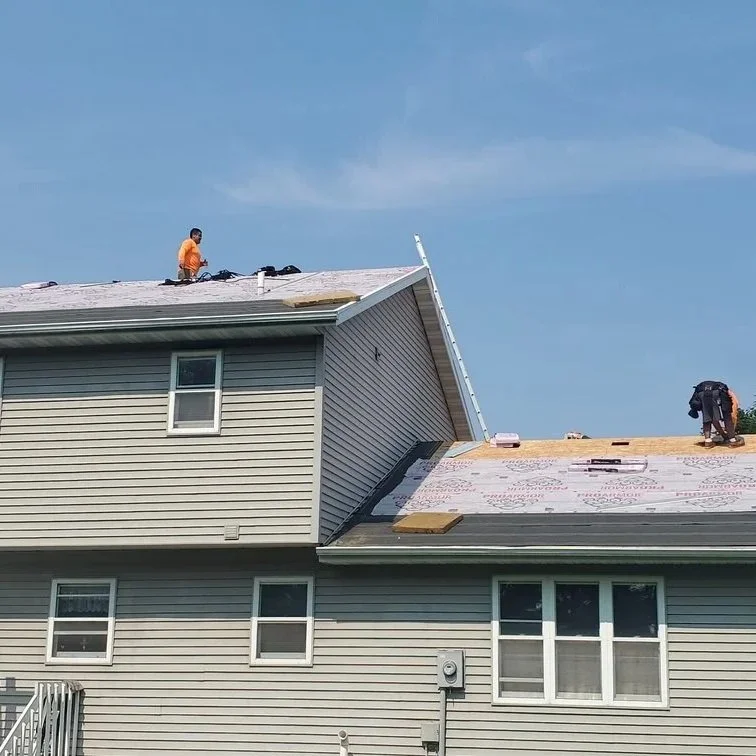
The call came—a missing shingle after a windstorm, and an active leak dripping onto the top-floor bathroom ceiling. The homeowner wanted to know if it could wait until spring. The answer was no. But the follow-up question—"Can you actually replace a whole roof in January in Wisconsin?"—is worth a longer answer.
Yes, you can. Whether you should depend on temperature, the type of damage, and your roofing contractor's experience with the cold weather installation. Here is what actually matters.
Why Temperature Is the Real Issue—Not Just the Season
The concern isn't winter itself. It's what cold temperatures do to asphalt shingles during installation.
Asphalt shingles have a self-sealing adhesive strip on the underside—a thermoplastic sealant that bonds the shingle to the course below it. Above 40°F, that strip activates within a few weeks of installation, bonding tightly under the sun's heat. Below 40°F, the strip won't activate on its own. The shingle is correctly installed and nailed, but not yet sealed—which means it's more vulnerable to wind lift until temperatures warm up.
Here is the other issue: asphalt gets brittle in cold. Above roughly 40°F, a shingle flexes when you bend it around a hip or valley. Below 20°F, that same bend can crack the mat. A skilled winter installer works with pre-warmed shingles and adjusts handling accordingly. It takes more care and more time. Neither issue is a hard stop—they're variables an experienced crew manages, not reasons to refuse the job.
What Changes About the Installation Process in Winter
Cold-weather roofing requires specific adjustments. Here's what a crew that knows what they're doing actually does differently.
Shingle storage and handling. Bundles are kept in a heated space overnight—often a garage or heated trailer—so shingles arrive at the roof pliable, not stiff. You can't bend a 15°F shingle around a valley without cracking it. Warming them to 50–60°F first keeps the material workable.
Hand-sealing the adhesive strip. Cold shingles won't self-seal, so crews apply roofing cement or use a propane torch to activate each shingle's adhesive strip manually. This adds roughly 20–30 extra minutes per square (100 sq. ft.) of labor. It's not optional—it's what makes a January installation hold.
Nail depth and placement. Cold nails and cold decking indicate the nailer needs recalibration. Overdriven nails in cold wood cause micro-fractures in the shingle mat around the nail hole. Underdriven nails leave a raised head that tears the course above. Both errors show up as leaks two winters later.
Ice-and-water shield application. Peel-and-stick ice-and-water shield needs a minimum surface temperature around 40°F to bond properly. Below that, installers use a torch-applied version or warm the deck with heat lamps first. At the eaves and in the valleys, this layer is what prevents ice dams from causing interior leaks.
Daylight windows. January days in Wisconsin run about 9.5 hours of usable daylight. A full roof replacement on a 25-square roof (2,500 sq. ft.) that takes one day in summer can require two days in winter—cold starts, ice clearance, and the hand-sealing time stack up. Factor that into your timeline.
When Winter Replacement Is the Right Call—Not a Compromise
There is a common assumption that winter roofing is always second-best. It's not. In some situations, doing it now is smarter than waiting until May.
Active leak causing interior damage. Water getting in now means four more months of damage to insulation, drywall, and framing—or in older homes, ceiling plaster—if you wait until April. The cost of accumulated damage can exceed the cost difference between a winter and summer replacement several times over.
Storm damage with an insurance claim. Insurers have timelines. If your roof was damaged in a November hailstorm and you need to file a claim and make repairs within the policy window, you can't tell the adjuster you'd prefer to wait until May. Document the damage, get an estimate, and do the work.
Real estate deadline. Buyers' inspections and lender requirements don't pause for weather. If a roof issue is holding up a sale or purchase, you may not have the luxury of scheduling around the calendar.
Contractor availability. Summer is peak roofing season. Lead times in June and July run four to eight weeks. In January, you can often get on a crew's schedule within a week—same contractor, same warranty, available now.
Pricing. Some contractors offer lower pricing in winter because demand drops. That spread has narrowed in recent years, but it still exists. Worth asking when you get estimates.
When Waiting Until Spring Actually Makes Sense
Not every roof situation is urgent. There are real reasons to wait.
No active leak, no structural damage. Your roof is 18 years old, showing granule loss, and you've been planning a replacement. There's no urgency to force a January job. Get estimates in the fall, book a March start, and let the weather work in your favor.
Temperatures below 0°F. Most roofing manufacturers void warranties on installations below 0°F or specify that hand-sealied. Working in sustained sub-zero temperatures is harder—adhesives get unpredictable, equipment slows, and crew safety becomes a real variable. If the forecast shows –10°F and wind chills of –25°F, any contractor worth hiring will tell you to push the schedule.
Significant ice on the deck. Two inches of ice across a roof deck needs to be cleared before work starts. That process is labor-intensive and sometimes damaging to the existing deck or gutters. After a major ice storm, waiting a few weeks for a thaw is the practical call.
Winter vs. Spring Roof Replacement: A Direct Comparison
| Factor | Winter Installation | Spring/Summer Installation |
|---|---|---|
| Shingle activation | Manual hand-sealing required | Self-seals within weeks |
| Material handling | Pre-warming needed, more care | Standard handling |
| Contractor availability | Higher availability, shorter lead times | 4–8 week waits common |
| Installation time | 10–20% longer | Standard pace |
| Pricing | Sometimes lower—ask | Peak demand rates |
| Warranty coverage | Valid if temp >0°F and technique correct | No temperature constraints |
| Best for | Active leaks, insurance claims, real estate deadlines | Planned replacements, budget flexibility |
What a Reputable Winter Roofing Contractor Should Tell You
A contractor who shows up in January and doesn't mention cold-weather techniques is cutting corners somewhere. Here's what you should hear before anyone touches your roof:
What temperature range they work in (most stop at 20–25°F for standard work; some go lower with modified technique)
How they store and warm shingles the night before
Whether they hand-seal or use torch-applied ice-and-water shield at the eaves
The warranty status for cold-weather installation on your specific shingle product
Any crew that says "it's the same as summer, no problem" without explaining how they handle the cold—walk away.
Why Wisconsin Winters Are Their Own Category
Other cold states deal with winter roofing. Wisconsin deals with something specific: sustained cold plus constant cycling.
The freeze-thaw cycle. Wisconsin averages more than 100 freeze-thaw cycles per winter—days where temperatures cross 32°F in both directions. Think of a cracked caulk joint in a shower: fine until you run water on it. Every freeze-thaw cycle forces water into any unsealed gap, then freezes it. Water expands 9% when it freezes. That expansion pries open the gap a little more. A winter installation that skipped hand-sealing because "it was warm enough that day" can fail by March.
Snow load. Residential roofs here are engineered for 30–40 lbs per square foot of snow load. A roof mid-replacement—stripped of old shingles, bare deck exposed—is more vulnerable to sudden loading from a snowstorm. Reputable crews track the forecast and time the stripped-roof window accordingly.
Ice dams. Ice dams form when heat escaping through the roof deck melts snow from the inside out. That meltwater runs to the cold eave, refreezes, and builds a barrier that backs liquid water up under the shingles. A winter replacement is the right moment to inspect and address attic insulation and ventilation—the root causes of ice dams—at the same time. If a contractor isn't bringing that up, ask.
Frequently Asked Questions
Not if it's done correctly. Major manufacturers—GAF, CertainTeed, Owens Corning—all permit cold-weather installation as long as shingles are properly handled and the adhesive strip is manually sealed. Warranty compliance requires technique, not a specific temperature.
Most contractors won't work at sustained temperatures below 20°F. Below 0°F, manufacturer guidelines require special procedures or defer installation. Wind chill matters too—it affects crew safety and equipment performance as much as ambient temperature does.
Yes. Insurers don't care what month it is. If the damage is covered, the claim and repair timeline are independent of the season. Your adjuster may ask for photos documenting current conditions.
Cold-installed shingles sometimes don't lie flat right away. They may look slightly raised or wavy until temperatures warm up and the adhesive strip activates. It's cosmetic and temporary. If it persists past mid-spring, contact your contractor.
Ask for documentation that hand-sealing was performed. Verify that ice-and-water shield was applied at the eaves—in Wisconsin, that means a minimum of 24 inches past the interior wall line. Check the ridge cap; that's where cold-weather shortcuts show up first.
Sometimes yes, sometimes no. The extra labor for hand-sealing adds cost. Lower winter demand often offsets it. Get two or three estimates and ask each contractor how they price cold-weather work specifically.
Schedule an estimate — Craftsman Exteriors handles roof replacement and winter roofing across Madison, Verona, Fitchburg, Middleton, Sun Prairie, and southern Wisconsin. If your roof can't wait until spring, we'll tell you honestly whether now is the right call and exactly how we handle cold-weather installation. Call (608) 975-5747.
