
Can You Replace Fascia Without Replacing the Gutters?
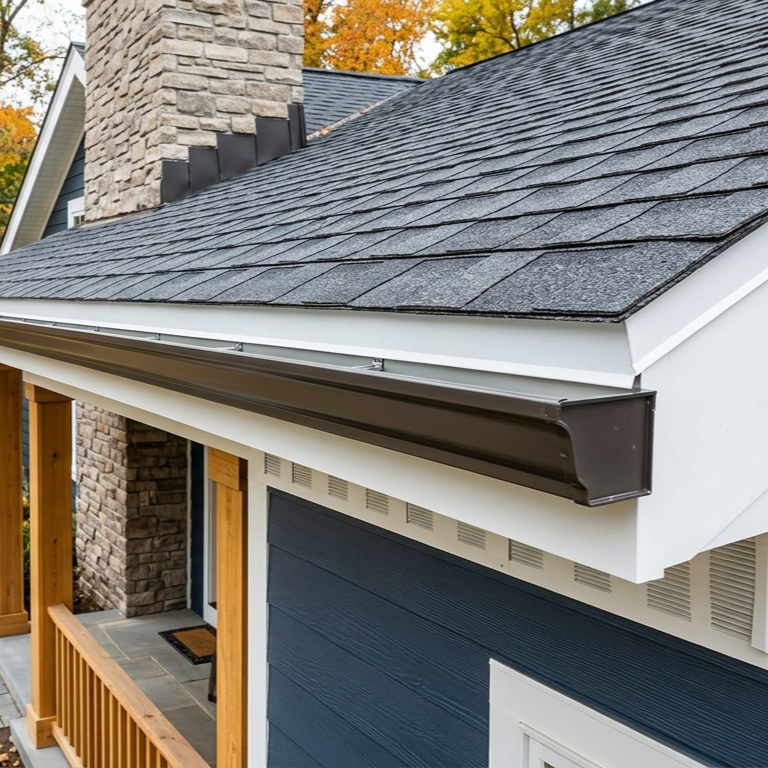
You climb up to clean the gutters and press your hand against the board behind them. It doesn't feel like wood anymore. Spongy. Like pushing a thumb into wet cardboard. The fascia is rotting, and now you're wondering whether fixing it means tearing out the gutters too.
It usually doesn't. Fascia and gutters are separate systems. You can replace rotted fascia without replacing the gutters—but the gutters still have to come off the wall to reach it. The real question isn't whether you can do one without the other. It's whether, given what your gutters look like right now, doing one without the other actually makes financial sense.
What Fascia Is and Why Wisconsin Winters Rot It Faster Than You'd Expect
Fascia is the horizontal board running along the roofline, capping the rafter ends. Your gutters bolt into it. The drip edge—the metal flashing that directs water off the roof—gets nailed against it. From the street, it looks like trim. In practice, it's the anchor for everything that manages water at your eave.
Fascia rots because water moves differently when gutters clog or fail. Rain flows down the shingles, over the drip edge, and into the gutter channel. That works fine when gutters stay clean and properly pitched. When they clog—maple seeds, shingle granules, compacted leaf debris—water backs up and pools against the fascia. Wood soaks it in. Once the board is saturated, it stays damp between rain events, and rot sets in.
Wisconsin's freeze-thaw cycle turns that process violent. Water in wood grain expands about 9% when it freezes—like someone driving a wedge into the grain, then pulling it out, then driving it again, more than 100 times in a single winter. Each thaw lets more water in. Each freeze splits the fibers a little further. A board that might last a decade in a dry climate can soften and fail in three or four winters here.
And then there are ice dams. When heat escapes through the roof deck, it melts snow from below. That meltwater runs toward the cold eave and refreezes. The dam builds up, water backs up behind it, and that pooled water wicks under the shingles and directly against the fascia and rafter ends. A second sustained moisture source, running every winter, forms the dam.
Yes, You Can Do One Without the Other — But the Gutters Come Off Either Way
There's no way to reach the fascia board without taking the gutters down first. They're lag-bolted directly into it. To swap the board, you remove the gutters, lift or pull the drip edge, take off the old fascia, check the rafter ends behind it, install the new board, reset the drip edge, and rehang the gutters. If the gutters are in good shape, they go right back on. If they're not, that's the moment to make the call—the crew is already on-site with everything off the wall.
About 80% of fascia replacement jobs go exactly this way: gutters come off, the board gets replaced, and gutters go back on. Done in a day. The other 20% hit something during the inspection. When rot has traveled from the fascia board back into the structural rafter tails, those sections need to be sistered before new fascia goes on. That adds $200–$400 per affected bay. But it still has nothing to do with whether you need new gutters.
What drives the gutter decision is the condition of the gutters themselves.
When to Do Fascia Alone vs. When to Bundle Both Jobs
| Factor | Fascia Only | Fascia + Gutter Replacement |
|---|---|---|
| Gutters removed? | Yes — must come off to reach fascia | Yes — being replaced anyway |
| Gutters reinstalled? | Yes, if they're still sound | No — new gutters go on |
| Best when... | Gutters are under 10 years old, no sagging or leaks | Gutters are 20+ years old, pulling away, or leaking at joints |
| Approximate add-on cost | None | +$800–$2,500 for new gutters on a typical home |
| Risk of not bundling | None if gutters are solid | Paying for two full mobilization visits |
| Risk of bundling unnecessarily | Extra cost on gutters that didn't need replacement | Very low if gutters were already failing |
The math tips toward bundling when gutters are already 20 years old or showing problems—sagging sections, leaking joints, rust staining at seams, or sections that have started pulling away from the wall. If a crew is already on-site with gutters off the wall, that's the cheapest moment to add new ones. No second visit. No second removal. No second staging setup. Doing both at once also avoids the scenario where you replace the fascia today and replace the gutters two years from now—two mobilizations instead of one.
If the gutters are newer and draining well, skip the replacement. Quality aluminum gutters last 20–30 years; vinyl runs 10–15 years. Once the gutters come off for the fascia work, inspect the seams, hangers, and pitch. If they drain cleanly and nothing is bent, cracked, or pulling, they go right back on.
What Fascia Replacement Actually Costs
Cost breaks down by linear footage, material, and whether rafter-tail damage turns up mid-job.
Wood fascia—pine or cedar—runs $8–$15 per linear foot installed, including gutter removal and reinstallation and drip edge reset. A typical home has 150–250 linear feet of fascia. Straightforward wood replacement for a home that size costs $1,200–$3,750 with no structural surprises.
Composite or PVC fascia runs $15–$25 per linear foot installed. Worth considering if you've already dealt with one round of rot. PVC has no wood fiber, so freeze-thaw cycling can't work into the material the way it does with wood. No repainting every five to seven years. No moisture absorption behind a clogged gutter.
Aluminum fascia wrap—coil stock bent over the existing board—runs $6–$12 per linear foot. From the street, it looks clean. But it's cosmetic. It covers the existing fascia instead of replacing it. If the wood underneath is already rotted, wrapping over it just hides the problem while the rot keeps going behind the metal.
Rafter-tail sistering adds $200–$400 per affected bay when rot has spread to the framing behind the board. Deck-edge rot at the sheathing adds $8–$15 per square foot. These are separate line items from fascia material costs.
What Material to Use for the New Fascia
Primed wood works fine if it gets painted on schedule. In Wisconsin's climate, that's every five to seven years—the freeze-thaw cycle cracks paint film, and once the seal breaks, moisture gets back into the grain. Most homeowners don't keep up with that schedule. That's how the rot cycle starts over.
PVC and composite fascia have no wood fiber, which means the freeze-thaw mechanism doesn't apply. Water doesn't wick in. No moisture absorption behind clogged gutters. No paint schedule to maintain. These materials cost more upfront, but on a home that's already been through one fascia rot repair, the math on skipping a rematch usually favors the upgrade.
Solid aluminum fascia lasts 30–40 years, won't rot, and holds up through Wisconsin winters without maintenance. It's paintable. The trade-off is denting—a ladder set in the wrong spot or a falling branch leaves a permanent crease visible from the ground.
Six Signs Your Fascia Needs Replacing Now
Not all fascia failure shows up easily from the ground. But several signs are hard to miss if you know where to look. The most direct test is pressing a finger against the board—softness or give where there should be solid resistance means active rot. From street level, look for paint peeling in sheets along the fascia, especially behind downspouts and at gutter seams where water concentration is highest. Dark vertical staining below the gutter line traces the path water has been running down the board instead of flowing into the channel.
Gutters pulling away from the house get misread constantly. Most homeowners assume the hangers bent or the gutter profile deformed. More often, the fascia the gutters are bolted to has softened enough that the lag screws have nothing solid to grip anymore. Re-spiking or rehanging into rotten fascia buys one season before they pull out again. The real fix is replacing the fascia first, then rehanging with proper hardware into fresh material.
Visible gaps between the fascia and the drip edge—gaps that weren't there before—mean the board has moved or warped. And pest activity is another tell: carpenter ants zero in on softened exterior wood before most homeowners spot the rot from below.
Frequently Asked Questions
On a single-story home, yes—if you're comfortable on a ladder and have done exterior trim work. The job requires removing gutters, handling the drip edge correctly, and inspecting the rafter ends. A mistake with the drip edge creates a new water entry point. For two-story homes, or if you find rafter damage, hire it out.
In most areas, fascia replacement is considered maintenance work and doesn't require a permit, especially for like-for-like material swaps. If the scope includes sistering damaged rafter tails, check with your local building department.
A single-story home with no structural complications takes about a day. Two-story homes or jobs where rafter damage turns up can run to two days.
Not by themselves. Clean gutters that drain completely are what stop rot—because they keep water from backing up against the fascia face. New gutters help if the old ones were leaking at joints or holding debris. Keeping them clear and properly sloped is what actually breaks the cycle.
Fascia is the vertical board at the roofline—where the gutters attach. Soffit is the horizontal material covering the underside of the eave overhang, between the wall and the fascia board. They are often replaced together because the same moisture that rots fascia tends to move back into the soffit, but they're separate components and can be replaced independently.
For a typical home with 150–250 linear feet of fascia, expect $1,500–$5,000 for wood or composite replacement, including gutter removal, drip edge work, and gutter reinstallation. Rafter damage and larger footprints push costs toward the high end.
Schedule an estimate — Craftsman Exteriors handles fascia replacement and gutter services across Madison, Verona, Fitchburg, Middleton, Sun Prairie, and southern Wisconsin. We'll inspect the fascia, check the rafter ends, and tell you whether your gutters can go back on or need to come out for good. Call (608) 975-5747.
