
Does a New Roof Increase Resale Value?
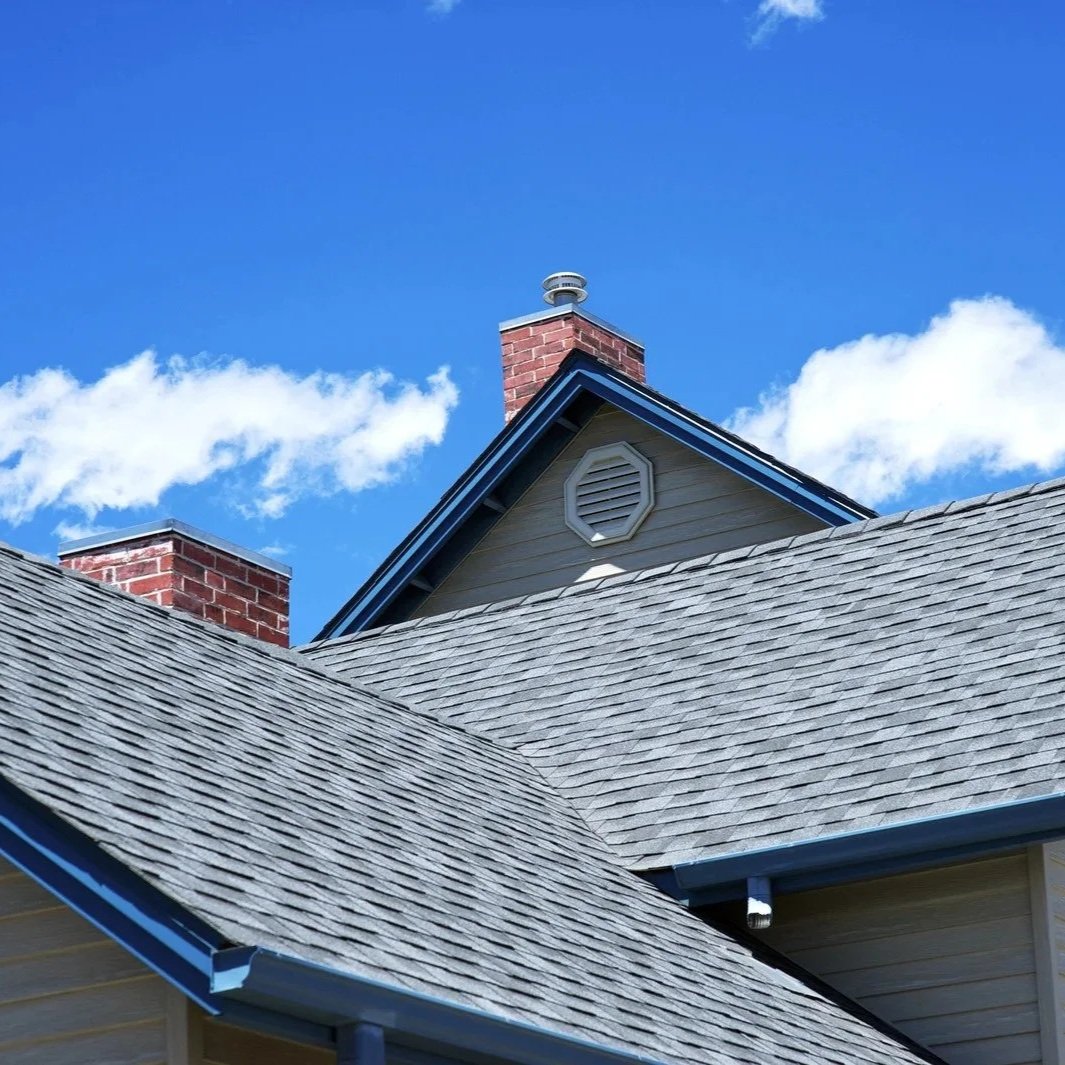
Your realtor walks through the house and stops in the backyard, tilting her head up at the shingles. "When was this last replaced?" You do the math — 1998, so 25 years ago — and watch her write something on her notepad. The roof looks fine from the ground. No sag, no missing shingles, no staining on the ceilings inside. But you can see the number in her head shifting before you've finished the sentence.
That moment happens in almost every pre-listing walkthrough, and it tells you something real about how roof age affects what your home sells for. It's not just about leaks. It's about whether the buyer's inspector will flag it, whether the buyer's lender will care, and whether you'll be handing back a $15,000 credit on closing day that you didn't budget for.
A new roof doesn't add value the way a kitchen remodel does. It works differently. Understanding how appraisers, buyers, and lenders actually respond to roof condition helps you figure out whether replacing before you sell makes financial sense for your situation.
What the Numbers Actually Show About Roof ROI
The most widely cited data comes from Remodeling Magazine's annual Cost vs. Value report, which tracks renovation ROI by region. Asphalt shingle roof replacement in the Midwest consistently returns 60 to 70 cents on the dollar at resale. On a $12,000 replacement, that's roughly $7,200 to $8,400 recovered in sale price.
That sounds like a loss. In pure arithmetic, it is. But the calculation has more moving parts than that number suggests.
A failing roof doesn't just fail to add value — it actively subtracts it. Buyers and their agents negotiate credits for deferred maintenance. A 25-year-old asphalt shingle roof, flagged by an inspector as at or beyond its service life, typically triggers a credit demand in the $8,000 to $18,000 range. Some buyers ask for the full replacement cost. Some ask for half and walk if you don't agree. Replacing before listing resets the clock on that negotiation entirely.
Roof condition also affects who can buy the house. Buyers using FHA or VA loans face lender requirements that can trigger mandatory repairs before closing. Investors lowball hard on deferred maintenance. Cash buyers who'll take it as-is usually want a 15 to 20% discount for the trouble. A new roof doesn't just add value — it keeps the deal from collapsing.
One more comparison that doesn't get enough attention: kitchen remodels return 52 to 68% in the Midwest. Bathroom additions come in around 54%. A roof replacement at 60 to 70% actually beats both, and it doesn't require gutting a single room.
How Appraisers Factor Roof Condition Into Value
Most homeowners don't know this part. Appraisers don't value a roof the way they value square footage or bedroom count. They use a method called the cost approach for components like roofing — it calculates what the installed system is currently worth based on how much useful life it has left. That's where age stops being a vague concern and becomes a hard number.
A new architectural shingle roof has an expected lifespan of 25 to 30 years. If yours is 20 years old, an appraiser calculating remaining useful life might assign it 20 to 30% of its original installed value — say $2,000 to $4,000 out of a $12,000 roof. A new roof carries its full contributory value. That gap shows up directly in what the appraiser writes down.
It matters most when buyers are financing. If the appraisal comes in lower than the sale price because of deductions for aging components, the buyer can't borrow the full amount. That forces either a price reduction or a cash contribution from the buyer — and most buyers won't make that contribution. Replacing before listing removes that risk before the appraisal ever happens.
Think of it like a car with 180,000 miles. It might run fine today. But every buyer prices in that it's near the end of its reliable life, even if nothing has broken yet. A 24-year-old roof prices in future replacement cost whether you want it to or not.
What Buyers Actually Respond To (And Why It's Not Just the Roof)
Buyers respond to certainty. A new roof signals that one major cost — typically $10,000 to $20,000 for a full replacement — won't land on them in the first five years. That shifts what they're willing to pay and how hard they'll negotiate.
Real estate agents consistently report that homes with recently replaced roofs draw fewer inspection-contingency demands and less renegotiation after the report comes back. When buyers know the roof is new, they don't use it to push the price down. When they find a 22-year-old roof during inspection, they almost always do.
The material matters too. Architectural shingles command more confidence than 3-tab, even at the same installation age. A standing-seam metal roof stands out in listings because it's a 40 to 70-year component — buyers won't have to think about it for decades. Metal also carries stronger impact ratings, which matters for insurance premiums in markets where spring hailstorms are common.
And on that point: carriers in the Midwest have tightened underwriting on aging roofs in the past few years. Some insurers now limit coverage or require higher deductibles on asphalt roofs older than 15 to 20 years. Buyers whose insurance agents flag this may back out or ask for a closing credit to offset the added cost. A new roof ends that conversation before it starts.
The ROI Beyond the Sale Price
The 60–70% figure captures what shows up in the appraised value and the negotiated sale price. It doesn't capture two things that keep paying after closing.
Insurance premiums are the first thing most people miss. Carriers have gotten more selective, and a roof replaced with Class 4 impact-resistant shingles — rated to withstand 2-inch hail under ASTM D3161 testing — often qualifies for a 5 to 20% discount on homeowners' insurance. On a $2,400 annual premium, that's $120 to $480 a year. Over 10 years, that's $1,200 to $4,800 back in your pocket. Keep the documentation: the shingle manufacturer's impact-resistance certification and your installation invoice both matter when you call your insurer.
The second is energy efficiency. Modern architectural shingles and properly installed ventilation cut heat transfer compared to an aging roof with compressed attic insulation and failed ridge vents. Homeowners who replace an older asphalt system alongside attic air sealing and updated ventilation typically see heating and cooling costs drop 10 to 15%. In Wisconsin, where you're running the furnace hard for five months and the AC hard for three, those savings add up every year you stay in the house.
One more thing worth keeping: the warranty paperwork. A manufacturer-backed material warranty — typically 30 to 50 years for architectural shingles — that transfers to the buyer adds real value at closing. Buyers choosing between two similar homes will often favor the one with warranty paperwork they can inherit. Put the installation paperwork in your disclosure package.
When Replacing the Roof Before Listing Makes Sense
The math doesn't work the same way for every house. Here's where it tends to pencil out.
If your roof is within five years of its functional end of life — a 20-to-25-year-old asphalt shingle system — the cost of doing nothing is real. Buyers will find it. Inspectors will flag it. You'll negotiate it away somehow, and negotiating under pressure almost always costs more than replacing on your own timeline.
Competitive markets make the case stronger. Buyers comparing two otherwise similar homes lean hard toward the one without deferred maintenance. Sometimes significantly. In a slower market where buyers have the upper hand, they'll extract that cost regardless — you're just giving up control of how.
The home's price point matters too. A $15,000 roof replacement on a $350,000 home is about 4% of the sale price — that transaction risk is real and worth eliminating. The same $15,000 replacement on a $145,000 home is a completely different calculation.
And if your roof has visible damage — curling shingles, missing sections, granule loss in the gutters — replace it before listing. Not doing so will cost more in negotiation than the replacement itself. That's not speculation; it's just how inspection negotiations work.
When It Probably Doesn't Change the Math
A roof that's 10 years old and performing well doesn't need to be replaced before selling. Buyers don't pay a premium above what the current condition already represents. You'd be spending money to fix something that isn't broken.
If you're selling a home at or near land value — where buyers are planning a significant renovation — roof condition matters less. An investor buying a gut-rehab prices in everything, roof included.
And if the market won't support the added value — if comparable homes in the neighborhood aren't selling for enough to justify a $14,000 investment — the math doesn't close. Know what your neighborhood actually supports before you make the call.
The Cold-Climate Variable Most Sellers Miss
In a cold-weather market, there's something roof inspectors look for that doesn't show up in national ROI averages: ice dam history.
An inspector here checks for stained sheathing, compressed insulation, and rotted decking near the eaves — even when the shingles themselves look fine. A roof that shows signs of ice-dam damage, even with relatively new shingles on top, raises questions about what happened to the decking and framing underneath. Those questions slow sales. Sometimes they kill them.
A new roof installation that includes updated ventilation and proper ice-and-water shield coverage addresses those concerns at the source. The shingles are visible proof; the underlayment and ventilation are the story cold-climate buyers actually want to hear. When a contractor documents that the replacement included air-sealing, ridge vents, and ice-and-water shield from the eave to 24 inches past the interior wall line, that documentation has tangible value at closing.
Snow loads matter too. A roof that's carried 30 to 40 lbs per square foot of wet snow repeatedly — without an inspection — can hide structural fatigue that a thorough replacement job would catch and correct. Buyers who've lived through a hard winter understand this, even if they can't put engineering terms to it.
Frequently Asked Questions
National data indicate an average increase of 60 to 70% of replacement cost. On a $13,000 replacement, that's roughly $7,800 to $9,100 in recovered value. But that number doesn't include reduced negotiation risk or the larger pool of buyers who can actually get financing on the house.
Yes, generally. Homes with new or recently replaced roofs spend fewer days on the market because they don't lose buyers during the inspection phase. A flagged roof leads to renegotiation, delayed closings, or buyers walking — all of which drag out the timeline.
Repairs address specific problem areas, but they don't reset how a buyer or appraiser reads a 22-year-old roof. If the shingle system is aging, a patched section still prompts questions. Repairs make sense when the roof has real useful life left, and the damage is isolated to a specific area.
Yes. FHA and VA loans have minimum property requirements that include roof condition. An appraiser who notes a roof at or near the end of life may flag it as a required repair before the loan can close. Conventional lenders have more flexibility but still deduct for conditions in the appraisal.
A metal roof typically recovers a similar or slightly higher percentage of cost than asphalt, but because metal runs $18,000 to $35,000 installed, the absolute dollar amount recovered is larger. More importantly, a lifespan of 40 to 70 years removes the replacement question from buyers' minds entirely — which, in a cold-climate market, is a real selling point.
It depends on age and condition. A roof that's 20-plus years old or showing wear tends to pay for itself in avoided negotiation credits and faster sale. Under 15 years and in good shape? You probably don't need to.
Schedule an estimate — Craftsman Exteriors handles roof replacement and installation across Madison, Verona, Fitchburg, Middleton, Sun Prairie, and southern Wisconsin. We can assess your current roof's condition and give you a straight answer on whether replacement before listing makes financial sense for your situation. Call (608) 975-5747.
