
Why Windows Fog Up or Feel Drafty in Winter
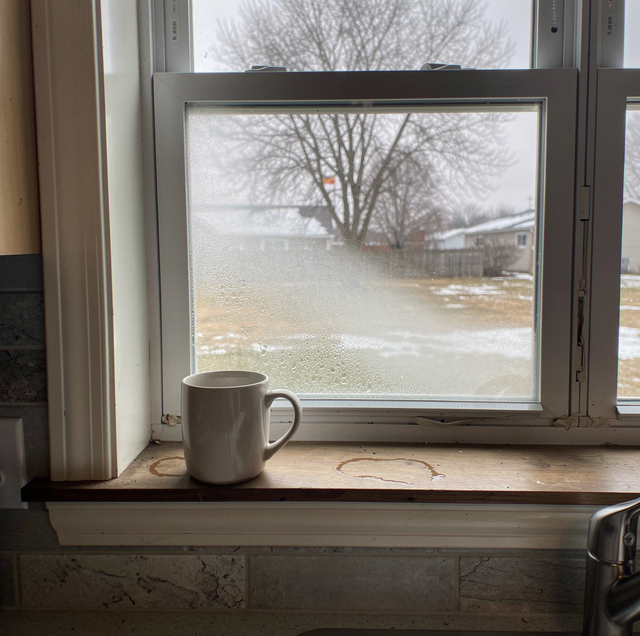
You're standing at the kitchen window with your coffee, and the yard has turned into a smear of gray and white. You wipe the inside of the glass with your sleeve, and nothing changes, because the haze isn't on the surface you can reach. A few feet away, near the bottom of the same window, you can feel cold air moving across your ankles even though the sash is latched shut. Two problems, showing up in the same room, on the same morning, and they aren't the same problem at all.
Foggy Glass Means the Seal Inside Your Window Has Failed
Most windows installed in the last few decades use an insulated glass unit: two, or sometimes three, panes of glass held apart by a spacer bar around the edges, with the airspace between them filled with a gas like argon that slows heat transfer. A bead of sealant along that spacer keeps the airspace sealed off from the outside world, and a small amount of desiccant packed inside the spacer absorbs any trace of moisture that got in during manufacturing.
That seal is doing more work than it looks like it's doing. Once it cracks or separates, even by a hair, humid air starts working its way into the airspace between the panes. The desiccant soaks up what it can, but it has a limited capacity, and once it's saturated, moisture has nowhere left to go. It condenses on the inside faces of the glass, right where you can't clean it, because those surfaces sit between two panes that were sealed together at the factory and were never meant to be opened again.
That's why wiping the glass does nothing. The fog you're looking at is on the inside of the sealed unit, not on either surface facing your kitchen or your yard.
Cold Weather Just Makes an Old Seal Failure Visible
A seal rarely fails all at once. Sealant is a flexible material, and as temperatures swing, the glass and spacer expand and contract at slightly different rates, putting a small amount of stress on the bond. Repeat that thousands of times across a window's life and the sealant gradually loses its grip, well before you'd notice anything from inside the house.
What changes in winter is the temperature on that inner surface between the panes. The colder it gets outside, the closer that surface drops toward the outdoor temperature, even though the seal failure itself hasn't gotten any worse. A seal that's already thinning may only let in a trace of humid air from outside, but once that air meets glass that's sitting near freezing, it condenses fast, and it's easy to see. A window that looked fine in October can look clouded by December, not because anything new broke, but because the conditions finally lined up to show you what had already been happening.
If you see fog concentrated in one corner or forming a faint ring rather than covering the whole pane, that's usually the earliest stage of a seal failure. It tends to spread and become a daily occurrence over the following seasons.
A Draft Has a Different Cause: Air Moving Through Gaps, Not Failed Glass
Where fog is a glass problem, a draft is almost always an air problem, and the two rarely share a cause. A draft means outside air is finding a path through a gap somewhere around the window rather than through the glass itself. The usual suspects are the weatherstripping that lines the sash and frame, the seal where the frame meets the surrounding wall, and the hardware that's supposed to pull a closed sash tight against that weatherstripping.
Weatherstripping is a compressible material, whether foam, felt, or a rubber gasket, and it does its job by staying springy enough to close every small gap when the window is latched. Years of compression, sun exposure, and repeated cold snaps leave it flatter, stiffer, and less able to spring back. Wood and vinyl frames also shrink slightly in cold weather, just enough to widen a gap that closed all summer snugly. Add in a lock or latch that no longer pulls the sash fully home, or old caulk between the frame and the siding that's cracked and pulled away, and you have a path for outside air straight into the room. Wind makes it obvious. A draft that's mild on a still day can feel sharp during a gusty one, because moving air pushes harder through whatever opening it can find.
How to Tell Where a Draft Is Actually Coming From
Before assuming a window needs to be replaced, it helps to narrow down where the air is actually getting in. On a cold or windy day, run the back of your hand slowly along the edges of the sash, the corners of the frame, and the spot where two sashes meet in the middle. Cold air moving steadily across your hand at a specific point tells you more than a general sense that "the room feels drafty."
A draft that runs along the entire perimeter of the frame usually indicates a sealing or installation issue where the frame meets the wall. A draft concentrated at the point where the sash meets the frame, or right at the lock, usually points to worn weatherstripping or hardware that's no longer pulling the window fully closed. A draft that seems to come from below the frame, near the sill or the trim, can mean the gap is inside the wall cavity itself, which isn't something to chase with caulk from the inside.
If a draft traces back to the sill, the trim, or anywhere the frame meets the exterior wall, leave the diagnosis to someone who can safely check both the interior and exterior sides. Removing exterior trim or siding to inspect a frame is not a job to take on from a ladder.
What These Problems Mean for Your Home Beyond the View
A window that's lost its gas fill or developed air leaks affects more than its appearance. Insulated glass units rely on the sealed gas layer to slow heat transfer, so once the seal breaks and the gas escapes, the window's insulating performance drops, even if the frame and hardware are perfectly fine. A cold snap puts real pressure on a window's efficiency, and a room with a failed seal or a drafty sash will run colder than the thermostat setting suggests.
Moisture is the other concern. Condensation that keeps forming at a sill, whether from a failed seal or from warm, humid indoor air meeting a cold, drafty frame, can soak into the wood underneath over repeated winters. Left unaddressed long enough, that moisture leads to soft or discolored trim and, eventually, to rot that goes beyond the window itself. A drafty or foggy window is rarely just a comfort issue. It's usually the first visible sign of wear that's been building at the glass, the seal, or the frame for years.
What a Draft or a Fogged Seal Actually Points Toward
The mechanism behind the symptom says a lot about what a window actually needs. A draft traced to worn weatherstripping or a latch that no longer pulls a sash fully closed often says more about the window's age than about any single part failing; on an older window, that kind of wear is frequently one sign among several that the window itself is nearing the end of its useful life, even if the glass still looks clear. A draft traced to a gap between the frame and the surrounding wall points to an installation or structural issue that extends beyond the window and warrants evaluation by someone who can inspect both the interior and exterior sides.
Fogging is more clear-cut. Because the two panes of an insulated glass unit are sealed together as a single manufactured piece, there's no way to clean the inside surface, refill the lost gas, or dry out the desiccant without disturbing a seal that was never designed to be reopened. Once that seal has failed, replacing the window is the lasting fix. A seasonal exterior inspection can catch a seal that's just starting to go, or hardware that's failing, well before either turns into a window you can't see through or a room you can't keep warm.
Frequently Asked Questions
Its insulating value does drop, but two things about a fogged window often surprise homeowners. Losing the gas fill doesn't disable the low-E coating on the glass, so a foggy unit typically keeps blocking UV rays at close to its original rate, which is why fabric and flooring near it usually aren't fading any faster than before. That protection isn't permanent, though: years of moisture and mineral residue trapped between the panes can gradually cloud or dull the coating itself, so a unit that's been fogging for a long stretch often ends up performing worse than one that failed more recently.
It comes down to the frame's condition and age more than the glass itself. A frame that's already warped, rotted, or outdated for the opening usually points to full window replacement as the more lasting choice, since a new glass unit won't outperform an aging frame. Even when a frame still looks sound, its remaining service life is worth evaluating, since that's what determines whether replacement makes sense now or can reasonably wait.
Yes, and it's an easy mix-up. Mineral buildup sits on the outer glass surface and can usually be scrubbed off, or at least dulled, with cleaning, while true seal fog sits between the panes and won't budge no matter how the outside or inside surface is cleaned.
It happens less often, but a manufacturing defect in the seal or a poor installation fit can cause fogging or drafts to appear within the first few years, well before normal wear would explain them.
Fixing the window you notice helps, but rooms with more than one window often have multiple leaks developing at a similar pace, since they're usually the same age and exposed to the same weather. A cold room can persist if a second, less obvious gap is still letting air through.
Once a year is a reasonable baseline, ideally in early fall before the heating season starts, since that leaves time to plan around any issues before winter locks in. Each check is worth doing the same way: look for fog forming or changing shape near the edges of the glass, press a finger into the weatherstripping to see whether it still springs back rather than staying flattened, and confirm the sash pulls fully flush against the frame when latched. Homes with older windows, or a history of one sealed unit already failing, are often worth checking twice a year: once in the fall and again after the coldest stretch of winter has passed.
Schedule a window evaluation — get a clear read on which windows are still sealing properly and which ones are due for replacement. Craftsman Exteriors serves Madison, Verona, and Fitchburg. Call (608) 843-5007.
