
What Is Soffit and Fascia, and What Do They Do?
You're up a ladder cleaning gutters in September when you press your hand against the trim board at the roof's edge to steady yourself—and your palm sinks in a little. Not wood anymore. Something softer. The paint looks fine from the driveway, but up close it's blistered, and the board behind it has turned gray and spongy. That's fascia rot, and it usually means water has been working on it for at least two seasons before it got obvious.
Both pieces are mostly hidden and easy to ignore until they fail—and by the time failure is visible from the ground, the water damage has usually spread behind them.
Here's what both parts actually do, why they matter more than trim work, and what happens when they go.
What Soffit Actually Does—and Why the Ventilation Part Matters Most
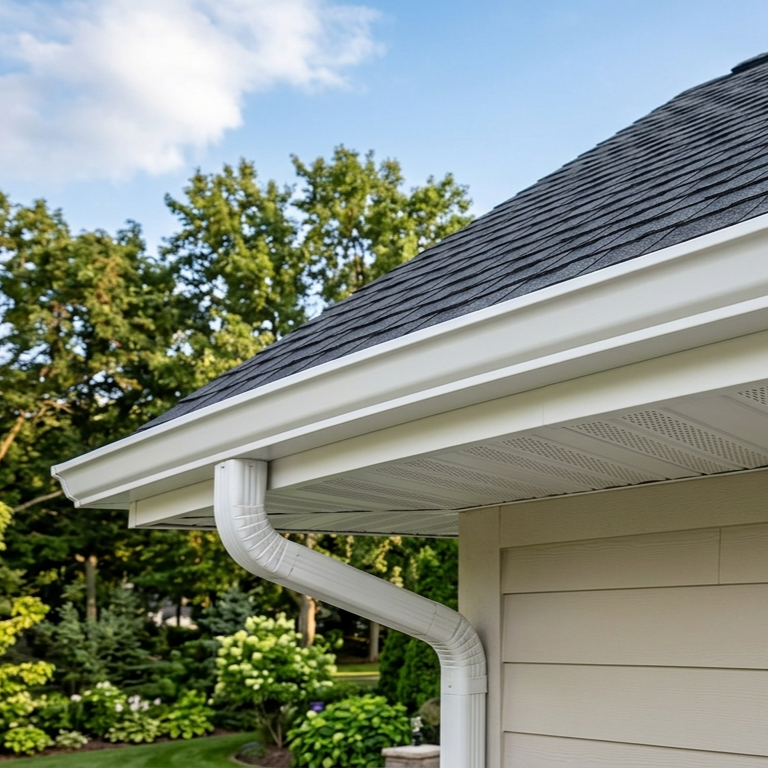
Soffit is the horizontal panel that spans the gap between the outer wall of your house and the roof edge—the "ceiling" of your overhang, if you imagine standing under it and looking up. It's typically 12 to 24 inches wide, depending on how far the roof overhang extends.
The visible job of the soffit is to close off the eave so birds, bats, and squirrels can't access the attic through the gap between the rafters. That matters, but it's the secondary function. The primary job is ventilation.
Most vented soffit panels have a pattern of small perforations or slots—visible up close. These openings allow outside air to enter the attic from the bottom while heat and moisture exit through ridge vents or gable vents at the peak. This creates a continuous airflow loop through the attic space. Without it, moisture from inside the house rises into the attic, condenses on the cold roof deck in winter, and eventually causes wood rot, mold, and premature shingle failure.
Here's the mechanism: in a Wisconsin winter, the temperature inside an unventilated attic can run 20-30°F warmer than outside. That temperature differential accelerates ice dam formation—heat escaping through the roof deck melts snow from the bottom up, the meltwater runs toward the cold eave and refreezes. The dam builds up until the liquid water backed behind it has nowhere to go but under the shingles. Adequate soffit ventilation reduces that temperature differential by keeping attic air closer to outside ambient temperatures. It doesn't eliminate ice dams entirely, but it slows how fast they form.
The standard for attic ventilation is 1 square foot of net free ventilation area per 150 square feet of attic floor space, split roughly 50/50 between low (soffit) and high (ridge) vents. A house with blocked or deteriorated soffit vents is working against that balance every single day.
What Fascia Actually Does—and Why It Takes More Abuse Than You'd Expect
Fascia is the vertical trim board running along the lower edge of the roof—the board your gutters are attached to. From the front of the house, it reads as a clean horizontal line where the roof meets the wall. It looks decorative. It isn't.
Fascia is load-bearing in a practical sense: gutters are heavy, especially when full of water, wet leaves, and ice. A standard 5-inch aluminum K-style gutter holds about 1.2 gallons of water per linear foot. At roughly 8 pounds per gallon, a 50-foot gutter run carries over 400 pounds when full—and all of that weight is pulling on the fascia through the gutter hangers. Wood fascia that's been absorbing moisture for a couple of seasons doesn't hold hardware well. Screws strip out, gutters sag, and water pours over the back of the gutter instead of through the downspout.
Fascia also acts as the cap that protects the bottom of the roof deck and the rafter tails—the portion of each rafter extending past the outer wall—from direct rain exposure. Drip-edge flashing laps over the top of the fascia specifically to direct water into the gutter rather than letting it wick back onto the fascia board. When the drip edge is installed incorrectly or gaps open up at joints, the fascia absorbs that water with every rain event.
Think of it like a book left on a wet windowsill. The cover looks fine until you try to open it and find the pages are welded together. Fascia hides that same problem until the board crumbles when you try to reset a gutter screw.
How Wisconsin's Freeze-Thaw Cycles Accelerate Soffit and Fascia Failure
In many climates, wood fascia might last 20-30 years before it needs replacement. In Wisconsin, that timeline compresses—and the mechanism is freeze-thaw cycling.
When water penetrates wood fascia—through a gap in the paint, a failed caulk joint at a corner, or water wicking back from a clogged gutter—it saturates the wood fibers. When temperatures drop below 32°F, that water expands by roughly 9% as it freezes. The expansion fractures cell walls inside the wood, creating more surface area for water to enter during the next thaw. Each cycle opens the damage a little further.
Wisconsin averages over 100 freeze-thaw cycles per winter—days where temperatures cross the 32°F threshold going up or coming down. A board that absorbed moisture in October has had 100 opportunities to be damaged further by February. By spring thaw, what looked like slightly peeling paint in the fall is now soft, delaminating wood.
Aluminum and vinyl fascia eliminate this failure mode entirely. They don't absorb water, so freeze-thaw cycling doesn't degrade them. They have their own failure modes—impact damage from hail and falling ice, paint oxidation on aluminum over time—but wood rot isn't one of them. Most replacement projects in Wisconsin have shifted to aluminum-wrapped or all-aluminum fascia for exactly this reason.
What Rotted Soffit and Fascia Look Like—and How to Stay Ahead of It
Damage is usually visible before it becomes critical, but you have to get close enough to see it.
On fascia: Peeling or bubbling paint in a localized section is the first sign. Tap the board with a screwdriver handle—solid wood produces a flat knock, rotted wood sounds dull and muffled. Visible staining, dark patches, and soft spots under finger pressure confirm rot. If gutters are visibly pulling away from the house, the fascia may have already lost its ability to hold fasteners.
On soffit: Water stains on the panels, especially after heavy rain, indicate that water is getting in above the soffit and running across it. Dark streaks or mold spots mean moisture isn't drying out. Soft spots when pressed, or panels that flex noticeably, mean the material behind the soffit—the sub-fascia or rafter tails—may be wet. Gaps or openings at the seam where the soffit meets the outer wall are entry points for birds and squirrels and should be sealed promptly.
Maintenance that keeps problems small: Clean gutters at least twice a year—fall and spring—because overflowing gutters are the most common cause of fascia saturation. Repaint wood fascia every five to seven years before the paint seal breaks down. After a hard winter, check soffit vent openings for debris, ice, or wasp nests that block airflow. These are 15-minute jobs. Catching a soft spot early, before it reaches the rafter tails, is the difference between a $400 board replacement and a $2,000 structural repair.
In Wisconsin, the best inspection windows are early spring—after freeze-thaw season has done its work—and late fall before it starts again.
Soffit and Fascia Material Options: Wood, Aluminum, and Vinyl
Wood: Traditional pine or cedar was the standard for decades. It takes paint well and looks sharp when properly maintained, but requires repainting every five to seven years and is vulnerable to moisture and insects. In Wisconsin's climate, any lapse in maintenance accelerates decay.
Aluminum fascia: The most common replacement choice in Wisconsin today. Typically installed as a formed aluminum wrap over existing wood sub-fascia, or as stand-alone boards. It won't rot, holds paint well, and handles freeze-thaw without degrading. Impact-resistant profiles handle hail without denting. Installed cost runs $6-12 per linear foot.
Vinyl soffit: Standard on most new construction for the past 20-plus years. Vented panels come in 12-inch widths, snap together, and install efficiently. They won't rot and don't need painting. The drawback is cold-weather brittleness—vinyl stiffens below about 20°F, and large hail or falling ice from the roofline can crack a panel that would have survived warmer conditions. Installed cost runs $3-8 per linear foot.
Aluminum soffit: More expensive than vinyl but more impact-resistant and longer-lasting. Worth considering in hail-prone areas or on houses where large icicles regularly break loose from the roofline. Installed cost runs $6-14 per linear foot.
Full replacement vs. wrap: When fascia boards are structurally sound but showing surface wear, aluminum wrap can go directly over them—quicker and less expensive. When the wood behind has softened or rotted, the damaged board needs to come out first. Skipping that step means the new material sits on a compromised base, and the problem returns within a few years.
How Much Does Soffit and Fascia Replacement Cost?
For most single-story homes, a full soffit and fascia replacement runs $2,500-$6,000. Two-story homes or complex rooflines can push $8,000-$12,000, depending on linear footage and material choices. Rough per-linear-foot installed costs:
Vinyl soffit: $3-8
Aluminum soffit: $6-14
Aluminum fascia wrap (over sound wood): $6-12
Full fascia replacement (remove and replace): $10-20
These are installed costs covering material and labor. Soffit and fascia work requires working at height with proper staging, precise fitting around corners and trim details, and often involves removing and resetting gutters—so it's not a straightforward DIY project.
The most common cost surprise: rotted rafter tails or sub-fascia discovered once the old material comes off. That adds $50-150 per rafter tail, depending on how far the rot has spread. When water gets behind fascia long enough, it migrates into the structural wood behind it. The fascia itself is the least expensive thing to replace.
Frequently Asked Questions
Fascia is the vertical trim board running along the lower edge of the roofline—the board gutters attach to. Soffit is the horizontal panel spanning the gap under the overhang between the fascia and the outer wall of the house. They work together to close off the eave.
Yes. They are separate components and can be replaced independently. If both are deteriorating, doing them together saves on labor since the same staging and equipment is already set up.
Look up at the soffit panel from below. Vented soffit has visible perforations or slots. A solid, unperforated panel is non-vented. Most homes built after 1980 have a vented soffit, but some older construction has inadequate ventilation or none at all.
Yes. Gutters are fastened directly to the fascia board, which is why rotted fascia causes gutters to sag and pull loose. When gutters are replaced, it's standard practice to check the fascia behind them before reattaching anything.
Aluminum soffit and fascia typically last 30-50 years. Vinyl soffit lasts 20-30 years in most climates, though freeze-thaw cycling and UV exposure can shorten that window in Wisconsin. Wood fascia requires repainting every five to seven years and may need full replacement within 15-20 years if moisture penetrates the paint.
Indirectly, yes. Rotted fascia no longer holds gutters securely, so gutters pull loose and overflow against the house. Less obvious: when roofers install new shingles, drip-edge flashing is reset onto the fascia. If the fascia is soft, the drip edge won't hold properly, and the new shingles won't be correctly protected at the eave where water is most likely to back up.
Schedule an estimate — Craftsman Exteriors handles soffit and fascia installation and replacement across Madison, Verona, Fitchburg, Middleton, Sun Prairie, and southern Wisconsin. We'll inspect the condition of your fascia boards and rafter tails before anything gets wrapped or replaced—so there are no cost surprises once the old material comes off. Call (608) 975-5747.
