
Ice Dams on Your Roof? Why They Form and How to Stop Them
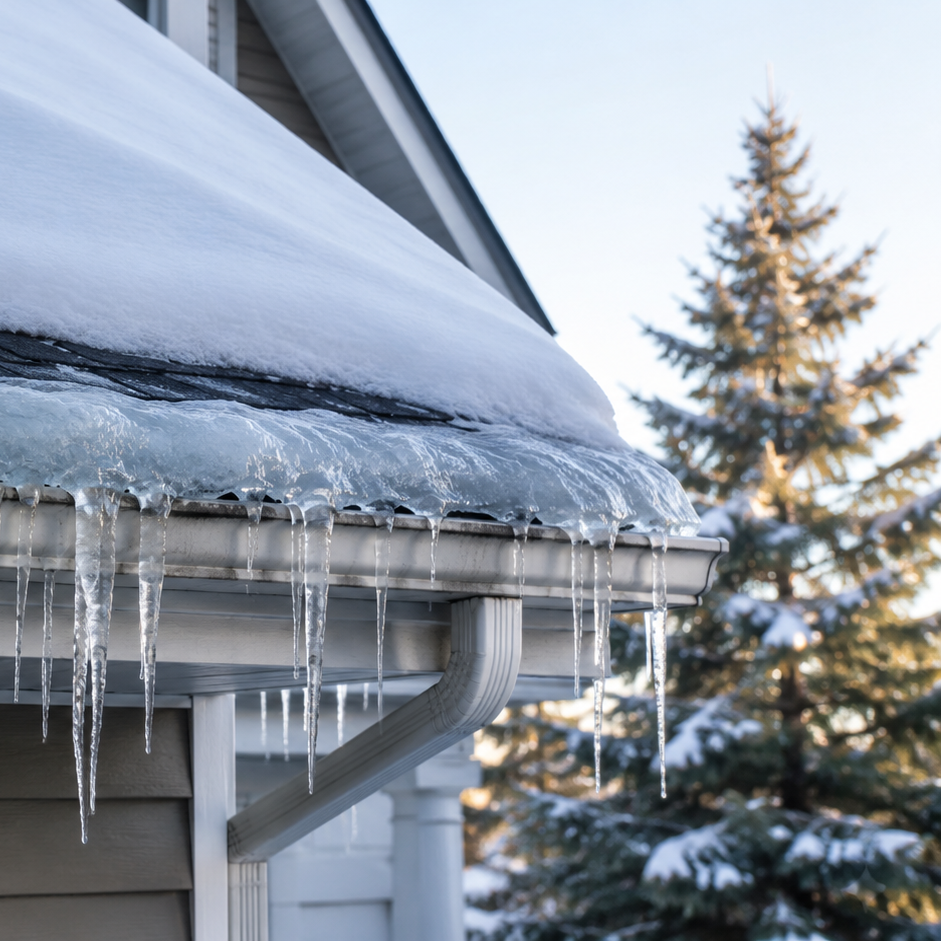
Quick Answer: Ice dams form when heat escaping into your attic warms the roof, melts the snow on it, and that meltwater runs down to the cold roof edge and refreezes into a ridge of ice. The dam then traps more meltwater behind it, which backs up under the shingles and leaks into the house. The root cause is a warm roof — from poor attic insulation, air leaks, and inadequate ventilation — not the cold weather itself. The fix is keeping the roof deck cold and uniform: better insulation, sealing attic air leaks, and proper ventilation.
You spot them every Wisconsin winter — thick ridges of ice along the roof edge, sometimes with icicles hanging off the gutters. They can look almost decorative, but ice dams are one of the most damaging winter roof problems there is, and the leaks they cause often show up inside as stained ceilings weeks later. The frustrating part is that the cold isn't really the cause. Ice dams are made by heat — your own heat escaping into the attic — and once you understand that, the fix makes sense.
Ice Dams Are a Heat Problem Wearing a Cold Disguise
It seems backward, but ice dams are caused by warmth, not just cold. Here's the chain of events. Heat from inside your home rises into the attic and warms the underside of the roof. That warmth melts the snow sitting on the upper part of the roof, even when it's freezing outside. The meltwater runs down the slope until it reaches the eaves and the gutter — the roof edge that overhangs the exterior wall and stays cold because there's no warm attic beneath it. There, the water refreezes into a growing ridge of ice: the dam.
Once a dam forms, it gets worse on its own. More snow melts higher up, runs down, and hits the ice dam, which traps it. That trapped water pools behind the dam, and standing water on a roof finds its way under the shingles, which are built to shed running water, not hold back a pond. From there, it leaks into the roof, the attic, the insulation, and eventually the ceilings and walls inside.
The Real Causes Are in Your Attic
Since a warm roof is what drives ice dams, the real causes are whatever lets heat reach the roof deck unevenly.
Poor or Insufficient Attic Insulation
Insulation is what keeps your home's heat down in the living space where it belongs. When attic insulation is thin, gapped, or inadequate, heat rises freely into the attic and warms the roof, melting snow. Good, adequate insulation is the first line of defense against ice dams because it keeps the roof cold.
Air Leaks Into the Attic
Even with insulation, warm air leaks up into the attic through gaps around light fixtures, attic hatches, plumbing penetrations, ductwork, and other openings. These air leaks carry heat straight to the roof deck, creating the warm spots that melt snow. Sealing them is a key part of stopping ice dams, and it's often overlooked.
Inadequate Attic Ventilation
Proper ventilation keeps the attic — and the roof deck above it — cool and at a consistent temperature by allowing outside air to flow through, typically from soffit vents to ridge vents. When ventilation is blocked or insufficient, heat builds up in the attic and warms the roof unevenly. Good airflow flushes that heat out and helps keep the whole roof at the same cold temperature, so snow doesn't melt and refreeze.
| Contributing cause | What it does | The fix |
|---|---|---|
| Thin/gapped attic insulation | Lets heat warm the roof deck | Add adequate insulation |
| Air leaks into the attic | Carry warm air to the roof | Seal attic air leaks |
| Poor attic ventilation | Traps heat, warms roof unevenly | Improve soffit-to-ridge airflow |
| Clogged gutters | Give ice a place to start | Keep gutters clear |
Why Ice Dams Do So Much Damage
The danger of an ice dam isn't the ice itself — it's the water trapped behind it. That standing water backs up under the shingles and into the roof system, where it soaks the decking and insulation, drips into the attic, and stains ceilings and walls. Over a winter of freeze and thaw, repeated ice dams can rot decking, ruin insulation, feed mold, and damage interior finishes. The ice and icicles can also tear at gutters and pose a falling hazard. Because the water often travels before it appears inside, the interior damage can show up well away from the dam and weeks after it formed.
Don't try to chip or hack ice dams off the roof with hammers, axes, or sharp tools, and avoid climbing onto an icy roof. You can damage the shingles and gutters and risk a serious fall. If a dam is causing an active leak, professional removal (such as steaming) is the safe route while the underlying attic causes are addressed.
How to Stop Ice Dams for Good
Because ice dams come from a warm, uneven roof, the lasting fix is making the roof cold and uniform — and that work happens in the attic, not on the roof. Adding adequate insulation keeps heat in the living space. Sealing attic air leaks stops warm air from reaching the roof deck. Improving ventilation flushes out any heat that does get in and keeps the roof at an even temperature. Together, these keep the snow on the roof from melting and refreezing at the edge. Keeping gutters clear helps, too, by removing a spot where ice likes to start. Treating the symptom — chipping ice each winter — never ends the cycle; fixing the attic does.
Frequently Asked Questions
Ice dams are caused by heat escaping into the attic and warming the roof. That warmth melts snow on the upper roof, the meltwater runs down to the cold eaves, and it refreezes into a ridge of ice. The dam then traps more meltwater, which backs up under the shingles and leaks inside. So the root cause is a warm roof — from poor insulation, air leaks, and weak ventilation — rather than the cold weather itself.
Because the ice dam traps meltwater behind it on the roof. Shingles are designed to shed water that's running down the slope, not to hold back standing water. When water pools behind a dam, it works its way under the shingles and into the roof system, then soaks the decking and insulation and drips into the attic and down to ceilings and walls. The trapped water, not the ice itself, does the damage.
Keep the roof cold and even, which means working in the attic. Add adequate insulation to keep your heat in the living space, seal air leaks that let warm air reach the roof deck, and improve attic ventilation so airflow flushes out heat and keeps the roof a uniform temperature. Keeping gutters clear helps, too. These address the warm-roof cause, unlike chipping ice off each winter, which only treats the symptom.
It's risky. Chipping at ice with hammers or sharp tools can damage shingles and gutters, and climbing onto an icy roof invites a dangerous fall. If a dam is causing an active leak, professional removal — often by steaming the ice off safely — is the better route. The more important step is fixing the attic insulation, air sealing, and ventilation so the dams stop forming, rather than fighting them on the roof each year.
Gutters don't cause ice dams — the warm roof does — but clogged gutters can make them worse by giving ice an easy place to start and build at the roof edge. Keeping gutters clear removes one contributing spot. Still, clearing gutters alone won't stop ice dams if the attic is still letting heat warm the roof. The real prevention is insulation, air sealing, and ventilation, with clear gutters as a helpful extra.
Fix the Attic, Not the Ice
Ice dams look like a cold-weather problem, but they're really a heat problem: warmth escaping into the attic melts roof snow that refreezes into a damming ridge at the cold eaves, trapping water that then leaks inside. Chipping the ice away every winter never ends. The lasting fix is making the roof cold and even — adding insulation, sealing attic air leaks, and improving ventilation — so the snow stops melting and refreezing in the first place. Solve it in the attic, and the dams stop forming on the roof.
Battling ice dams and leaks every winter? — Get the attic and roof assessed and the real cause fixed by southern Wisconsin's exterior pros. Craftsman Exteriors serves Madison, Verona, Fitchburg. Call (608) 843-5007.
