
Missing or Loose Shingles: Causes and Warning Signs
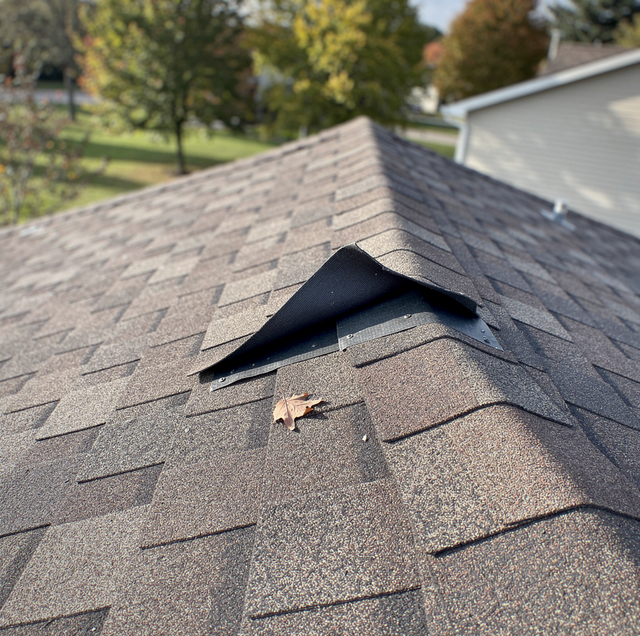
A shingle roof is a system of small, overlapping pieces held down by two things: nails and a strip of factory-applied adhesive. When either one fails, a shingle can lift, slide, or disappear entirely, and from the driveway that often looks like a small cosmetic flaw. It rarely is. A loose or missing shingle means the roof's fastening system has already given up in that spot, and the piece meant to shed water is now doing the opposite. Understanding why shingles let go, and what's happening under the gap once they do, makes it easier to judge if the problem is a five-minute fix or the start of something that spreads.
How A Shingle Is Supposed To Stay Down
Every properly installed shingle holds two ways at once. Nails driven through the reinforced nailing strip pin it to the deck, and a factory-applied adhesive strip bonds each shingle to the one below once the sun warms it enough to soften and set. The nails carry the mechanical load and resist wind's upward pull, while the sealant strip locks the tabs together so wind can't get a grip on the edge in the first place. Both systems have to work. A shingle with solid nailing but a sealant strip that never bonded can still flap loose in a stiff wind, and one with a good seal but nails that have backed out will eventually tear free at the fastener. Missing or loose shingles almost always trace back to one of these two systems failing, sometimes both at once.
Nail Failure And Wind Uplift
Nails are supposed to land in a reinforced band on the shingle called the nailing zone, positioned to grip the layer below it. A nail driven too high misses that zone and never really secures the shingle underneath; one driven too low sits exposed and can rust or work loose over time. Overdriven nails cut through the shingle surface instead of sitting flush, weakening the material at the fastening point, while underdriven nails sit proud and can catch and lift the course above. Too few nails or the wrong nail type leaves a fastening system never built to hold under real wind loads.
Wind uplift is the force that exploits these weaknesses. Air moving across the roof creates lift, strongest at ridges, hips, and the roof's edges and corners, where wind accelerates around the building's shape. A shingle with marginal nailing can hold through years of ordinary weather and still fail in a single gusty afternoon, because uplift forces spike well above the everyday load the fastening was holding. Once a shingle tears free, its neighbors lose some of their own wind resistance, too, which is why missing shingles so often cluster near an edge rather than appear as a single isolated tab mid-slope.
The Sealant Strip: A Bond That Can Fail Or Never Form
The factory sealant strip needs warmth and direct sun to activate, so a roof installed during cold weather can sit through a whole season with tabs that aren't fully bonded yet. Until the first stretch of warm, sunny days, the shingles rely almost entirely on their nails, and a cold-weather installation paired with an early windstorm is a common cause of scattered tabs lifting before the roof ever gets the chance to seal. Foot traffic before the seal sets can break the bond the same way.
As a roof ages, the opposite problem arises: the adhesive breaks down. Years of ultraviolet exposure and repeated heating and cooling dry out the sealant strip until it loses its tack, much like old caulk turning brittle. A roof with widespread lifting tabs, especially one nearing the end of its expected service life, usually indicates the sealant has aged out across the surface rather than failing in one spot.
Age And Ordinary Wear
Shingles are built to last a defined number of years, and as they approach that limit, the asphalt hardens, granules shed, and the material loses flexibility. Brittle shingles crack more easily when wind flexes them, and a cracked shingle is an easier target for the next gust to finish tearing loose. This kind of aging tends to spread widely across a roof, since the sun and weather work the entire surface at roughly the same pace. Missing or curling shingles spread evenly on an aged roof point to a different conclusion than a handful gone from one corner of an otherwise sound roof.
Installation Choices That Show Up Years Later
Some missing-shingle problems trace back to the day the roof went on. Shingles installed out of alignment, or nailed with a gun set to the wrong depth for the crew's pace, can look fine for years before the failure pattern gives away the cause. Reused or mismatched flashing at valleys, walls, and penetrations can allow wind and water to work under nearby courses, loosening shingles from beneath. None of this shows up on a quick glance from the yard, which is part of why an installation-driven problem so often gets mistaken for simple age or storm damage.
Why A Few Missing Shingles Matter More Than It Looks
It's tempting to treat one or two missing shingles as a minor gap to patch at your convenience. That instinct undersells what's exposed. Underlayment, the water-resistant layer between shingles and the wood deck, is built for brief exposure, not ongoing weather. Once uncovered, sun and moisture break it down faster than it was ever meant to withstand, and the plain wood deck underneath has no real weather protection at all. Rain, meltwater, and blowing snow can work into the seams and soak the wood, and wet decking risks more than a leak; it can swell, soften, and eventually rot, turning a shingle replacement into a decking repair.
There's a domino effect too. A gap where a shingle used to be gives wind a place to catch under the edges of the shingles around it, so one missing piece tends to create more if it sits unaddressed through a few more storms. Water rarely drips straight down from where it enters; it often runs sideways under the shingles and along the deck before finding a gap inside the house, so a ceiling stain can trace back to a missing shingle several feet away.
What You Can Actually See From The Ground
A pair of binoculars or a walk around the exterior tells you more than most people expect. Look for a patch that appears a different color or texture than the surrounding roof, since exposed underlayment or bare decking looks darker or grayer than the granulated shingles around it. Watch for a tab sitting at a slightly different angle than its neighbors, casting a shadow line the rest of the roof doesn't have, or an edge that looks lifted rather than lying flat. Granules collecting in the gutters, beyond the light dusting a roof normally sheds, signal nearby shingles are breaking down. On a windy day you might even catch a tab visibly flapping.
What Needs A Closer Look
Ground-level observation has limits. Whether the deck underneath is still dry and firm isn't something you can judge from the yard, and neither is the condition of the sealant strip on shingles bordering the gap, which tells a roofer whether the surrounding area is likely to fail next or is still stable. A single lifted tab can also hide damage to the layer beneath it, since the course below takes the brunt of whatever got past the top layer. Beyond one or two obviously loose shingles, a closer inspection reveals a pattern: damage clustered at an edge points to wind uplift, damage spread evenly points to age, and damage following a valley or wall points to flashing or underlayment.
Repair Or Full Replacement: How That Call Gets Made
A handful of missing or lifted shingles on a roof with real service life left is usually a simple repair: matching shingles go back in, nailed correctly and resealed. The math changes as the count climbs, the roof ages, or the shingle style is no longer made in a matching color and profile, since patched-in replacements can stand out even when they perform fine. It also changes if an inspection finds the deck has already sustained moisture damage beyond a spot or two, since at that point the repair isn't just about shingles anymore. And if the cause is systemic, poor original installation or an aged sealant strip across the whole roof, spot repairs tend to buy time rather than solve anything. Weighing the roof's age against its expected lifespan, the extent of the damage, and whether the cause is isolated or roof-wide determines whether a quick patch or a full replacement is warranted.
Frequently Asked Questions
There's no fixed number, but pattern matters more than count. One shingle missing from an isolated spot on an otherwise sound roof is a simple repair if addressed promptly. Several missing from the same slope, especially near a ridge or edge, suggest wind uplift is actively working on that section and is likely to claim more in the next storm. Any gap left uncovered longer than a few days puts the underlayment and deck at real risk, since that layer isn't built for sustained exposure.
It's possible for a handful of tabs, but a few details trip people up. The sealant strip needs warm, direct sun to bond on its own, so a shingle set in cool weather may need a small dab of roofing cement under each tab to hold until the seal sets naturally. Color and granule wear rarely match a weathered roof exactly, so a patch can be visible even when it performs correctly. Walking on a roof safely, especially one with pitch, algae growth, or moisture, carries a real fall risk that many people underestimate.
Wind load concentrates unevenly across a roof. Ridges, hips, and the outer edges and corners see higher uplift forces than the flat middle of a slope, because wind accelerates as it moves around those shapes. A shingle with marginal nailing in one of those zones can hold through years of ordinary weather and still fail in a single gusty afternoon, simply because that storm's peak gusts finally exceeded what the fastening was holding against.
It depends on the cause, and it's worth checking with whoever holds the warranty rather than assuming. Manufacturer warranties typically apply when the roof was installed and ventilated to the manufacturer's specifications; damage traced to wind uplift, impact, or age generally falls under separate coverage, if any, rather than a material-defect claim. A workmanship warranty from the installer, where one exists, usually covers a different set of issues than the shingle manufacturer's warranty, so knowing which one applies matters.
To a point, yes. The sealant strip is temperature-sensitive by design, and a tab slightly raised on a cold morning can flatten and rebond once direct sun warms it later. That's different from a shingle that stays lifted, cracks along the lift line, or shows a torn corner, none of which reseals on its own. A tab that keeps re-lifting in the same spot across multiple warm-up cycles has usually lost its adhesive for good and needs to be reset or replaced.
A curled or lifted shingle is still attached at the nail line, but its sealant bond has broken, so the tab flaps free and the fastener is the only thing keeping it on the roof. A blown-off shingle has torn past the nail line entirely, usually ripping the tab material around the fastener, and leaves a bare patch of underlayment or deck where the shingle used to be. They're two stages of the same failure: a curled, unsealed tab is often what a blown-off shingle looked like the week before the next windstorm finished the job.
Spotted a missing or lifted shingle on your roof — get it inspected before the next storm finds the gap first. Craftsman Exteriors serves Madison, Verona, and Fitchburg. Call (608) 843-5007.
